
How to Choose the Right Tissue Paper for Hotels
In every hotel across the globe, tissue paper is an essential item that touches the daily experience of hotel guests. Even something that may seem like a small detail to guests, such as the quality, softness, absorbency, and durability of tissue paper, can impact how guests rate their stay and their comfort. From guest rooms and hotel bathrooms to restaurants, reception areas, and public washrooms, hotel tissue paper products are used throughout hotel facilities every day.
Choosing the right tissue paper for hotels helps maintain hygiene standards, aids in controlling operating costs, and adds a level of comfort to guests’ stay. However, hotels have different tissue paper requirements based on their service level, room types, guest capacity, and daily consumption.
So, how can hotels decide what type of tissue paper is appropriate for their needs? In this article, we’ll examine what factors a hotel should consider when selecting the suitable tissue paper for daily operations.
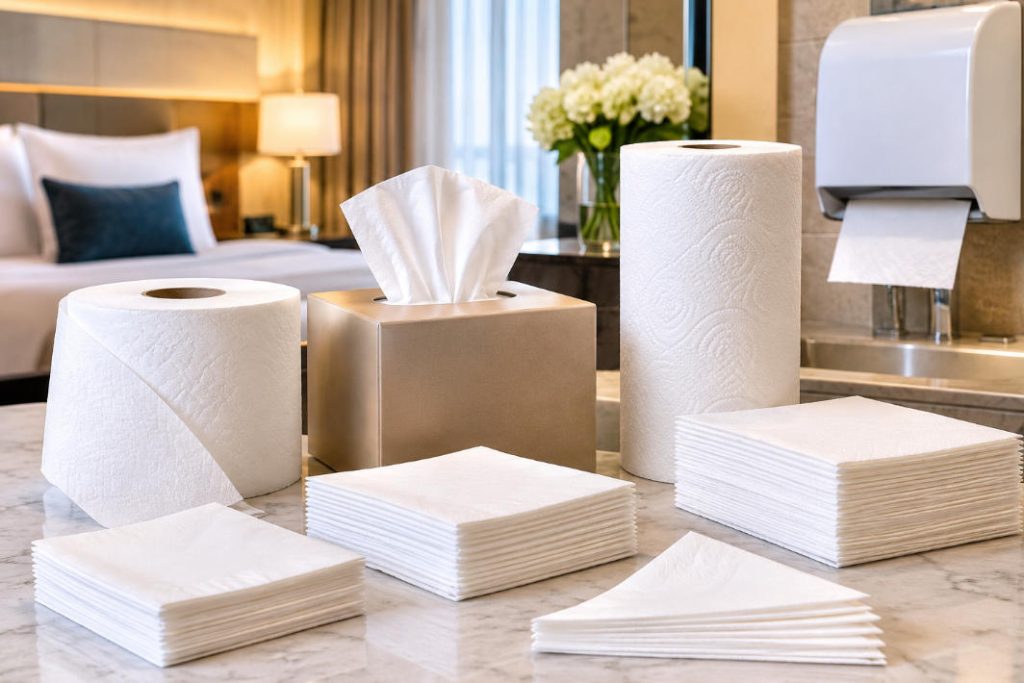
Different Types of Tissue Paper Used in Hotels
Before selecting tissue paper, hotels should understand the main types of products available and their specific applications. Different hotel areas require different tissue products to meet guest expectations and hygiene requirements.
| Type of Tissue Paper | Common Applications | Key Features |
| Toilet Paper | Guest bathrooms, public restrooms, employee washrooms | Soft, absorbent, available in different ply counts |
| Facial Tissue | Guest rooms, bedside tables, reception areas, meeting rooms | Soft texture, skin-friendly, gentle on the face |
| Paper Hand Towels | Public restrooms, guest bathrooms, restaurants | Absorbent, convenient, disposable |
| Kitchen Paper Towels | Hotel kitchens, restaurants, food preparation areas | High absorbency, practical for wiping and cleaning |
| Dinner Napkins | Hotel restaurants, banquet halls, bars, catering areas | Available in different sizes, colors, and thicknesses |
| Cocktail Napkins | Bars, lounges, coffee shops, reception events | Compact, lightweight, suitable for beverages and snacks |
| Jumbo Roll Tissue | High-traffic public restrooms and commercial washrooms | Large roll capacity, fewer replacements |
| Center-Pull Paper Towels | Public washrooms, housekeeping areas, service stations | Convenient dispensing, controlled sheet usage |
| Industrial Cleaning Tissue | Housekeeping departments, maintenance rooms, back-of-house areas | Strong, versatile, suitable for cleaning tasks |
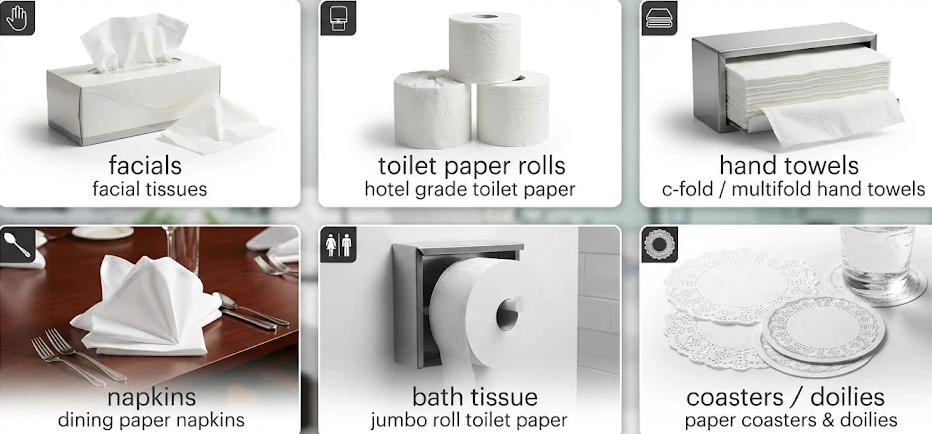
Key Considerations for Choosing the Right Tissue Paper for Hotels
1. Tissue Paper Quality and Softness
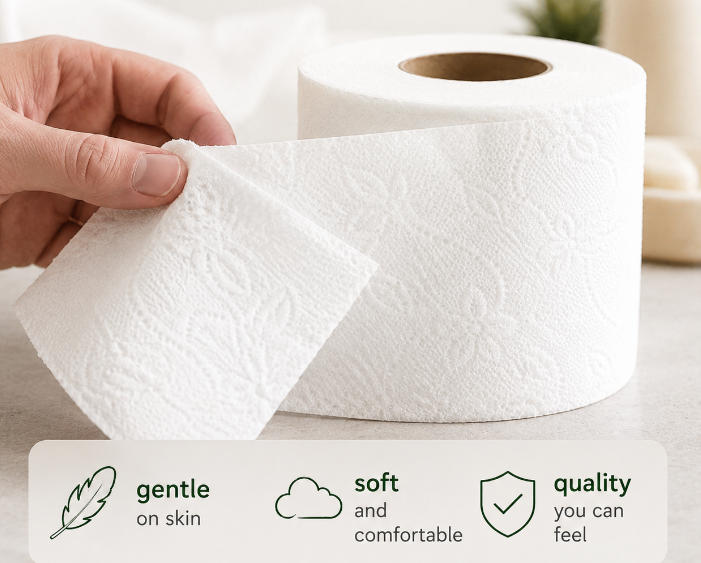
Quality and softness are paramount in determining how tissue paper affects guest comfort. When analyzing various products, softness should be examined in conjunction with other features like thickness, strength and surface texture.
Because of their close contact with skin, softness is crucial for toilet tissue and facial tissues. When a hotel chooses to provide tissue of lesser softness or quality, guests become more critical and lose a level of satisfaction.
The same applies to thickness, where more is better. Usually, multiple plies result in a more premium feel, but that’s not always the case. There are several factors that contribute to tissue softness, including the fiber quality and how it’s embossed and made.
In the long run, purchasing smaller tissue samples is probably the better route for hotels to test products to find what best fits their requirements for softness, strength, absorbency and price.
2. Absorbency and Wet Strength
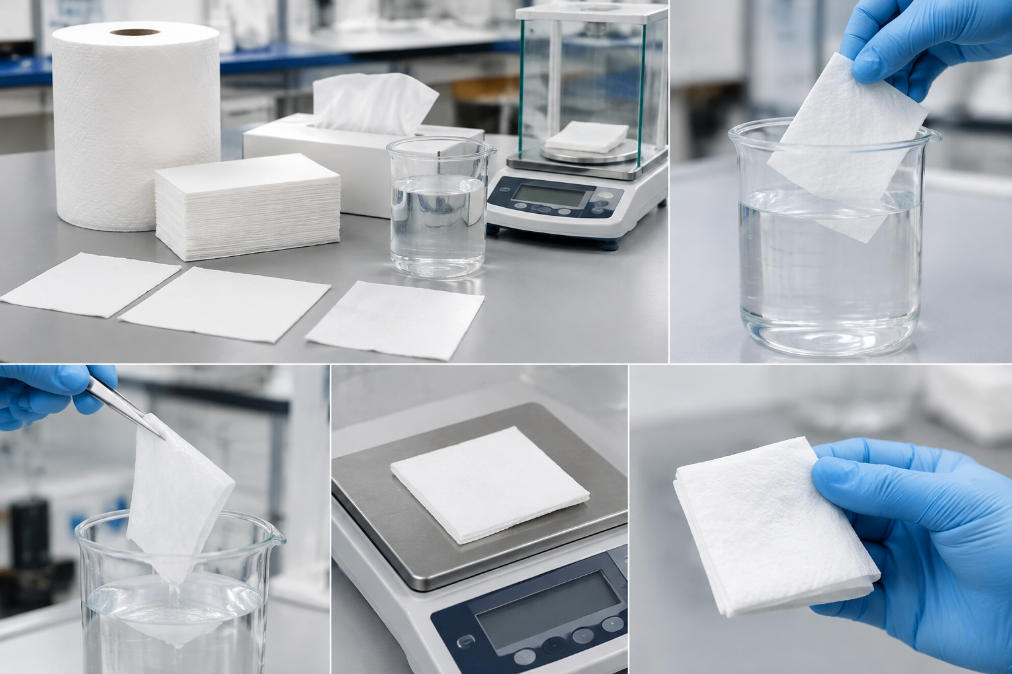
Absorbency of tissue paper is an essential performance factor used in hotel bathrooms, restaurants, and kitchens.
For example, facial tissues should absorb moisture effectively without falling apart during normal use. Paper hand towels should quickly absorb water so guests can dry their hands with fewer sheets. Kitchen paper towels need sufficient absorbency to handle spills and cleaning tasks efficiently.
Wet strength in tissue paper is equally important for certain applications. Paper towels used in kitchens and food service areas should maintain their structure when wet. Otherwise, they may tear easily and leave paper residue on surfaces.
Hotels should select products based on their actual usage requirements rather than relying only on appearance or thickness.
3. The Appropriate Ply Count
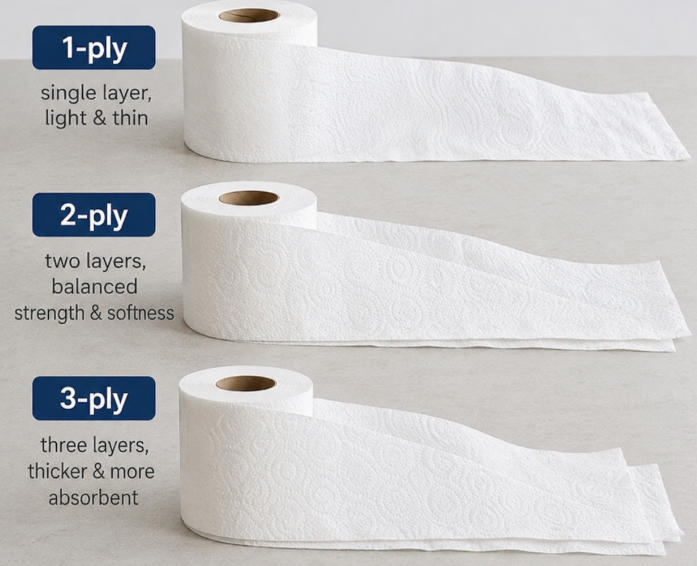
The ply count is the number of tissue paper layers combined to form a sheet of paper. This determines the paper’s thickness, strength, softness, and overall user experience.
Single-ply paper tissues are generally low cost, making them ideal for areas with large tissue paper demand and where tight budgets need to be maintained. Two-ply products are a common balance between budget and comfort in many hotels. Three-ply tissue paper tissues offer a premium, thicker and softer product that may be more suitable for upscale and luxury hotel guest rooms.
When hotels choose to offer thicker tissues, they need to take into consideration how well the product dissolves in their toilet plumbing systems. Thicker products do not always lead to a higher quality experience if they fail to dissolve.
Matching ply counts in tissues with guest needs helps manage purchasing costs and hotel guest expectations.
4. Matching Tissue Paper to Different Hotel Areas
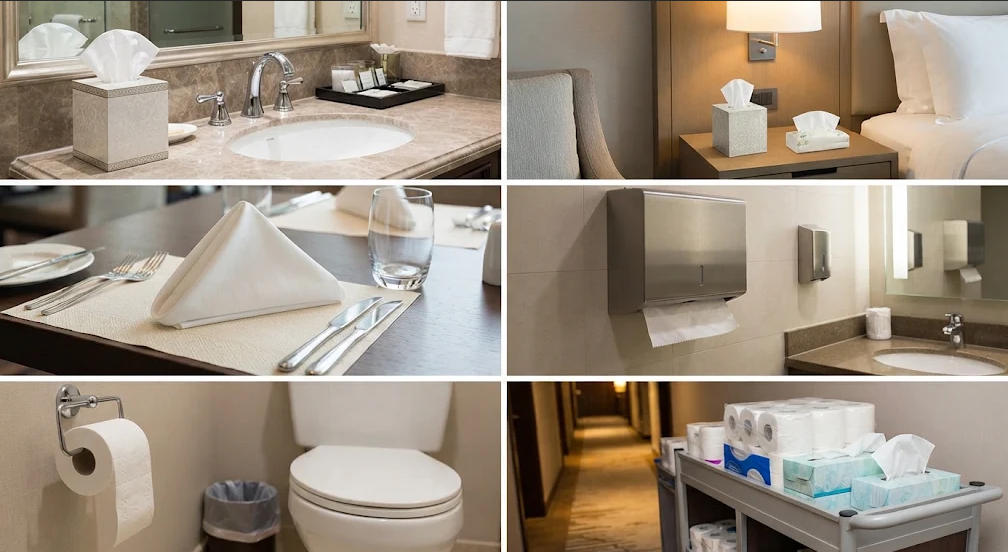
Not every area of a hotel requires the same tissue paper specifications. Selecting products according to their intended applications can improve both operational efficiency and cost management.
For example, luxury guest rooms may require premium facial tissues and soft toilet paper, while employee washrooms may prioritize economical products with reliable performance.
The following table shows how hotels can select tissue paper for different areas.
| Hotel Area | Recommended Tissue Product | Key Requirements |
| Guest bathrooms | Premium toilet paper | Softness, strength, comfortable texture |
| Guest bedrooms | Facial tissue | Softness, skin friendliness, low lint |
| Public restrooms | Toilet paper and hand towels | Absorbency, durability, cost efficiency |
| Hotel restaurants | Paper hand towels and kitchen towels | Hygiene, absorbency, convenience |
| Hotel kitchens | Kitchen paper towels | Wet strength, high absorbency |
| Reception areas | Facial tissue | Attractive presentation, softness |
| Meeting rooms | Facial tissue and hand towels | Convenience, quality, easy replacement |
| Employee washrooms | Standard toilet paper and hand towels | Practicality, affordability, reliable supply |
| Housekeeping departments | Cleaning paper towels | Strength, absorbency, versatility |
Matching tissue paper products to their intended applications helps hotels avoid unnecessary spending on premium products in low-priority areas while ensuring guest-facing facilities maintain appropriate quality standards.
5. Dispenser Compatibility and Product Size
Dispenser compatibility is another important factor when choosing tissue paper for hotels. Many hotels use standardized dispensers to simplify maintenance, reduce waste, and improve the appearance of public facilities.
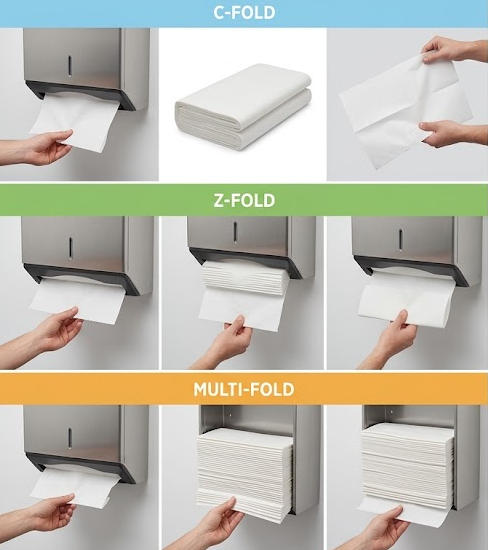
Hotel managers should check dimensions such as the required sheet size, roll diameter, core size, sheet folding style, and other product dispenser requirements.
For instance, paper hand towels can be purchased in many formats such as C-fold, Z-fold, multifold towels and roll towels. Every one of these formats has its own dedicated dispenser.
Toilet paper is also available in standard rolls, jumbo rolls, and other commercial formats. High-traffic public restrooms may benefit from larger rolls because they reduce the frequency of replacement.
Choosing the correct product size and format can help housekeeping staff maintain supplies efficiently and prevent unnecessary paper waste.
6. Balancing Product Quality with Purchasing Costs
As part of their daily operations, all hotels have tissue paper costs. Unlike one-off purchases, even small price changes can add up quickly over the year.
The fact is, even purchasing cheap tissue paper doesn’t result in low costs for the hotel.
Tissue paper of low quality has lower absorbency and lower structure. It also doesn’t provide sufficient size, leading guests and employees to use much more tissue paper for even a single need.
Overall costs should be determined by evaluating performance and usage rather than comparing just the costs.
The following table explains several important cost-related considerations.
| Cost Factor | What Hotels Should Evaluate | Why It Important |
| Unit price | Price per roll, pack, or carton | Helps compare supplier quotations |
| Sheet count | Number of sheets per pack or roll | Indicates the quantity supplied |
| Sheet size | Length and width of individual sheets | Affects usability and consumption |
| Ply count | Single-ply, two-ply, or three-ply | Influences comfort and material usage |
| Absorbency | Amount of liquid absorbed per sheet | Affects the number of sheets required |
| Product durability | Resistance to tearing during use | Reduces unnecessary consumption |
| Delivery expenses | Shipping and handling charges | Influences total procurement costs |
| Replacement frequency | How often dispensers need refilling | Affects housekeeping labor |
By considering these factors together, hotels can identify products that offer better long-term value.
7. Hygiene and Safety Standards
It is crucial that tissue products used in hospitality be manufactured and stored hygienically, just like all other hospitality products. Reliability of the tissue product should also be considered with regard to its manufacture and storage. Packaging should protect the tissue from contamination, including dust and moisture, and should withstand normal stresses during transport.
In hotels where tissue products come into contact with food, whether in the storage, preparation, or service area, product compliance should be verified for use in a food environment.
Tissue paper products should be stored in dry, clean conditions and separated from other contaminants.
Following these simple practices helps hotels maintain high standards of hygiene throughout their facilities.
8. Environmental Sustainability
Increasingly, hotels are integrating sustainable procurement into their daily operations. For tissue paper purchasing, hotels can examine several aspects to lower the environmental impact of tissue paper.
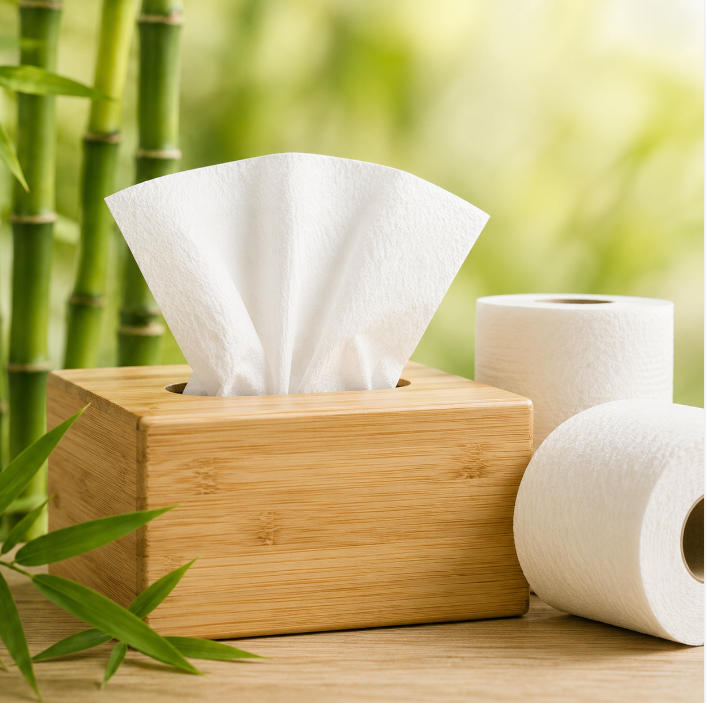
Using products manufactured from responsibly sourced pulp, recycled fibers or bamboo fibers is one approach hotels can take to lower the environmental impact of their tissue products.
Using tissue products manufactured from recycled materials decreases the demand for raw materials. While using pulp products should be done from responsible, sustainable forestry practices. Other aspects hotels should consider in tissue products include the suppliers’ environmental certifications, manufacturing processes, and packaging materials.
Reducing waste should be an objective in all hotel departments. Hotels can consider using well designed tissue paper dispensers, which help regulate tissue consumption by staff and guests.
Hotels should also consider whether tissue paper packaging uses unnecessary plastic, and whether there are other alternative packaging options.
The selection of sustainable tissue products strengthens a hotel’s goal of environmentally responsible operations.
How to Select a Reliable Hotel Tissue Paper Supplier
For hotels, choosing the right tissue paper supplier is equally as important as choosing the right paper. Uninterrupted daily hotel operations rely on the constant supply of various products.
Reliable tissue paper manufacturers should offer consistent product quality, competitive pricing, sufficient production capacity, and stable delivery schedules.
As well as evaluating quality and pricing, hotels should determine if suppliers offer a range of tissue papers to suit various requirements of hotel rooms, washrooms, restaurants, and other facilities.
For hotel chains and larger groups of hospitality companies, personalization is of value. Suppliers of tissue paper that are flexible and willing to offer varying sheet dimensions and plys, as well as the ability to package private label products, are preferred by hotel chains and large hospitality companies. Such suppliers help large hospitality groups develop uniform buying practices throughout hotel units.
Hotels should analyze specifications, quality controls, and supply chain reliability of a product before signing any long-term agreement.
Test Tissue Paper Samples Before Bulk Purchasing
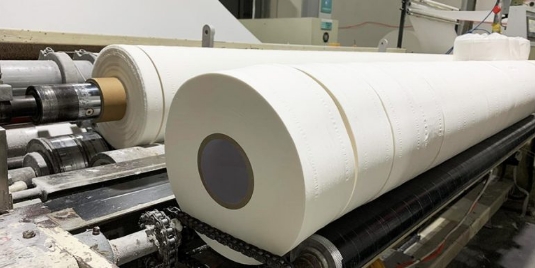
One of the best ways to avoid buying poor-quality tissue in bulk is by purchasing and testing the product in small quantities.
Descriptions and quotes should not be the sole focus when choosing a supplier. A practical evaluation and testing is needed.
Softness, lint, and tear resistance should be the focus when evaluating tissues for the face. Comfort, strength, and how long a tissue takes to break down, especially in toilet paper and whether or not it will block toilet systems should be tested. Comfort and strength should also be evaluated for hand towels along with their absorption rate and ease of dispensing.
A better way for purchasing managers to identify issues is for hotel housekeeping staff and others to use and test tissues on the job.
After identifying a suitable tissue, purchasing specifications can be developed to help hotels maintain the quality of their future orders.
Summary
Selecting the right tissue paper for hotels involves more than comparing prices or selecting products based on appearance. The different tissue paper types should also be considered with regard to softness, absorbency, strength, ply count, dispenser compatibility, hygiene, and environmental sustainability. Selecting a reliable tissue paper supplier is also important.
It is better for a hotel to employ a multi-level purchasing strategy by having different paper tissues for different hotel areas. Premium tissue paper products, therefore softer and more absorbent, can be used in more important guest areas. In public washrooms and employee facilities, a practical tissue can be used.
By evaluating samples, comparing long-term costs, and working with dependable tissue paper manufacturers, hotels can maintain high hygiene standards, improve guest satisfaction, reduce unnecessary consumption, and achieve more efficient procurement management.