
How the Absorbency of Tissue Paper is Tested
Absorbency is one of the most important performance characteristics of tissue paper. It shows up in many uses, like cleaning at home, personal care, food service needs, and industrial work. Tissue paper has to take in liquid fast, yet it must stay strong enough and feel soft. To keep consistent product quality, manufacturers use set test steps, which help them meet consumer expectations.
Absorbency tests look at a few things at the same time. They check how much liquid a tissue sheet can hold. They also track how quickly the sheet takes in water. Another point is how well the tissue paper keeps the liquid in place without falling apart. With these tests, tissue paper manufacturers can optimize raw materials, fiber composition, production processes, and product designs.
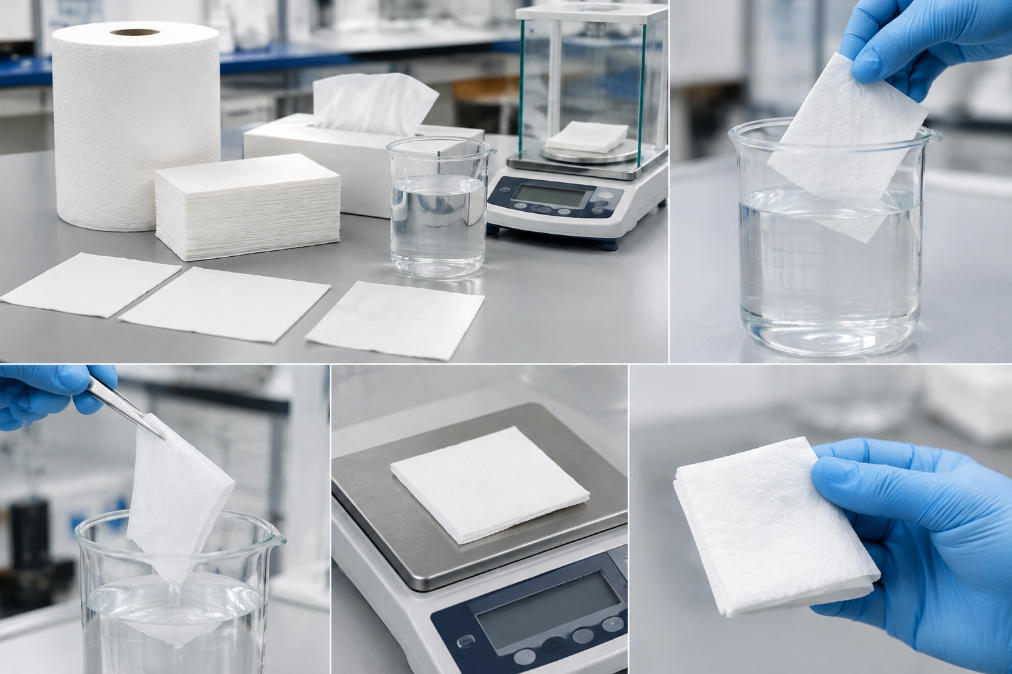
Why Absorbency Testing is Important for Tissue Paper
The absorbency performance of tissue paper directly affects its usability. If the tissue soaks up well, it can handle spills with less effort. It can also help reduce how much product people go through. For the maker, absorbency testing is a way to see if the tissue fits the set quality limits. It can also show when production tweaks are needed.
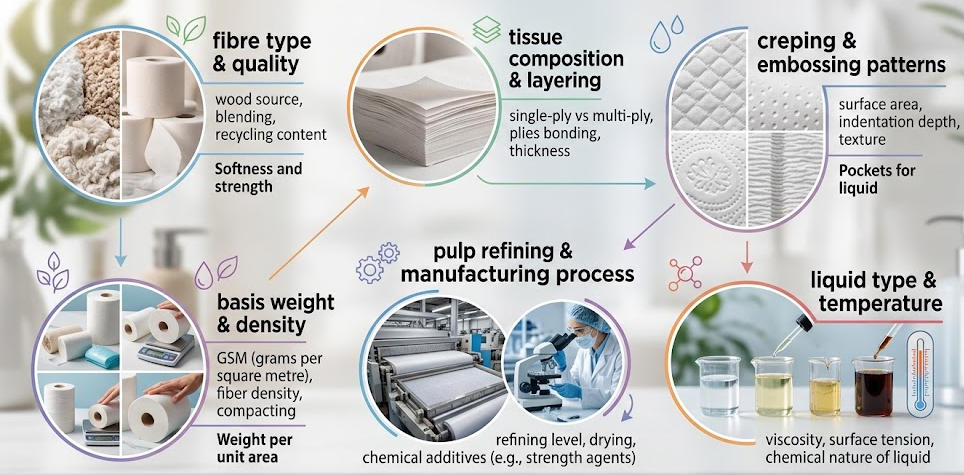
Absorbency changes based on several setup choices. Fiber type matters, as does pulp quality. Sheet thickness and basis weight play a role too. Things like creping steps, embossing shapes, and added materials can shift results. By testing, manufacturers can compare tissue blends and raise overall performance.
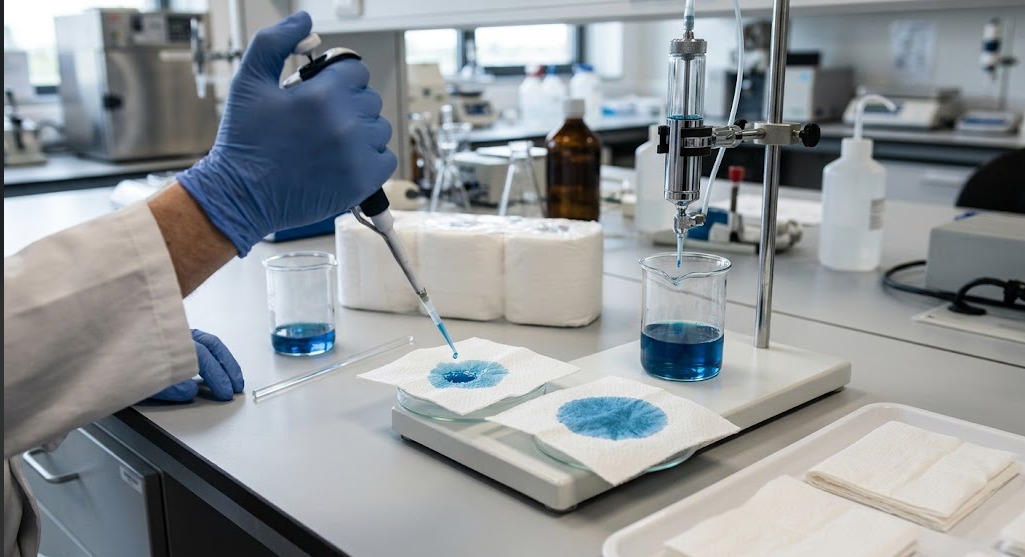
Main Factors Evaluated During Absorbency Testing of Tissue Paper
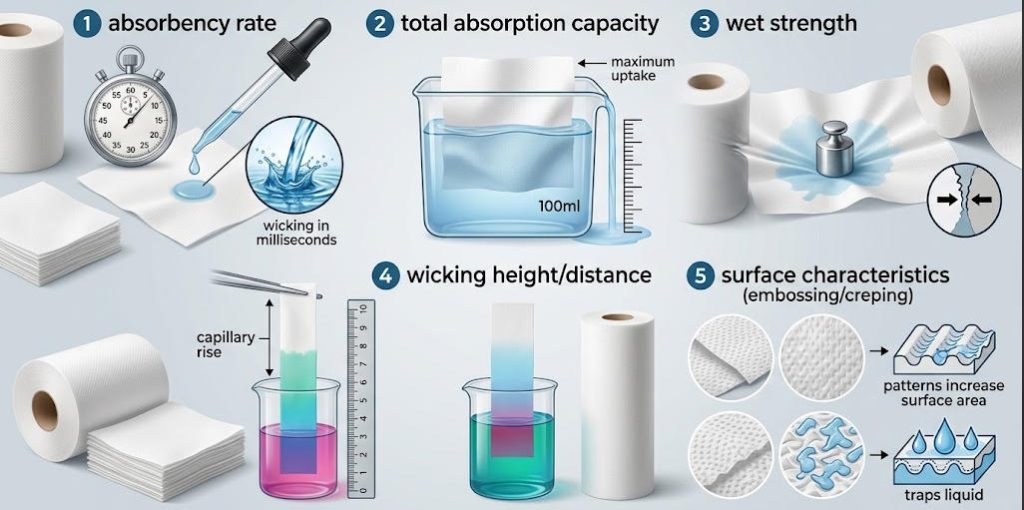
In absorbency testing, manufacturers focus on a set of core results. They look at absorption capacity, how fast liquid enters, and liquid retention. Wet strength and liquid spread are also checked. Taken together, these points help guide fiber choice, production steps, and final tissue quality.
| Evaluation Factor | Definition | Testing Purpose | Importance for Tissue Paper Performance |
| Absorption Capacity | The total amount of liquid that tissue paper can absorb compared with its original dry weight. | Measures the maximum liquid-holding ability of the tissue sample. | Determines whether the tissue can effectively handle spills, moisture, and daily cleaning tasks. |
| Absorption Speed | The time required for tissue paper to absorb liquid after coming into contact with moisture. | Evaluates how quickly liquid penetrates the tissue structure. | Indicates the efficiency of the tissue in quickly removing liquids from surfaces or skin. |
| Liquid Retention Ability | The ability of tissue paper to hold absorbed liquid without releasing it under pressure. | Tests whether the tissue can maintain absorbed moisture during handling. | Improves usability by reducing dripping, leakage, and tissue breakdown. |
| Liquid Distribution | The ability of tissue fibers to spread absorbed liquid evenly throughout the sheet. | Examines how moisture moves through the tissue structure. | Helps prevent localized saturation and improves overall absorption efficiency. |
| Capillary Absorption Performance | The ability of fibers and pores within tissue paper to draw liquid through capillary action. | Measures liquid movement through the internal fiber network. | Shows the effectiveness of fiber structure in supporting rapid absorption. |
| Wet Strength | The ability of tissue paper to maintain its structure after absorbing liquid. | Evaluates resistance to tearing or disintegration when wet. | Ensures durability during use, especially for paper towels and wipes. |
| Absorbency Rate | The amount of liquid absorbed within a specific period of time. | Compares absorption efficiency between different tissue products. | Helps manufacturers optimize tissue design for faster moisture uptake. |
| Surface Absorption Behavior | How quickly liquid enters the outer surface of the tissue. | Tests initial contact performance between liquid and tissue surface. | Important for products requiring fast spill absorption and quick drying. |
| Absorption Uniformity | The consistency of absorption performance across the entire tissue sheet. | Checks whether different areas of the tissue absorb liquid equally. | Ensures stable product quality and reliable user experience. |
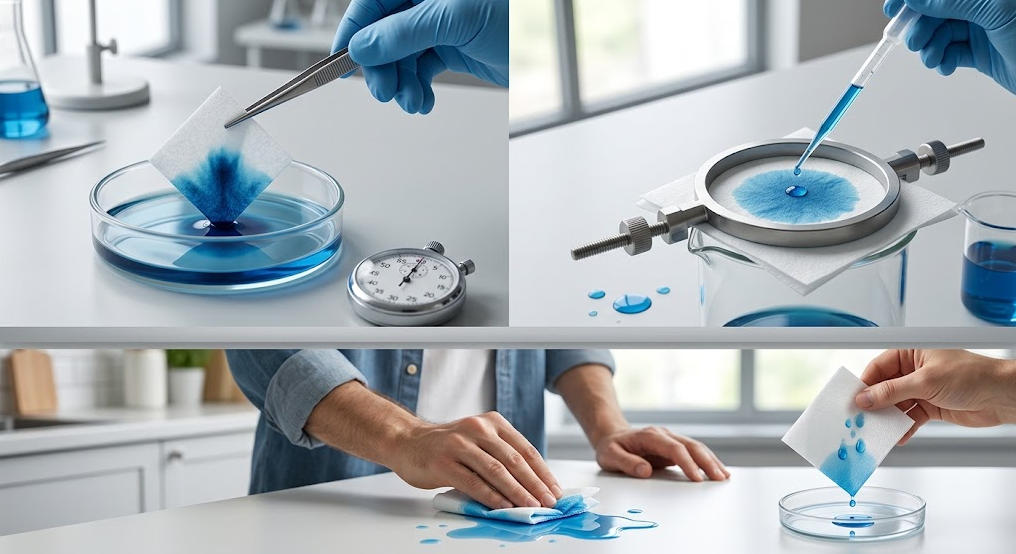
Common Methods for Testing Tissue Paper Absorbency
1. Water Absorption Capacity Test
The water absorption capacity test is one of the most common methods used to evaluate how much liquid tissue paper can absorb. This test measures the amount of water absorbed by a tissue sample compared with its original dry weight.
During the test, a tissue sample with a specific size is weighed before being placed in contact with water. After allowing the tissue to absorb liquid for a controlled period, the sample is removed, drained, and weighed again. The increase in weight represents the amount of water absorbed.
This method helps manufacturers determine whether a tissue product can effectively handle moisture during daily use. Products such as kitchen towels and cleaning wipes often require higher absorption capacity compared with lightweight facial tissues.
2. Absorption Rate Test
The absorption rate test checks how quickly tissue absorbs liquid once it touches it. Fast uptake is useful for products meant for quick spill cleanup. It also helps when the goal is to remove moisture fast.
In this test, a known volume of liquid is put onto the tissue top layer. Then the test tracks how long it takes for the liquid to move through the sheet until full penetration is reached. A lower time means the liquid gets taken in sooner.
Absorption speed can change due to fiber layout, sheet thickness, embossing pattern, and the way the surface is shaped. Companies run this test to judge one tissue design against another and to support faster drying.
3. Sink Time Test
The sink time test checks how quickly tissue paper soaks up water after it is put in water.
A small tissue piece is set on the water surface. The timing starts right away and ends when the tissue has absorbed water and sinks fully. In general, a shorter sink time points to better water entry and quicker soaking.
This test is used for basic checks on quality since it needs only simple items and gives clear results. It is also used for toilet paper and other disposable tissue products.
4. Cobb Absorption Test
The Cobb absorption test is a well known way to check how much liquid paper can take in. It is often used for packaging paper. It can also show how tissue reacts to liquid contact.
In the test, a tissue sample is exposed to a set amount of water for a set time. After the surface liquid is removed, the sample is weighed again. The weight change shows the water taken in.
The Cobb value gives a sign of how easily liquid moves into the sheet from the surface. Manufacturers can use that outcome to adjust fiber mix and surface features to reach the absorbency level they want.
5. Gravimetric Absorbency Test
The gravimetric absorbency test looks at absorbency by comparing sample mass before and after liquid uptake.
This test commonly includes these steps:
- Weigh a tissue sample in its dry state.
- Let the sample take in a measured liquid amount.
- Remove extra moisture from the surface.
- Weigh the wet sample.
- Compute how much liquid was absorbed.
The results give solid numbers. It is used in lab based quality control. It helps compare absorbency across tissue grades and different production runs.
6. Capillary Absorption Test
The capillary absorption test measures how well tissue draws liquid through the fiber network inside the sheet. The method depends on capillary action. Fibers create small pathways that help liquid move through the tissue.
A tissue strip is dipped partly into liquid. Then the test measures how far up the liquid travels through the sheet over a set time.
This helps explain the internal tissue layout. It also supports studies on how fiber traits relate to absorption results.
7. Wet Retention Test
Wet retention testing checks how well tissue paper holds liquid after it is pressed. Even if the sheet soaks up a lot of water, weak retention can let liquid escape or can make the sheet tear down during use.
In a typical run, a wet tissue sample is pressed using set pressure. After that, the test measures how much liquid stays in the tissue. This is a big deal for paper towels, industrial wipes, and similar goods that need dependable wet strength.
Environmental Conditioning Before Testing
Tissue samples are often conditioned first. This is done at set temperature and humidity levels. If the surroundings change, the tissue can behave differently. So conditioning supports repeatable results that are easier to compare.
Important testing conditions include:
- Temperature control
- Relative humidity control
- Sample storage time
- Consistent sample size and preparation
With proper conditioning, the test is less likely to drift. It also helps makers compare batches with more trust.
Key Factors Affecting the Absorbency Results of Tissue Paper
Absorbency depends on many things. Fiber traits matter. Sheet structure matters too. How the paper is made also plays a role. The environment at the time of testing changes the outcome. Even the test setup itself can shift the results. When these parts are understood, manufacturers can adjust the design and tighten quality checks. The goal is better liquid absorption, better retention, and steadier performance.
| Factor | How It Affects Tissue Absorbency Results | Impact on Performance |
| Fiber Type and Quality | The type, length, and quality of fibers used in tissue paper production influence the internal structure and liquid absorption ability. Virgin wood pulp and bamboo pulp usually provides high absorbency due to its open fiber network. | Determines how quickly and how much liquid the tissue can absorb. |
| Fiber Porosity and Structure | The spaces between fibers create channels that allow liquids to move and be stored inside the tissue sheet. A more porous structure generally improves absorption. | Enhances liquid penetration and increases absorption capacity. |
| Basis Weight (GSM) | Basis weight refers to the tissue’s weight per square meter. Higher GSM often means more fiber content and greater liquid-holding ability. | Affects the amount of liquid the tissue can retain during use. |
| Tissue Thickness | Thicker tissue usually contains more air spaces and fiber layers, providing more room for liquid storage. | Improves absorption volume but may influence softness and flexibility. |
| Creping Process | Creping creates wrinkles and expands the fiber structure, increasing surface area and improving liquid absorption. | Enhances softness, bulkiness, and absorption speed. |
| Embossing Pattern | Embossing adds texture and creates small spaces between tissue layers, helping capture and distribute liquids. | Improves liquid storage and absorption efficiency. |
| Number of Tissue Plies | Multi-ply tissues have more layers that can absorb and hold moisture compared with single-ply products. | Increases absorption capacity and overall strength. |
| Pulp Processing Method | Refining, bleaching, and pulp treatment processes affect fiber flexibility and bonding strength. | Influences liquid flow, absorbency rate, and tissue quality consistency. |
| Liquid Properties Used in Testing | The type, viscosity, and temperature of the test liquid influence how quickly it penetrates the tissue structure. | Affects absorption speed and comparison accuracy between tests. |
| Surface Treatment and Additives | Additives used for softness, strength, or water resistance may improve or reduce liquid penetration. | Changes the balance between absorbency, softness, and durability. |
Quality Control Applications of Absorbency Testing
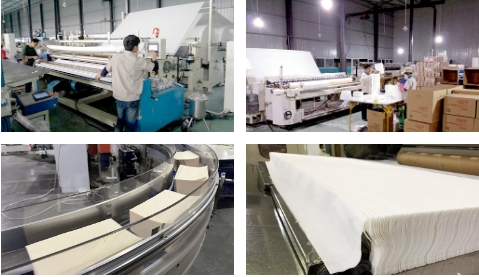
Absorbency testing is used throughout the tissue paper manufacturing process, They start with choosing raw materials. They continue through process checks and final inspection. During production, teams test samples from different lots. This helps confirm that each batch performs the same way.
Test results support these tasks:
- Keep product quality stable across runs
- Tune pulp blends and process settings
- Work on new tissue types
- Follow industry rules and meet customer needs
- Improve how users rate the product
Final Thoughts
Testing the absorbency of tissue paper involves evaluating how quickly and effectively the product absorbs and retains liquid. Tests like water absorption checks, sink time tests, and gravimetric measurements help track tissue behavior in a clear way.
When absorbency testing is done well, tissue paper manufacturers can balance softness, strength, and moisture absorption. As consumers’ demands for high-performance and sustainable tissue paper products continue to grow, accurate absorbency evaluation remains a key part of tissue paper quality control.