
Hand Paper Towels vs. Cloth Towels: Which Option is Better
Hand drying in public and private places often uses either hand paper towels or cloth towels. You see both in homes, workplaces, eateries, medical settings, schools, and other service locations. They do the same basic job, but they do it in different ways. The differences show up in hygiene, daily use, cost, environmental impact, and maintenance requirements. Choosing the right option depends on factors such as usage frequency, sanitation standards, available facilities, and long-term operating costs.
Hand paper towels are disposable products and cloth towels are reusable textiles that require regular washing and drying. When you know how they compare, it can help businesses and households develop a more effective hand-drying routine.

Understanding Hand Paper Towels
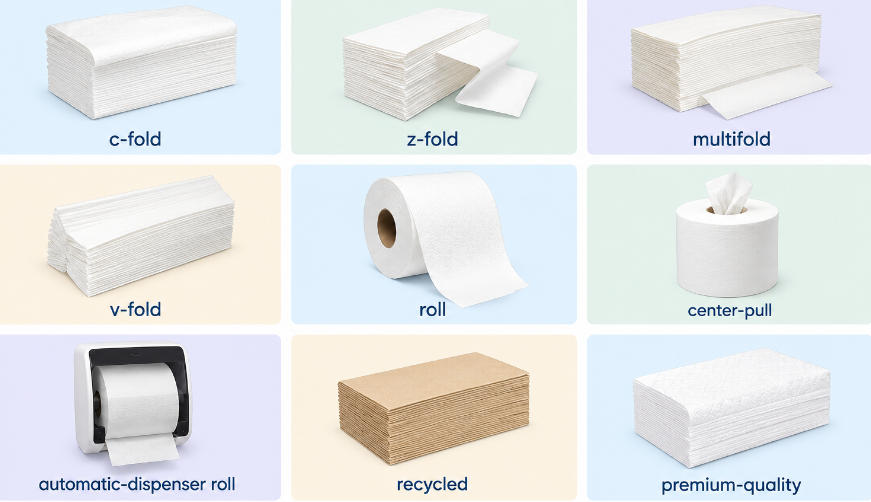
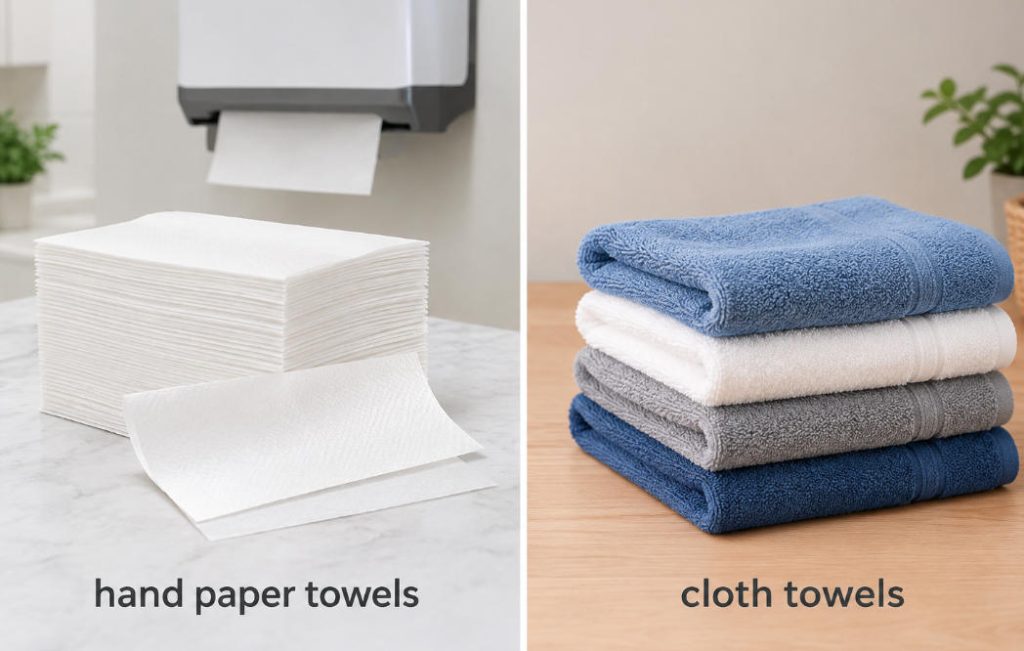
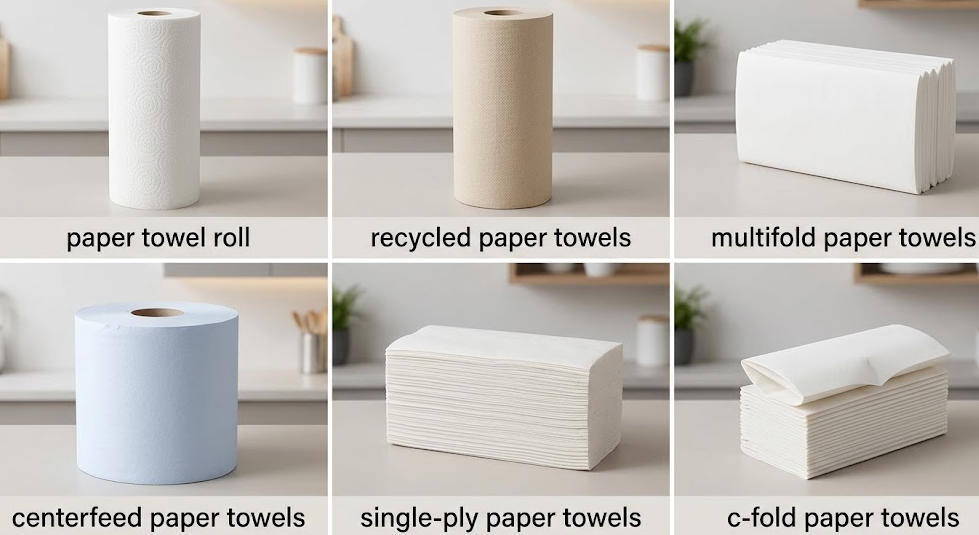
Hand paper towels are absorbent sheets meant to wipe moisture off hands and other surfaces. You can buy them in multiple forms. Common options include folded towels, roll towels, and center pull paper towels. Many places pair them with wall dispensers. Others use countertop holders. This makes them fit in areas with different layouts and crowd levels.
A key benefit is that the person gets a clean towel each time. That lowers contact with a shared drying surface. For sites that want tight hygiene, paper towels are often picked.
Many commercial sites also like hand paper towels because they are simple to restock. They fit into standard restroom setup. Maintenance teams can manage them with clear routines.
Understanding Cloth Towels
Cloth towels are rewashable textiles. They are often made from cotton, microfiber, or a blend of cotton and polyester. The fabric soaks up water, and the towel can be reused after washing and drying.
You can find cloth towels in many settings. They are common in homes, hotels, gyms, spas, and some other sites. They come in many forms, like different sizes, thicknesses, textures, and absorbency levels. That variety helps meet different hand drying needs.
The main upside is reusability. A towel is not tossed after one use. With proper care, it can go through many wash cycles. This can cut down on waste from single use products.
Even so, cloth towels need a real laundry plan. If they sit damp for too long, are not cleaned well, or are shared without care, germs can grow. Bad smells can also form over time.
Because of these issues, cloth towels are often a better fit for areas with controlled.

Key Comparison Between Hand Paper Towels and Cloth Towels
1. Material and Construction
One of the most fundamental differences between hand paper towels and cloth towels is their material composition.
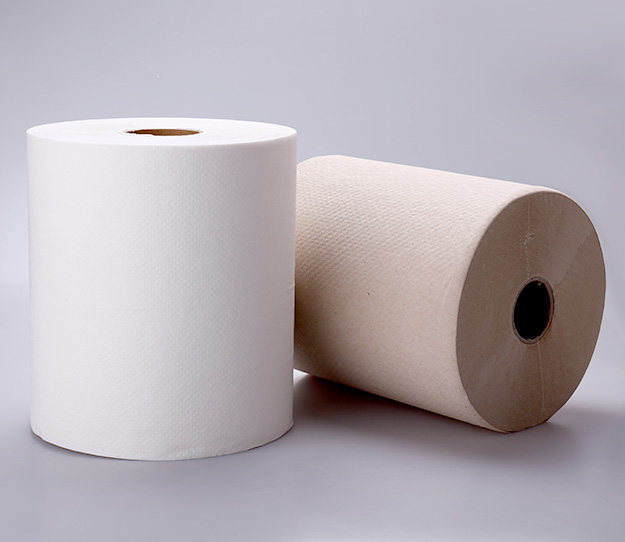
Hand paper towels are usually made from new wood pulp, recycled paper fibers, bamboo fibers or a mix of both. The sheet design helps pull water in fast, yet it still needs to stay strong while you dry your hands. Some brands use more than one ply. Others add texture, like embossed patterns. Still others rely on special fiber mixes to boost softness and absorbency.
Cloth towels are often produced from cotton, microfiber, or cotton and polyester blends. Cotton towels tend to feel soft and soak up water well. Microfiber towels often remove water quickly and can dry faster. How long a cloth towel lasts depends on the fiber grade, how the fabric is built, and how you wash and dry it over time.
The choice between the two materials depends on whether the priority is disposable convenience or repeated use.
2. Hygiene and Sanitation
Hygiene is a key point when comparing hand paper towels with cloth towels. This matters even more when many people use the same handwashing area.
Hand paper towels can give a new drying surface each time you dispense one. After use, you throw it away. That reduces the chance that germs grow on a towel that different people handle.
Cloth towels can still be hygienic if the towel stays for one person and is washed and dried well. But cloth towels that are shared can hold onto moisture. If they are not changed often or cleaned often, microorganisms can build up.
In busy public restrooms, in clinics, and in places that serve food, disposable paper towels can make hygiene easier to manage. Cloth towels may work better when each person has their own towel and there is a solid laundry routine.
No towel style can replace good handwashing. The real results depend on using the product correctly and keeping it in good condition.
3. Absorbency and Drying Performance
Absorbency is how well a towel lifts water off wet hands. Both paper towels and cloth towels can dry hands well. Still, results can change with quality and how the product is made.
Paper towels made to work well absorb water quickly. Their results can shift with fiber type, number of plies, embossing, and overall paper density. Some towels dry hands well using just one or two sheets. Cheaper options may need more sheets to finish the job.
Cloth towels absorb water through their textile fibers. Cotton towels, particularly those with suitable looped construction, can hold considerable moisture and provide a soft drying experience. Microfiber towels may also absorb water effectively, depending on their design.
However, a cloth towel becomes less effective when it is already saturated. Paper towels can also perform poorly if they are thin, weak, or used in insufficient quantities.
The best option depends on the required drying speed, absorbency, and frequency of use.

4. Convenience and Ease of Use
Convenience matters a lot, especially in places that see many people each day.
Hand paper towels are simple to handle. They are meant for quick use and easy disposal. You can install them in folded-towel units, roll holders, or center-pull setups. Staff refill them when supplies drop, without running a laundry workflow.
Cloth towels take more effort. After use, they need to be picked up, then washed and dried before they can be used again. Clean towels also have to be issued on a schedule. That means the site must keep enough extra towels on hand so the supply does not run out during laundry processing.
In homes, cloth towels can feel practical since they can stay in one spot and be cleaned with regular laundry. In public areas, paper towels are often a more straightforward choice for dealing with high usage.
5. Cost and Long-Term Expenses
The total cost of hand-drying products includes more than the purchase price. Businesses should consider product consumption, labor, equipment, maintenance, washing, and waste disposal.
Hand paper towels typically have a relatively low initial cost, but they generate recurring purchasing expenses. In high-traffic locations, daily consumption can make supply costs significant. Dispensers, waste bins, and waste collection also contribute to the overall cost.
Cloth towels may require a larger initial investment in reusable inventory. However, they can be used repeatedly, reducing the frequency of replacement purchases. Their ongoing costs include water, electricity, detergent, laundry equipment or commercial laundry services, labor, and eventual replacement.
The following table summarizes the main cost considerations.
| Cost Factor | Hand Paper Towels | Cloth Towels |
| Initial investment | Usually low for basic dispensers and stock | Depends on towel quality and initial inventory |
| Recurring purchases | Continuous replenishment required | Replacement needed as towels wear out |
| Cleaning expenses | No laundering required | Regular washing and drying required |
| Labor requirements | Restocking and waste collection | Collection, sorting, laundering, and redistribution |
| Waste management | Ongoing disposal costs | Less single-use waste, but laundry costs remain |
| Cost efficiency | Depends on consumption and purchasing price | Depends on reuse frequency and laundering efficiency |
There is no universal cost winner. Businesses should compare total operating costs based on their actual usage levels and local labor, water, and energy prices.
6. Environmental Impact
Environmental performance depends on the full life cycle of each product, from raw material production to disposal or reuse.
With hand paper towels, waste is created each time they are used. The impact is shaped by fiber sources, factory energy use, water use, packaging, shipping, and how the waste is handled. If a product uses recycled fibers, it may lower the need for new fiber. Still, the final effect depends on how it is made.
Cloth towels can reduce single-use waste since they can be used repeatedly. But making cloth takes resources, and washing uses water, energy, and cleaning chemicals. In many settings, laundering services and towel transport can add more impact.
A reusable towel is not automatically greener in all cases. The same idea applies to paper towels. The result can change based on how long towels last, how well washing is done, how many paper towels are used in one drying period, and how local waste systems handle the material.
Facilities seeking to reduce environmental impact should evaluate these factors together rather than relying on disposability alone.
7. Maintenance and Storage Requirements
Hand paper towels and cloth towels also differ in how they are stored, maintained, and supplied.
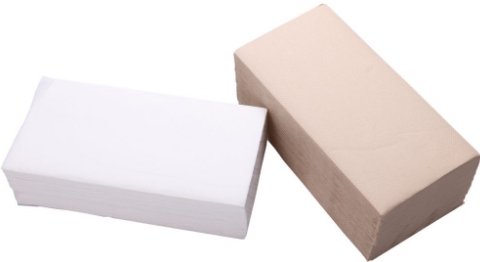
Paper towels require a dedicated storage area for unused stock and suitable dispensers in the hand-washing area. Staff must check supply levels, refill dispensers, empty waste bins, and clean the surrounding surfaces. In high-traffic restrooms, frequent replenishment may be necessary.
Hand paper towels need room for unused stock. They also require dispensers placed in the handwashing zone. Staff must keep track of stock levels, restock dispensers, remove waste from bins, and wipe down the nearby areas. In busy restrooms, refills may be needed often.
Cloth towels call for separate storage for clean items and used items. Clean towels should sit in a hygienic space. Used towels should be gathered and sent for laundering under set procedures. The facility must hold enough towels to keep fresh ones available across the day.
Paper towels are often easier to run in buildings that do not have laundry systems. Cloth towels can work well for companies that already have a strong laundry setup in place.
8. Comfort and User Experience
How people feel matters when choosing hand-drying options, especially in hotels and at home.
Cloth towels usually feel gentle on the skin. When the cotton is well made, drying can feel steady and mild. This is why cloth towels show up in houses, hotels, spa areas, and guest bathrooms.
Hand paper towels can feel different from one brand to the next. Some are smooth and thicker, while others feel stiffer or thinner. Better towels often feel more pleasant. Lower-grade towels can feel scratchy and may take more sheets. Even so, disposable towels give a fresh towel each time. Many users like that in shared restrooms.
For companies, the best pick should balance comfort with hygiene rules, cost limits, and day-to-day upkeep needs.

9. Suitability for Different Applications
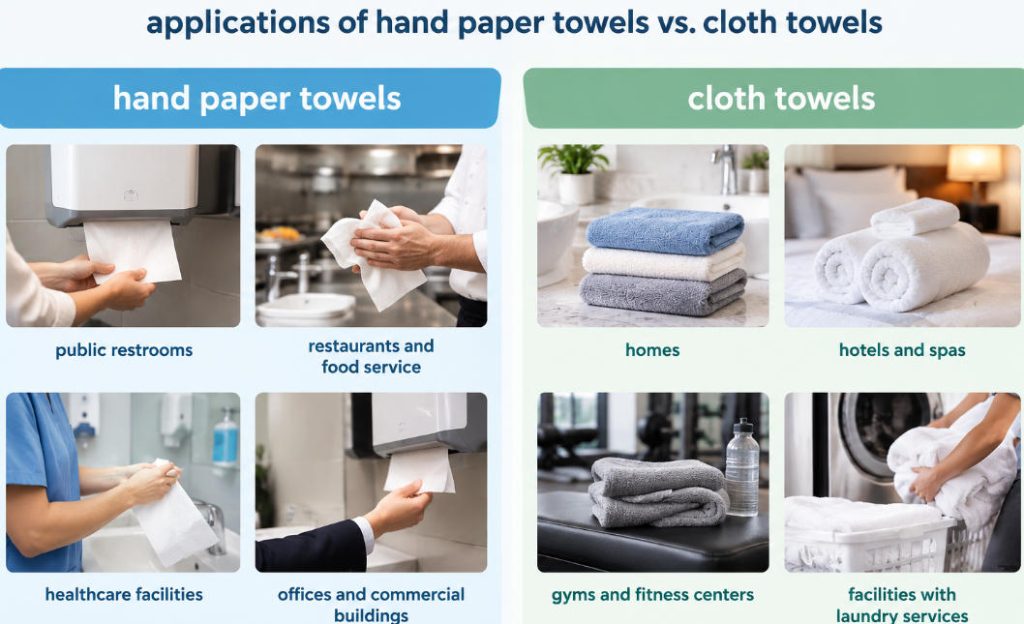
Different environments have different operational requirements, so neither towel type is the best choice for every situation.
| Application | Recommended Option | Main Reason |
| Public restrooms | Hand paper towels | Convenient single-use distribution |
| Restaurants and commercial kitchens | Hand paper towels | Easier management of shared hand-drying stations |
| Healthcare facilities | Hand paper towels where appropriate | Supports single-use hand-drying procedures |
| Office buildings | Either option | Depends on traffic, budget, and maintenance capacity |
| Household bathrooms | Cloth towels or paper towels | Depends on personal preference and sharing practices |
| Hotels and spas | Cloth towels or paper towels | Depends on service style and laundering capacity |
| Gyms and fitness centers | Either option | Depends on hygiene procedures and towel management |
| Temporary events | Hand paper towels | Convenient where laundry facilities are unavailable |
Facilities should always follow applicable hygiene regulations and industry-specific sanitation procedures when selecting and using hand-drying products.
Summary Comparison Table of Hand Paper Towels and Cloth Towels
| Comparison Factor | Hand Paper Towels | Cloth Towels |
| Material | Virgin wood pulp, recycled paper fibers, bamboo or a combination | Cotton, microfiber, or cotton-polyester blends |
| Usage | Usually designed for single use | Designed for repeated use |
| Hygiene | Provides a fresh drying surface for each use | Requires proper washing and drying to maintain hygiene |
| Absorbency | Depends on paper quality, thickness, and ply count | Depends on fabric type, weave, and thickness |
| Drying Performance | Convenient for quick hand drying | Effective when clean and not already saturated |
| Convenience | Easy to use and dispose of | Requires collection, washing, and drying |
| Initial Cost | Generally low for basic products and dispensers | Varies according to fabric quality and quantity |
| Long-Term Cost | Recurring purchasing and disposal expenses | Laundry, labor, water, energy, and replacement expenses |
| Environmental Impact | Generates single-use waste; impact depends on fiber sourcing and disposal | Reduces disposable waste but requires resources for laundering |
| Maintenance | Requires restocking dispensers and emptying waste bins | Requires regular laundering and inventory management |
| Storage | Needs space for unused stock | Needs separate storage for clean and used towels |
| Comfort | Varies from basic to premium softness | Often offers a soft, textile-based feel |
| Best Applications | Public restrooms, restaurants, offices, and healthcare facilities | Homes, hotels, spas, and settings with reliable laundry services |
| Main Advantage | Convenience and straightforward single-use hygiene | Reusability and potential long-term savings |
| Main Disadvantage | Continuous purchasing and waste generation | Ongoing laundering requirements and the risk of poor hygiene if mismanaged |
How to Choose Between Hand Paper Towels and Cloth Towels
Before selecting hand paper towels or cloth towels, consider the following factors.
Usage Frequency and Traffic
Start by estimating daily user count. In busy places, staff often needs a method that is easy to restock and manage. Paper towels can be a good fit when many different people share the same restrooms.
Hygiene Requirements
Decide if each person should get a separate towel, or if sharing can fit your sanitation plan. In healthcare and food service, follow the relevant rules. Use documented cleaning steps.
Total Operating Costs
Look at the full cost, not only the product price. For paper towels, count refills, dispensers, waste containers, and disposal. For cloth towels, count stock, washing, drying, detergent, staff time, and new towel replacements.
Environmental Objectives
Check where the fiber comes from and whether there is recycled content. Also compare water and energy use, shipping distance, towel life, and local waste handling. A life-cycle view gives a clearer comparison than focusing only on whether the item is disposable.
Available Space and Labor
Paper towels need room for extra supply and for waste collection. Cloth towels need a place for clean towel storage, a way to collect used towels, and access to laundry support. The best option is the one that matches the site’s daily flow.
Summary
- For public restrooms, restaurants, offices, and healthcare facilities, hand paper towels are often a practical choice because they simplify the management of shared hand-drying stations.
- For households, hotels, and other settings with reliable laundry procedures, cloth towels can provide a reusable alternative.

Final Thoughts
Both hand paper towels and cloth towels have clear strengths. Hand paper towels are easy to use, meant for single use, and fit shared areas with heavy traffic where fresh towel use helps meet hygiene expectations. Cloth towels can be reused, feel comfortable, and may work out as cheaper if clean towel handling and laundering stay consistent.
The right decision should reflect hygiene needs, user volume, maintenance capabilities, total costs, and environmental priorities. When these factors are weighed together, businesses can select a hand-drying solution that supports cleanliness, convenience, and efficient operations.