
C-fold vs. Z-fold vs. Multi-fold Paper Towels: Choosing the Right Type for Your Facility
Paper towels are important in many places, like public restrooms, break rooms, hospitals, and office bathrooms. Even when the towels look alike, different folding styles can affect dispensing efficiency, user experience, waste control, and maintenance costs.
Common options are C-fold, Z-fold, and multi-fold paper towels. Each type of paper towel matches certain dispenser systems and fits different facility needs. Knowing what differs between them can help businesses select the most suitable paper towel solution.
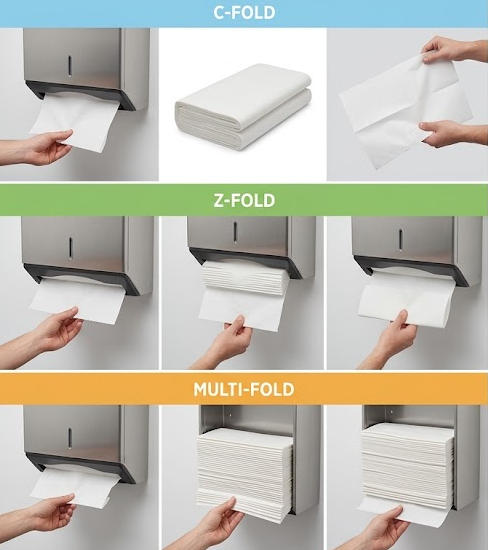
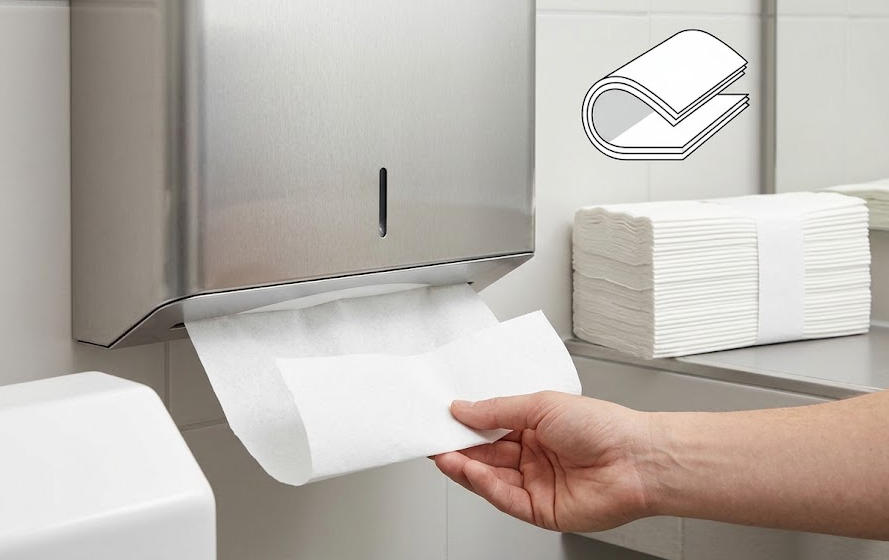
Understanding C-fold Paper Towels
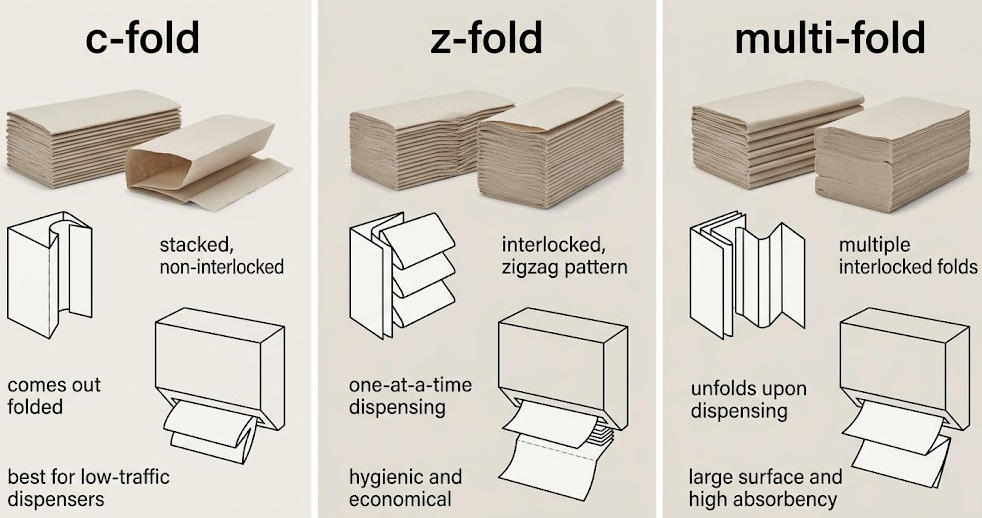
C-fold paper towels are made with a fold that looks like the letter “C”. The paper is creased inward from two sides, so the stack stays flat. In most cases, a person pulls one towel from the dispenser, but in some setups more than one sheet can come out.
These towels are often seen in standard restroom use. They are straightforward, cost less, and they match many older dispenser models.
Advantages
- Cost-effective: These towels are often priced lower and work well where usage is heavy.
- Good drying area: When opened, the sheet covers a decent surface for drying hands.
- Simple to store: Flat stacks stack well and move easily.
- Works with many units: They are compatible with many common dispensers.
Limitations
- Higher risk of overuse: Some users pull several sheets because the dispenser does not always separate each towel.
- Higher waste risk: Extra towels mean higher use and higher running costs.
- Requires frequent refilling: Flat stacks can run out faster in busy areas if the dispenser is not managed closely.
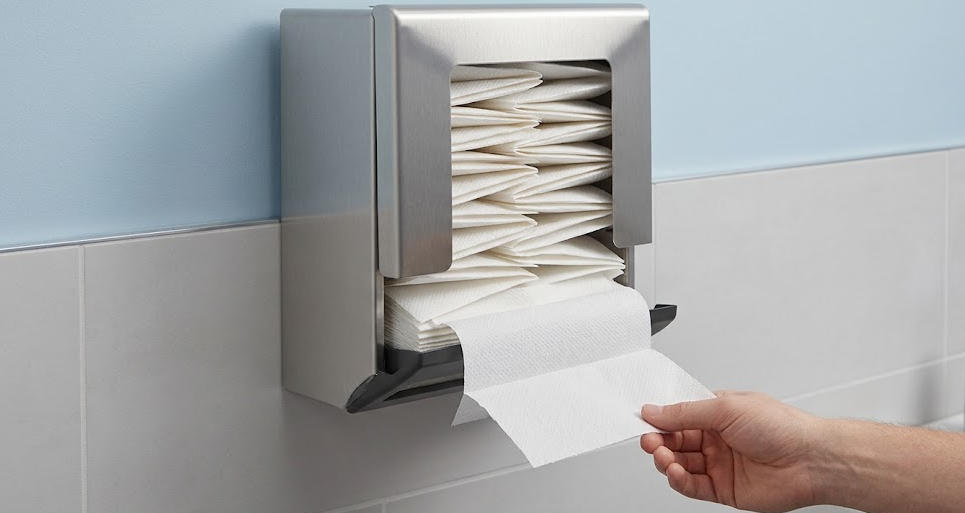
Understanding Z-fold Paper Towels
Z-fold towels are folded in a “Z” pattern. Each towel is linked to the next with overlapping creases. When a person pulls one sheet, the next one shifts forward so it is ready to grab.
This interfold setup helps with better portion control. It is common in newer commercial restrooms.
Advantages
- One-at-a-time pull: The connected folds support cleaner dispensing.
- Better hygiene: People usually touch only the towel they remove.
- Steady dispenser flow: After each pull, the next towel is positioned.
- Less overall waste: When dispensing is controlled, total consumption can drop.
Limitations
- Needs matching dispensers: Some Z-fold towels do not work well in older C-fold dispensers.
- May cost more up front: Certain Z-fold packs can be priced higher than basic folded options.
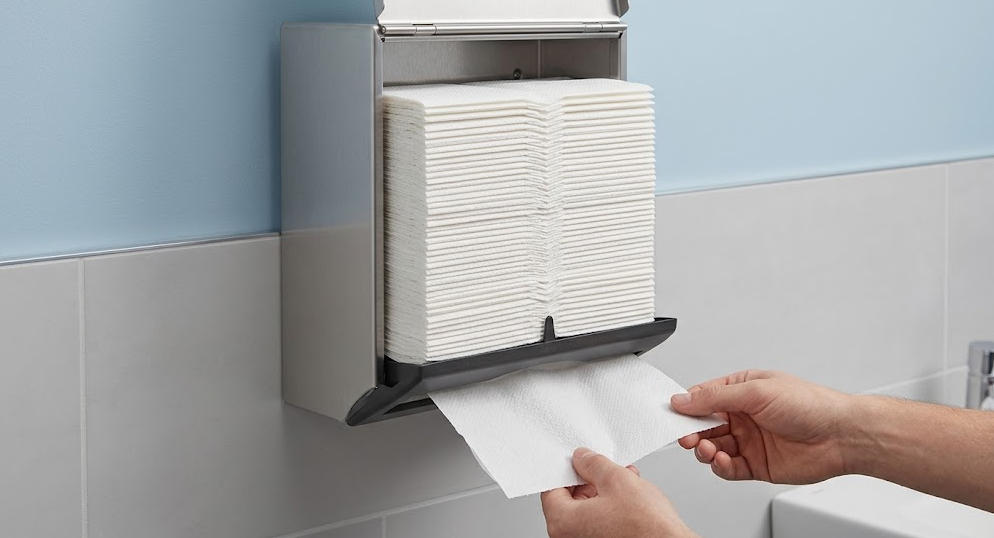
Understanding Multi-fold Paper Towels
Multi-fold towels, often called M-fold towels, use several folds to make a compact, interlocked stack. They are built to support one-sheet dispensing while using dispenser space well.
You will find multi-fold towels in offices, restaurants, schools, and healthcare spaces where foot traffic is high.
Advantages
- Strong space use: The fold is compact, so more towels fit in the dispenser.
- Easy control: People can pull a single towel without grabbing extra.
- Less frequent restocking: Larger capacity means fewer refill trips.
- Neat look: Restrooms stay tidy and feel well run.
Limitations
- Need matching dispensers: These towels work best with compatible multi-fold dispensers.
- Cost may run higher: Some premium models cost more at the start.
Key Differences Between C-fold, Z-fold, and Multi-fold Paper Towels
| Comparison Factor | C-fold Paper Towels | Z-fold Paper Towels | Multi-fold Paper Towels |
| Folding Design | Folded into a “C” shape with two inward folds | Folded into a “Z” shape with overlapping layers | Folded multiple times into a compact interlocked structure |
| Dispensing Style | Stack dispensing; users pull towels directly from the pile | One-at-a-time dispensing through connected folds | One-at-a-time dispensing with efficient interfold design |
| Towel Presentation | The next towel may not automatically appear after dispensing | The next towel is partially exposed after each pull | The next towel is presented smoothly for easy access |
| Waste Control | Lower waste control because users may take multiple sheets | Better waste control due to portion-controlled dispensing | Excellent waste control with efficient sheet distribution |
| Hygiene Performance | Moderate; unused towels may be touched during removal | High; users mainly touch only the towel they use | High; minimizes contact with unused towels |
| Dispenser Capacity | Medium; requires more storage space | Medium to high depending on dispenser design | High; compact folding allows more towels per dispenser |
| Refill Frequency | More frequent refilling in high-traffic areas | Moderate refill frequency | Less frequent refilling due to higher capacity |
| Storage Efficiency | Lower because towels are stacked flat | Better than C-fold due to interfold structure | Highest storage efficiency among the three types |
| User Convenience | Simple but may require multiple pulls | Easy and quick single-sheet access | Convenient and efficient for busy environments |
| Cost Level | Usually the lowest initial cost | Moderate cost with improved efficiency | Slightly higher initial cost but better long-term value |
| Best Applications | Small offices, low-traffic restrooms, basic facilities | Offices, restaurants, schools, commercial restrooms | Hospitals, airports, hotels, large commercial facilities |
| Main Advantage | Affordable and widely compatible | Good balance between hygiene and cost control | Maximum efficiency, capacity, and waste reduction |
| Main Limitation | Higher risk of overuse and waste | Requires compatible dispensers | May have higher purchase costs and specific dispenser requirements |
Key Factors to Consider for Choosing Between C-fold, Z-fold, and Multi-fold Paper Towels
Choosing the right paper towel type matters for cleanliness, cost control, and a better restroom feel in workplaces. To select well, companies should look at a few key points that match their facilities and daily use.
1. Facility Traffic and Usage Frequency
User volume and daily demand are major factors. For low-traffic sites, like small offices or private workspaces, cost and easy handling are often the priority. In those places, C-fold paper towels can work well. They are simple to store, easy to find, and fine for basic hand drying.
In busier areas, like restaurants, schools, and retail buildings, Z-fold paper towels are often a better fit. The interfold layout helps control take-outs. It makes it easier for users to take one towel at a time, which can limit waste.
At very busy locations, such as hospitals, airports, malls, and large job sites, towel demand is constant. These places need options that keep up with frequent use and also cut down on refill work. Multi-fold paper towels fit this need because the compact stacks let dispensers hold more, so they run longer between refills.
2. Hygiene Requirements
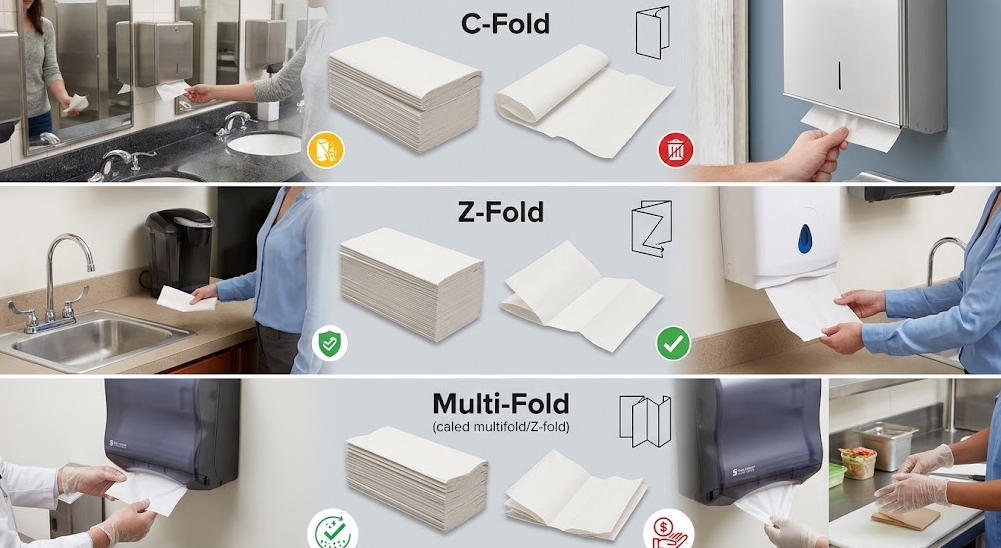
Hygiene performance is a key concern in many public and service settings. The way a towel is folded can change how people handle it and how much contact happens with towels that have not been used.
C-fold paper towels are a common choice for drying. Still, some users may grab more than one towel, or they may touch sheets nearby. That is why they fit better in areas with average hygiene rules.
Z-fold paper towels can support cleaner use. The interlocking fold helps the next towel line up when one is taken. This lowers contact with unused towels and supports a more hygienic restroom setting.
Multi-fold paper towels provide similar hygiene benefits while offering greater dispensing efficiency. Their compact folding structure helps maintain controlled usage and makes them especially suitable for healthcare facilities, food service areas, and other environments where hygiene is a priority.
3. Comparing Waste Reduction and Cost Efficiency
Paper towel waste directly affects operating costs. Choosing a towel style with better portion control can help reduce unnecessary consumption.
| Fold Type | Waste Control Performance | Main Reason |
| C-fold | Moderate | Users may pull multiple towels at once |
| Z-fold | High | Interfold design encourages one-sheet dispensing |
| Multi-fold | Very High | Compact structure improves portion control |
C-fold towels may have a lower purchase price, but excessive usage can increase long-term expenses. Z-fold and multi-fold towels often provide better cost efficiency through reduced waste.
4. Check Dispenser Compatibility
The dispenser system matters when you compare paper towel styles. The folded hand paper towel has to work with the unit so it feeds well. If the match is wrong, you can see issues like slow output or stuck product.
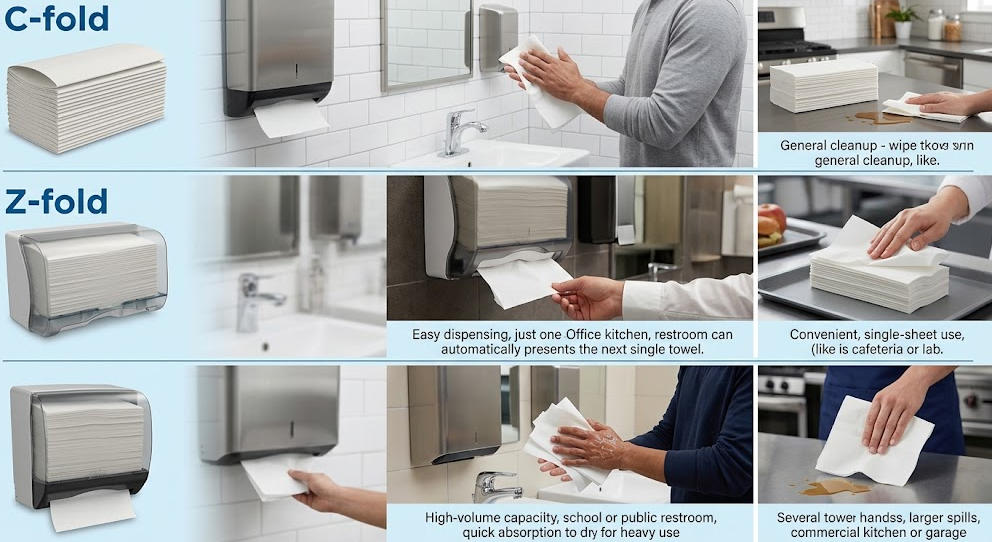
C-fold paper towels usually work with many older or basic dispensers. Z-fold and multi-fold paper towels often need interfold dispensers made for their linked folds.
Before switching towel types, a business should look at what dispenser equipment it already has. It should also consider the space for installation and what upkeep will be needed later.
5. Storage Capacity and Maintenance Needs
How much the system can hold affects how often staff refill it. In busy sites, that can change labor time. If the towel design holds more, cleaning and maintenance teams do less frequent work.
C-fold towels tend to take more storage space since they sit flat in stacks. In high-traffic areas, refill trips may happen more often.
Z-fold towels usually store well because of the way they fold. Multi-fold towels typically give the most capacity. Their smaller folded form can let more towels fit in one dispenser. That helps when you want fewer refills.
6. Analyze the Application Environment
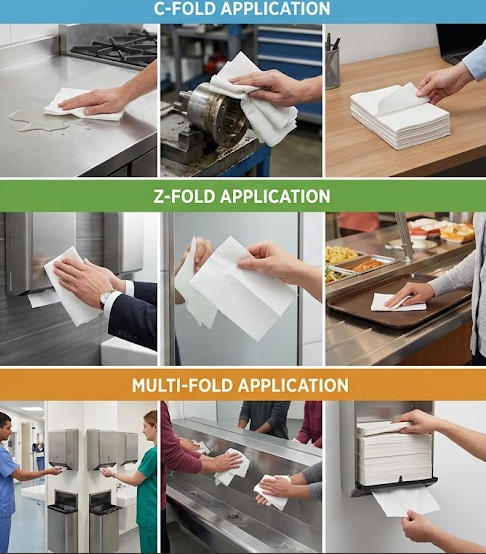
The operating environment plays a major role in determining the most suitable paper towel type. Different facilities have different expectations regarding hygiene, convenience, cost, and appearance.
| Facility Type | Recommended Paper Towel Type | Main Reason |
| Small offices | C-fold or Z-fold | Affordable and easy to manage |
| Restaurants | Z-fold or Multi-fold | Better hygiene and reduced waste |
| Hospitals | Multi-fold | High capacity and controlled dispensing |
| Schools | Z-fold or Multi-fold | Suitable for frequent use |
| Hotels | Multi-fold | Professional appearance and efficiency |
| Manufacturing facilities | C-fold or Multi-fold | Durable and practical for heavy usage |
7. Balance Initial Investment and Long-Term Value
When selecting paper towels, businesses should consider both immediate expenses and long-term operational value. A product with a lower upfront price may not always provide the best financial outcome if it results in higher waste or frequent refilling.
| Cost Factor | C-fold | Z-fold | Multi-fold |
| Initial Product Cost | Low | Medium | Medium to High |
| Waste Reduction | Moderate | High | High |
| Maintenance Savings | Limited | Good | Excellent |
| Long-Term Value | Suitable for low usage | Balanced choice | Best for high-volume facilities |
C-fold paper towels are often the most economical choice at the purchasing stage, while Z-fold paper towels provide a balance between cost and performance. Multi-fold paper towels may require a higher initial investment but can deliver better long-term value through improved efficiency, reduced waste, and lower maintenance requirements.
Summary
- C-fold paper towels are ideal for cost-conscious facilities with basic needs.
- Z-fold paper towels offer improved dispensing control and hygiene performance.
- Multi-fold paper towels are the best choice for high-traffic environments that require maximum capacity, reduced waste, and improved maintenance efficiency.
Final Thoughts
C-fold, Z-fold, and multi-fold paper towels each bring different strengths depending on facility requirements. If a business wants a balance of hygiene, cost savings and user convenience, it should choose the right folding style based on traffic levels, dispenser compatibility, and operational needs.