
Why Does Toilet Paper Tear Easily? Common Causes and Solutions
Toilet paper is a basic hygiene item for homes and public spaces. But its performance can vary significantly depending on its material, manufacturing process, thickness, and storage conditions. One common problem consumers encounter is toilet paper tearing too easily during use. Whether it breaks when being pulled from the roll, falls apart when wet, or tears into small pieces during wiping, poor tear resistance can affect user comfort and product quality.
It helps to know why toilet paper tears so easily. For consumers, it can help pick rolls that hold up better. Manufacturers can spot the real causes and then fix them in the line. That can lead to steadier output and happier customers.
This article looks at common causes of why toilet paper tears easily and provides practical solutions to improve its strength and performance.
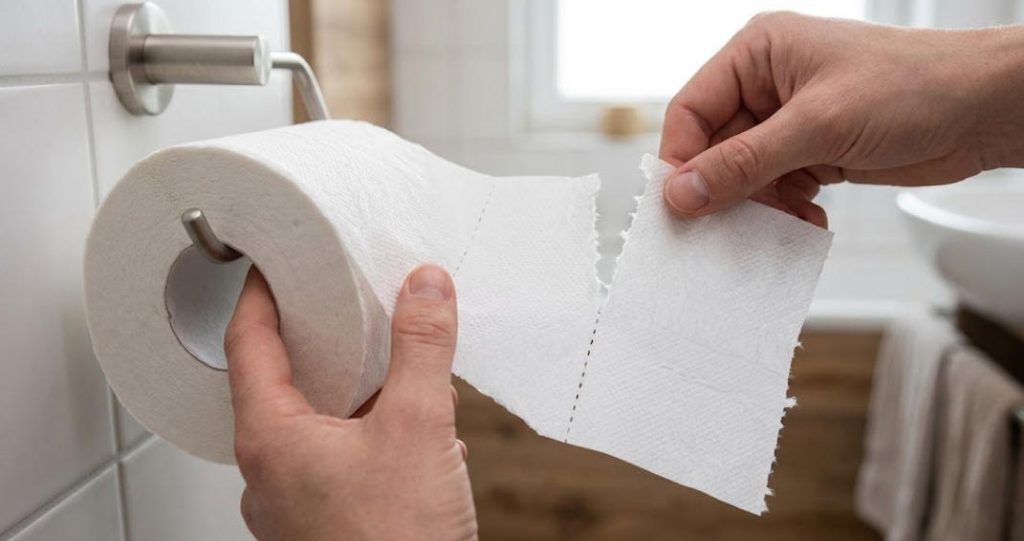
Common Reasons and Solutions for Toilet Paper Tearing
1. Low-Quality Raw Materials
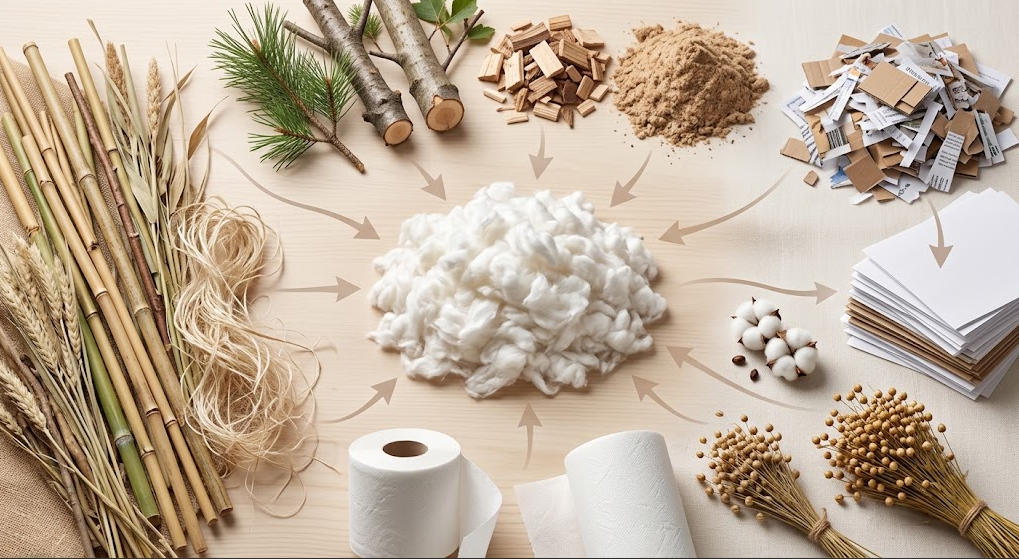
Raw material choice for toilet paper matters a lot for strength. Toilet paper is often made from virgin wood pulp, recycled pulp, or a mix of both.
Virgin wood pulp tends to give steady fiber traits. With good processing, it can build strong sheets. Recycled pulp may have shorter fibers. That happens because recycling can damage fibers each time it is repeated.
If the mill uses weak fibers or pulp that bonds poorly, the roll can end up with low tensile strength. It may tear more easily too.
Solutions
Tissue paper manufacturers should pick better pulp. They should also check fiber length, purity, and how well fibers bond before starting a run. Mixing pulp grades can help keep a workable balance. It can support softness, strength, and cost.
2. Insufficient Paper Thickness
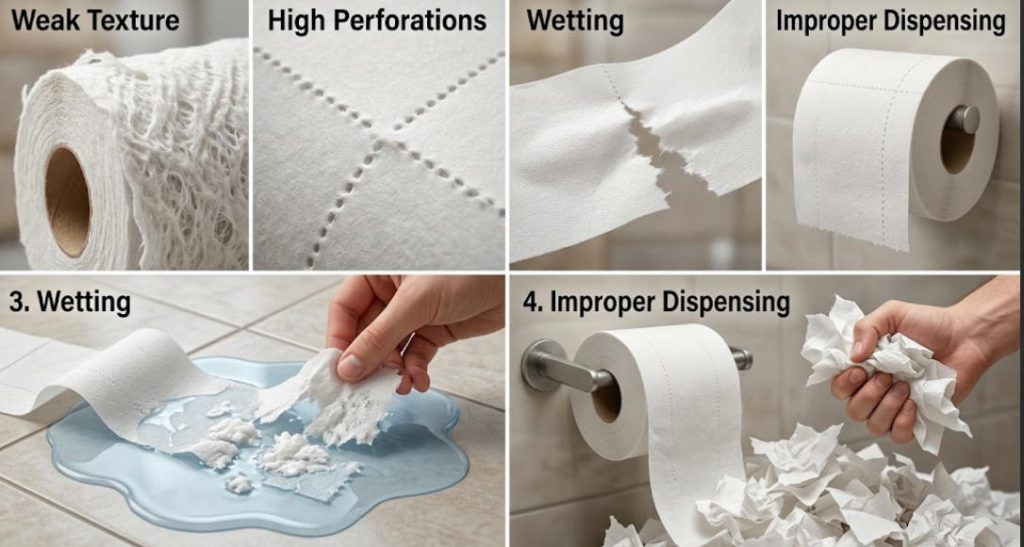
Thickness has a direct link to how tough the paper feels. If the product has fewer layers or low basis weight, it may tear during pulling or when pressure is applied.
Single-ply toilet paper often has less total material than multi-ply paper. That can make it weaker in practice. But thickness is not the only factor. Fiber quality, how the paper is formed, and sheet layout also matter.
If the sheet is too thin, it can stretch, split, or snap during normal use.
Solutions
Producers can raise the basis weight. They can also add more plies to build strength. They should tune the sheet structure so the paper stays comfortable. At the same time, it should not get thicker than needed or cost more than it must.
3. Poor Fiber Bonding During Manufacturing
If the fibers do not bond well, the sheet can have weak inner links. Then toilet paper tears faster when you pull it out, fold it, or stretch it.
This weak bonding can happen from bad refining settings, not enough fiber development, or the wrong chemical ingredients.
Solutions
Producers should fine-tune pulp refining, fiber prep, and papermaking steps. Better refining helps fibers bend and connect more easily. Still, too much refining should be avoided. It can hurt drainage, make the paper feel less soft, and slow down output.
4. Excessive Moisture or Improper Storage Conditions
Moisture also plays a big role in how strong toilet paper is. The product is meant to take in water. But if it sits in damp air for too long, the structure can drop in quality and the strength can fall.
In bathrooms or storage areas with high humidity, rolls pull in water from the air. Over time, the sheets may feel softer, lose shape, and tear more easily.
Water exposure can make the issue worse. It disrupts hydrogen bonding between cellulose fibers, even in regular toilet paper.
Solutions
Store toilet paper in a dry place with good airflow. Use packaging that blocks moisture during shipment and storage.
Avoid keeping rolls by showers, sinks, or any spot that gets wet often.
5. Improper Embossing and Perforation Design
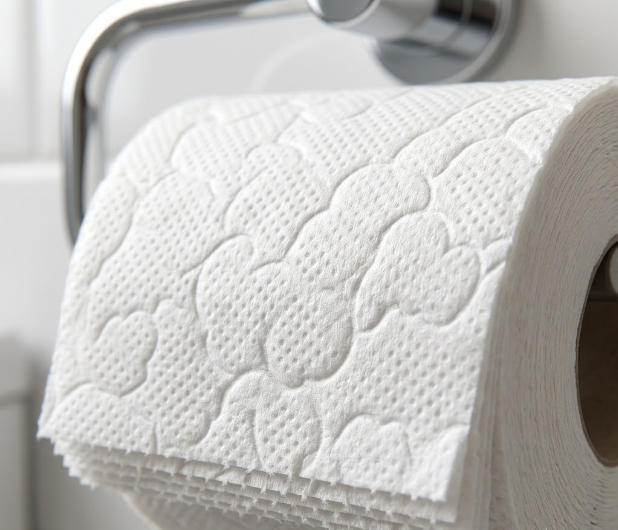
Embossing and perforation are common in modern toilet paper. Embossing adds texture and can improve look, softness, and structure, especially in multi-ply sheets. Perforations let users split off one sheet at a time.
Still, if the embossing or perforation work is done poorly, the paper strength can drop.
If the perforation cuts are too deep or packed too close, the roll may split when it should not. Likewise, pressing too hard during embossing can harm fibers and form weak spots.
Solutions
Producers should watch embossing pressure, how deep the pattern goes, and the spacing of perforations. Perforation lines should help normal sheet separation, without causing tearing during everyday handling.
6. Incorrect Pulp Refining and Production Parameters
Manufacturing toilet paper includes several stages. They include pulp prep, refining, forming, pressing, drying, and winding.
Wrong settings at any stage can lead to uneven paper and weaker strength.
For instance, too little refining can cause weak fiber bonding. On the other hand, too much refining can make the sheet too tight and dense, which lowers bulk and softness. Drying that is not consistent can also shift the paper structure and change how it performs..
Solutions
Manufacturers ought to set consistent production targets and track key variables from start to finish.
They also should carry out routine checks on machines. Ongoing process reviews and quality tests can spot defects early. This can prevent issues from spreading into big toilet paper batches.
7. Excessive Chemical Additives
Chemical additives are used in toilet paper to boost softness, wet strength, brightness, and other traits.
Still, the wrong choice of additives, or using too much, can harm fiber bonding. It can also hurt the final paper performance.
For instance, too many softening agents can lower the bond between cellulose fibers. That can make the sheet feel weaker. It may also tear more easily.
Solutions
Manufacturers should pick additives that match the goal of the product. They must control the chemical dosage closely. After production, the finished rolls should be tested for strength and softness. This helps keep the balance right.
8. Poor Winding Tension During Production
Winding matters in toilet paper making. At this point, big parent rolls get turned into smaller customer rolls.
If the winding tension is too high, the paper can get overly compressed. It may also face extra mechanical stress. If the tension changes during the run, the roll can end up uneven. Sheets may also get damaged.
These failures can weaken unwinding. They can also raise the chance of tearing.
Solutions
Manufacturers should set winding tension based on sheet thickness and basis weight. They should also consider roll size specs. Using automatic tension control can keep winding steadier. This can cut down on many production defects.
9. Low Wet Strength
Some toilet paper is made to break down fast in water. That supports flushing.
But this trait can also make the paper fragile when it meets moisture. Toilet paper with low wet strength can split apart during use. This is especially true when it contacts water or other liquids.
Dry strength and wet strength should not be treated the same. A roll can seem strong when dry. Yet it may lose structure once it gets wet.
Solutions
Manufacturers should choose pulp blends that fit the intended need. If wet-strength additives are used, the dose should be managed carefully. Product design should aim for two outcomes. The paper should resist tearing in wet use. It should also break down when flushed.
10. Improper Product Handling and Transportation
Even toilet paper that was made well can still get harmed after production. Bad handling, poor packaging, or rough shipping can cause issues.
Too much pressure, careless handling, damaged packages, and moisture exposure can spoil finished rolls. Rolls that are bent or crushed may also unwind unevenly. That can lead to unexpected tearing.
Solutions
Manufacturers need to use safe packing and proper shipping methods. In storage, operators should not pile items higher than the stated limits. They also must keep the space within the right temperature and humidity range.
Common Causes and Solutions for Toilet Paper Tearing Easily
The following chart summarizes the main factors that can affect toilet paper tear resistance and the corresponding solutions.
| Common Causes | Effects on Toilet Paper | Recommended Solutions |
| Low-quality raw materials | Weak fiber structure and poor tensile strength | Select high-quality virgin or recycled pulp |
| Insufficient thickness | Sheets tear easily under pressure | Optimize basis weight and ply structure |
| Poor fiber bonding | Weak internal paper structure | Improve refining and fiber bonding |
| Excessive moisture | Reduced strength and sheet stability | Improve storage and packaging |
| Improper embossing | Damaged fibers and weak areas | Optimize embossing pressure and patterns |
| Incorrect production parameters | Inconsistent paper strength | Standardize manufacturing conditions |
| Excessive chemical additives | Reduced fiber bonding | Control additive selection and dosage |
| Improper winding tension | Uneven rolls and damaged sheets | Optimize winding tension |
| Low wet strength | Paper breaks easily when wet | Balance wet strength and dispersibility |
| Poor handling and transportation | Damaged rolls and packaging | Improve packaging and logistics |
How to Choose Toilet Paper That Does Not Tear Easily
For consumers, choosing toilet paper with suitable strength and quality can significantly improve the overall experience. Several factors should be considered when comparing different products.
Key Factors to Consider When Choosing Toilet Paper That Does Not Tear Easily
| Key Factors | What to Look For | Why It iimportant | Recommended Choice |
| Number of Plies | Single-ply, two-ply, or three-ply construction | More layers can provide better thickness and distribute pulling force | Choose two-ply or three-ply toilet paper for everyday household use |
| Raw Material Quality | Virgin wood pulp or properly processed recycled pulp | High-quality fibers help create a stronger and more stable paper structure | Select products made from high-quality pulp |
| Paper Thickness | Appropriate basis weight and sheet thickness | Thicker paper generally provides better handling strength | Choose toilet paper with consistent thickness and suitable density |
| Fiber Bonding | Strong and uniform cellulose fiber connections | Good fiber bonding helps prevent sheets from breaking during use | Look for products with reliable manufacturing quality |
| Dry Strength | Resistance to tearing when dry | Determines whether paper can withstand pulling, folding, and normal handling | Choose products with good tensile and tear resistance |
| Wet Strength | Ability to maintain integrity when exposed to moisture | Helps prevent excessive breakdown during use | Select products with suitable wet strength for the intended application |
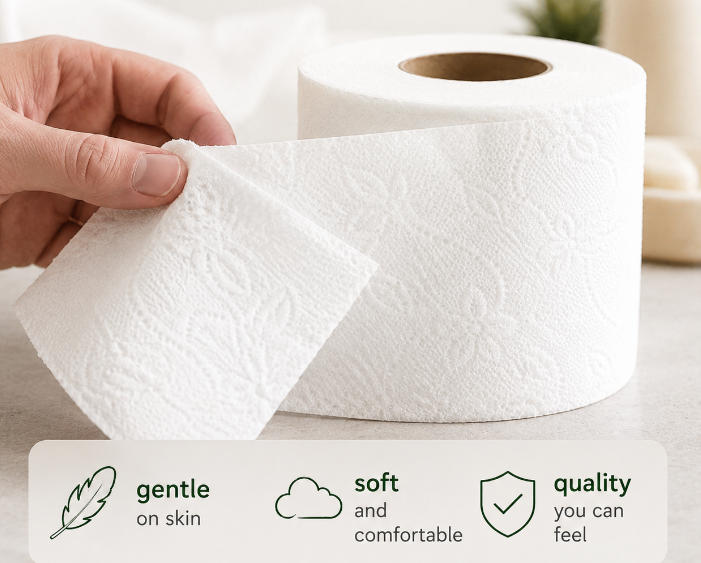
| Softness | Smooth texture and comfortable surface | Ensures a comfortable experience without sacrificing durability | Look for a balance between softness and strength |
| Perforation Quality | Evenly spaced and properly designed perforation lines | Prevents sheets from tearing unexpectedly when pulled from the roll | Choose products with clean and consistent perforations |
| Embossing Design | Uniform embossing patterns without excessive pressure | Can improve sheet structure and multi-ply bonding | Select products with well-controlled embossing |
| Absorbency | Ability to absorb moisture without immediately falling apart | Supports practical performance during everyday use | Look for balanced absorbency and structural integrity |
| Manufacturing Quality | Consistent production standards and quality inspections | Reduces defects and variations between rolls | Choose products from reliable manufacturers |
| Packaging and Storage | Moisture-resistant packaging and intact rolls | Protects paper from humidity, contamination, and physical damage | Purchase properly sealed products stored in dry conditions |
| Intended Application | Household bathrooms, commercial restrooms, hotels, or public facilities | Different environments require different strength and softness levels | Match paper specifications to actual usage requirements |
When choosing toilet paper that does not tear easily, consumers should pay attention to raw material quality, ply construction, thickness, fiber bonding, and dry strength. The best toilet paper is not necessarily the thickest or strongest product. Instead, it should provide a practical balance of durability, softness, absorbency, and appropriate water dispersibility.
How Manufacturers Can Improve Toilet Paper Tear Resistance
Toilet paper manufacturers who want higher tear resistance should use a full plan. This plan should include choices of raw pulp, the way the paper is made, how machines are handled, and how checks are run.
First, set tough rules for incoming materials. Inspect the pulp before it reaches the line. Check fiber length, cleanliness, and bonding behavior.
Second, manage the run settings so the sheet stays steady from roll to roll. Refining settings matter. Forming performance matters too. Drying heat needs tight control. Embossing pressure and winding tension also need careful adjustment.
Third, test often and track the results. Key items to watch include tensile strength and tear resistance. Basis weight, sheet thickness, moisture, softness, and water absorption are also important.
Last, keep equipment working well and adjust the line when needed. This helps cut down defects and makes output more uniform.
Summary
Toilet paper can tear too easily for several causes. Common ones are weak raw materials, low thickness, poor fiber bonding, too much moisture, wrong embossing, and off-target manufacturing settings.
Although some toilet paper products are intentionally designed to break down quickly in water, they should still provide sufficient strength during normal use.
For consumers, choosing rolls with suitable thickness, stable fiber quality, and consistent perforations can limit tearing that happens by accident. For manufacturers, better pulp quality, tighter control of production steps, and firm quality checks are needed to reach stronger, softer, and more durable toilet paper.
When these issues are handled, toilet paper manufacturers can improve product performance. They can also lower repeat complaints and offer a more dependable and comfortable hygiene experience.