
Private Label Tissue Paper Cost: What Determines the Final Quotation?
The cost of private label tissue paper depends on much more than the price of paper. Product specifications, raw materials, packaging design, order quantity, customization requirements, and international shipping all influence the final quotation. For importers, wholesalers, retailers, and private-label brands, understanding these cost drivers is essential for budgeting accurately and comparing manufacturers on an equal basis.
A low factory price does not always represent the best purchasing decision. One quotation may include customized packaging and export cartons, while another may exclude printing setup, sampling, or delivery expenses. Without a consistent specification, the comparison can be misleading.
This guide explains the main factors affecting private label tissue paper cost, how to evaluate OEM tissue paper quotations, and how to calculate the total purchasing cost before placing an order.
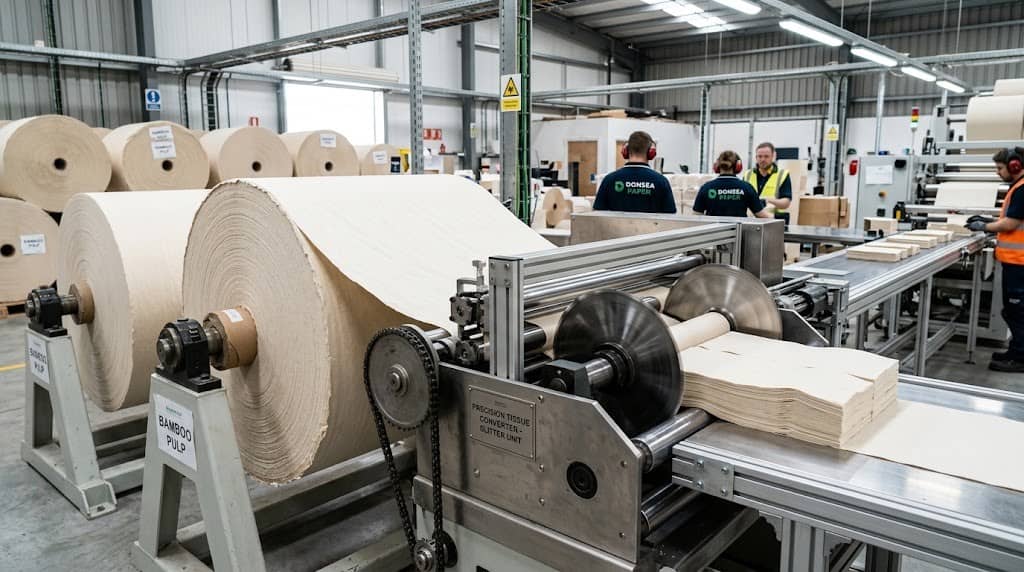
Product Specifications and Raw Material Costs
Product specifications determine how much material is required and what manufacturing processes are needed. Even within the same product category, small differences in construction can affect the quotation.
GSM, Ply Count, and Sheet Dimensions
GSM measures paper basis weight in grams per square meter. When sheet dimensions and other factors remain constant, higher GSM generally means greater paper consumption per sheet.
Ply count also matters. A three-ply tissue typically uses more paper layers than a two-ply product with comparable dimensions, although actual material consumption depends on the construction of each layer.
Before requesting a private label tissue paper quotation, confirm the following specifications:
- GSM: The required basis weight and any agreed tolerance.
- Ply count: The number of paper layers.
- Sheet dimensions: The length and width of each sheet.
- Sheet count: The number of sheets per pack or roll.
- Roll specifications: Roll length, diameter, core diameter, and perforation where applicable.
- Performance requirements: Softness, absorbency, tensile strength, or wet strength, depending on the product.
For example, two facial tissue packs may contain the same number of sheets but have different costs because their sheet dimensions, GSM, or ply configurations differ.
The most economical specification is not necessarily the lightest or thinnest option. It is the specification that meets the target market’s performance expectations without unnecessary material consumption. For additional guidance, see Donsea Paper’s Bamboo Tissue Paper GSM Guide.
Fiber Type and Material Requirements
Bamboo pulp, virgin wood pulp, recycled fiber, and blended materials may differ in price, availability, and finished-product performance. The actual cost depends on material grade, sourcing conditions, fiber composition, and the manufacturer’s production arrangements. A product described as bamboo tissue should not automatically be assumed to have the same composition or specifications as another bamboo tissue product.
If your brand requires a particular fiber source or documented sourcing claim, specify it before requesting a quotation. Any proposed material substitution should be approved in writing.
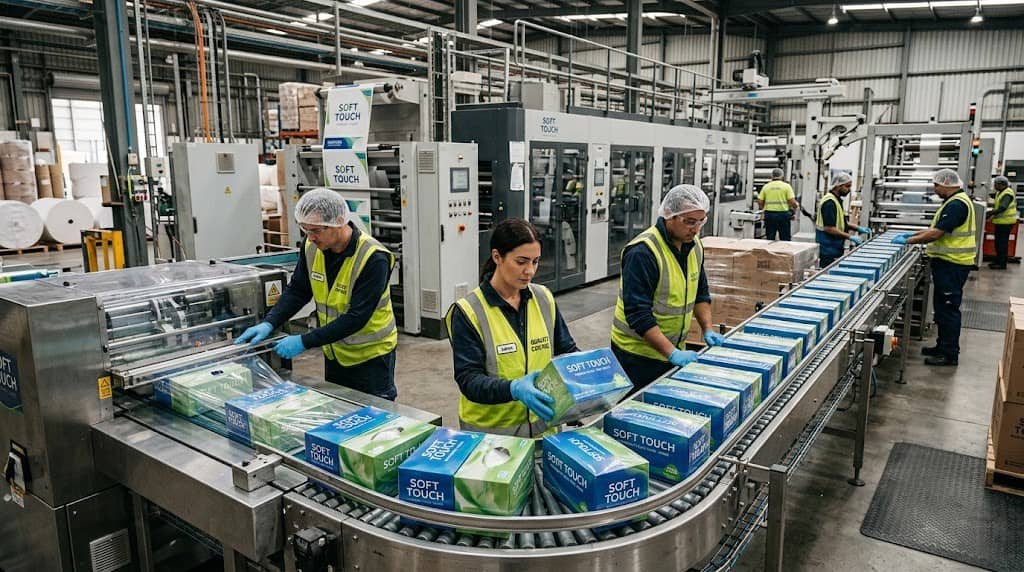
Packaging, Printing, and Customization Costs
For many private-label projects, tissue paper packaging cost is a significant variable because packaging affects both material consumption and production preparation. A buyer may choose an existing tissue product with custom branding or request a more extensively customized product with specific dimensions, embossing, or packaging features. These two projects may require different levels of production preparation.
| Cost factor | What buyers should confirm | Why it matters |
| Packaging format | Box, soft pack, individual wrap, multipack, or roll packaging | Affects material use and packing operations |
| Printing | Printing method, number of colors, and artwork requirements | May involve setup and printing expenses |
| Packaging material | Film, paper-based wrap, carton grade, or other specified materials | Affects material cost and product protection |
| Labels and artwork | Logo, barcode, product information, and language requirements | May require design preparation and label production |
| Outer cartons | Carton dimensions, strength, printing, and units per carton | Affects packaging and shipping efficiency |
| Special customization | Embossing, unusual dimensions, or other approved features | May require additional setup or production trials |
Buyers should ask whether artwork preparation, printing plates, cylinders, sampling, and other setup charges are included in the quotation or billed separately. It is also important to clarify whether these charges apply only to the first order or recur when packaging designs or specifications change.
For details about available customization arrangements, visit Donsea Paper’s OEM vs. Custom Tissue Paper guide.
How MOQ Affects Private Label Tissue Paper Pricing
The minimum order quantity (MOQ) can significantly influence the unit price of a private-label product. Manufacturers may need to arrange raw materials, prepare packaging, configure equipment, and organize printing before production begins. When these costs are spread across a larger order, the cost per pack may decrease.
However, a larger order does not guarantee a lower price in every situation. Material prices, production capacity, customization requirements, and shipping arrangements also affect the result.
Consider two hypothetical purchasing scenarios:
- Scenario A: A brand orders a small quantity across several SKUs, each with different packaging artwork.
- Scenario B: The same brand consolidates suitable products into fewer packaging versions and places a larger order for each version.
Scenario B may reduce duplicated setup work and simplify production planning. Whether it achieves a lower unit price depends on the manufacturer’s pricing structure and the actual specifications.
Before placing an order, ask the supplier to confirm:
- MOQ per product and SKU.
- MOQ per packaging design or printed version.
- Whether different products can share compatible packaging arrangements.
- Price breaks at different order quantities.
- Sample and trial-order requirements.
- Any differences between initial and repeat-order charges.
For brands entering a new market, starting with a manageable SKU range may help control inventory risk. The objective is to balance unit price with demand forecasts, storage costs, and cash flow rather than ordering more products simply to reach a lower quoted price.
OEM Development, Sampling, and Production Preparation
Not every private-label tissue paper project requires the same degree of customization. Some buyers need an existing product with their own logo and packaging. Others require changes to dimensions, ply, embossing, or other product characteristics.
The quotation should distinguish between standard production options and additional development work.
- Existing product with private labeling: The manufacturer uses an established product specification and applies the approved branding or packaging. This may require less development than creating a new product.
- Customized product: The buyer requests changes to selected specifications or production features. Additional sampling, setup, or validation may be necessary.
- New product development: More extensive changes may require additional coordination, trials, and approval before mass production.
These categories are not universal pricing standards, so the buyer should confirm how the manufacturer classifies each requirement.
For an accurate OEM tissue paper quotation, clarify whether the following are included:
- Product samples and shipping.
- Artwork preparation and proof approval.
- Printing or production setup.
- Customization trials.
- Pre-production sample approval.
- Additional testing or inspection.
Also confirm whether a previously approved specification can be reused for repeat orders without repeating the same development work. The more clearly these costs are documented, the easier it becomes to forecast the initial investment and future replenishment expenses.
Shipping and Landed Cost: Beyond the Factory Price
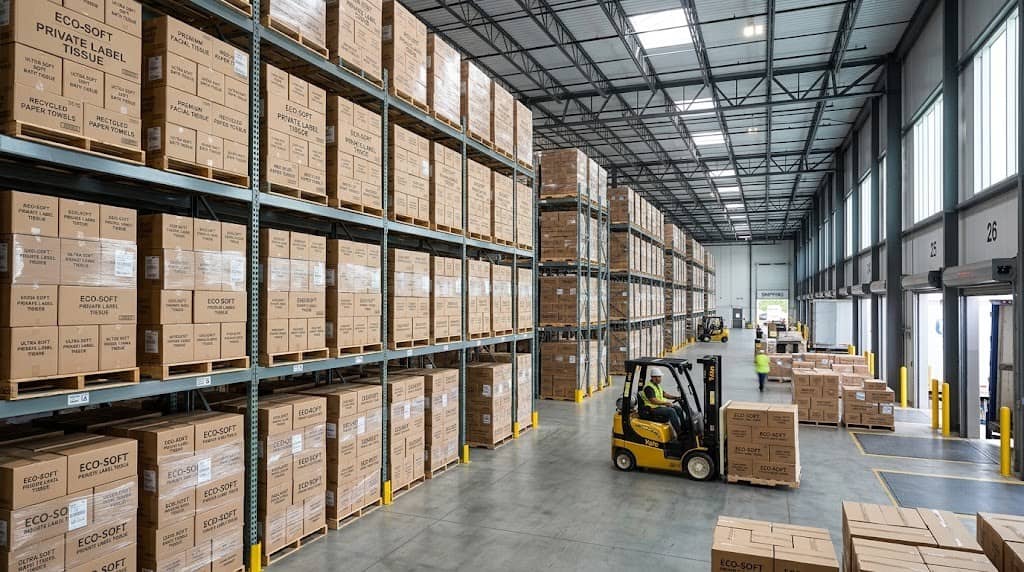
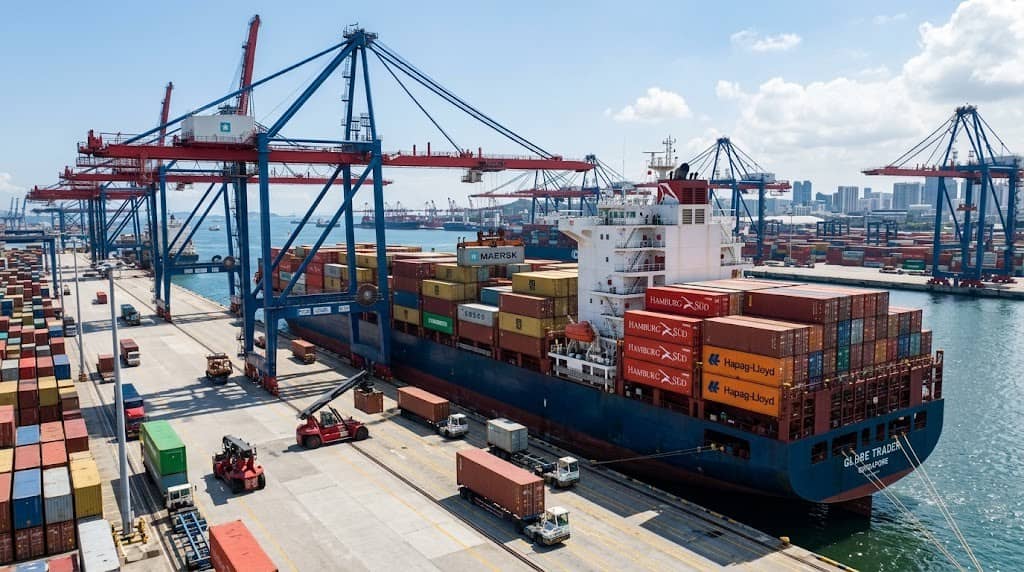
For international buyers, the factory quotation is only one part of the total procurement budget. Tissue paper can occupy substantial shipping volume relative to its weight. Carton dimensions, packing density, pallet arrangements, and container utilization can therefore affect the final cost per unit.
Important factors include:
- Finished carton dimensions and gross weight.
- Units per carton and cartons per pallet.
- Container loading configuration, where applicable.
- Inland transportation and export handling.
- International freight and insurance, where applicable.
- Customs clearance, import duties, and taxes.
- Destination handling and local delivery.
- The agreed Incoterm and named location.
A simplified landed cost calculation is:
Total landed cost = Product cost + Excluded packaging and setup charges + Freight and insurance + Import and destination costs
Only add charges that are not already included in the supplier’s quoted price.
For meaningful comparisons, use the same order quantity, destination, packaging specifications, currency, and delivery terms across all quotations. Buyers should also compare costs using a consistent unit, such as cost per pack, roll, carton, or sheet. A lower price per carton may not represent better value if the carton contains fewer packs or the products have different specifications.
How to Compare Private Label Tissue Paper Quotations
The most reliable way to compare suppliers is to use one approved product specification and a standardized quotation checklist. A quotation that does not clearly define its product or commercial terms should be clarified before it is used for purchasing decisions.
| Quotation item | What to check |
| Product specifications | Material, GSM, ply, dimensions, sheet count, and roll specifications |
| Packaging | Material, artwork, printing, labels, and outer cartons |
| MOQ | Minimum quantity per SKU and packaging version |
| Price basis | Currency, unit of measure, and quantity tier |
| Setup charges | Sampling, artwork, printing setup, and other additional fees |
| Quality requirements | Approved sample, inspection method, and acceptance criteria |
| Lead time | Sample approval, production, inspection, and shipment preparation |
| Delivery terms | Incoterm, named location, freight inclusion, and destination charges |
| Documentation | Applicable product specifications, certificates, and export documents |
| Repeat orders | Conditions for maintaining specifications and pricing |
A Practical Quotation Comparison Example
Suppose two suppliers quote the same type of private-label facial tissue. Supplier A offers a lower factory price, but its quotation excludes printed packaging and certain setup charges. Supplier B includes those items but quotes a higher unit price.
Comparing the two factory prices alone would not establish which offer is more economical. Instead, calculate the total cost for the same order quantity, include all applicable one-time charges, and divide by the number of saleable units.
Effective unit cost = Total comparable order cost ÷ Number of saleable units
This calculation should use the same product specifications and commercial basis for both suppliers. If freight, duties, or other costs are excluded, identify them separately rather than treating the result as a complete landed cost.
A structured comparison also helps buyers identify missing information before signing a purchase order. For a broader supplier evaluation framework, see Donsea Paper’s Tissue Paper Supplier Checklist for Importers.
How to Request an Accurate OEM Tissue Paper Quotation
A complete inquiry helps the manufacturer understand the project and reduces repeated clarification during quotation and production.
Before contacting a supplier, prepare the following information:
1. Product type: Identify the required product, such as bamboo toilet paper, facial tissue, kitchen paper towels, hand towels, or another tissue category.
2. Technical specifications: Provide the material, GSM, ply, sheet dimensions, sheet count, roll dimensions, and required performance characteristics. If some specifications are undecided, ask the supplier to propose suitable alternatives.
3. Packaging and branding: Specify the packaging format, logo, artwork status, printing requirements, labels, and outer carton preferences.
4. Order quantity: State the estimated quantity per SKU, whether multiple packaging versions are required, and whether repeat orders are expected.
5. Target market: Identify the destination market and any applicable labeling, certification, or documentation requirements.
6. Delivery requirements: Provide the destination port or location, preferred commercial terms, and target delivery schedule.
7. Quality and approval requirements: Specify sample approval, inspection requirements, testing documentation, and any agreed product acceptance criteria.
If the final specifications are not yet confirmed, request quotations for two or three clearly defined options. This makes the price differences easier to understand than requesting a single price for an unspecified product.
Conclusion: Compare Total Cost, Not Just the Unit Price
The final private label tissue paper cost depends on product specifications, packaging, MOQ, customization, and shipping arrangements. A reliable quotation should make these factors transparent and identify any additional charges that may affect the purchasing budget.
For importers, wholesalers, retailers, and private-label brands, the best approach is to prepare a clear specification sheet, compare quotations on the same commercial basis, and approve the product and packaging requirements before mass production.
Donsea Paper supplies tissue paper products and provides OEM/ODM customization options for business customers. Planning a private-label tissue paper project? Contact Donsea Paper to discuss your product specifications, packaging requirements, order quantity, and quotation needs.