
How Embossing Improves Kitchen Paper Performance
Kitchen paper is a common household item. It helps with daily cleaning. People use it to wipe counters, soak up spills, and deal with oily messes. These days, shoppers want paper towels that soak well, feel soft, stay strong, and work in a fast, easy way. For that reason, manufacturers are exploring production techniques that improve kitchen paper performance. One method that matters here is embossing.
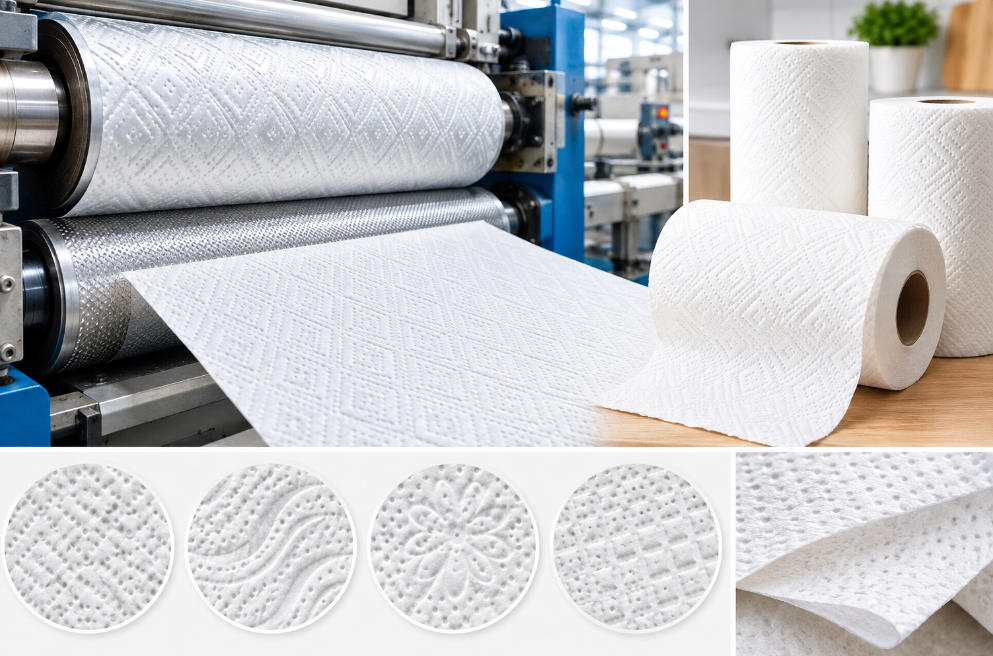
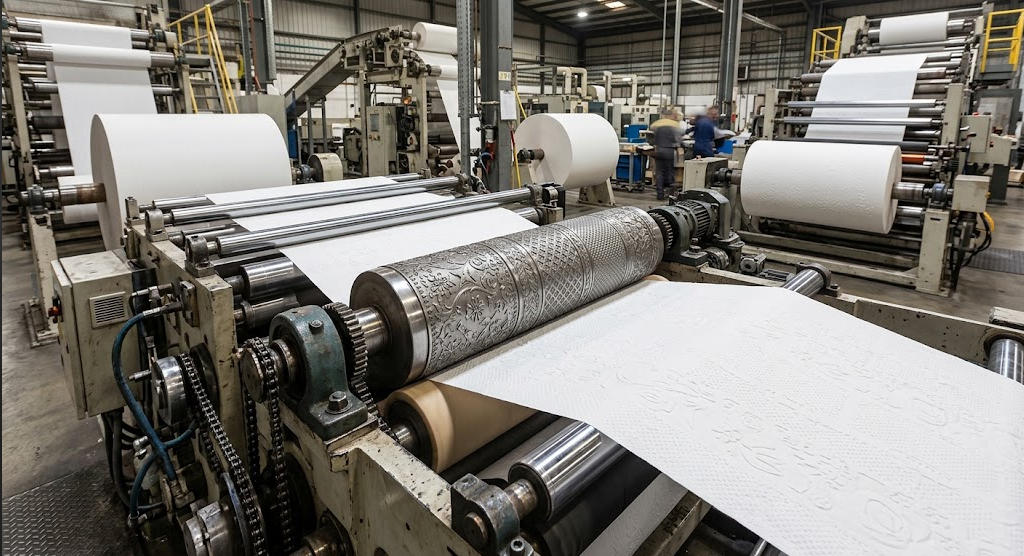
Embossing is a converting process. It adds raised marks and a textured feel to the sheet. Tissue paper manufacturers use rollers with a pattern on them. The rollers press the sheet under pressure. The result is a surface with clear texture. That texture can change how the paper meets liquids. It can also affect how thick the sheet feels and how well it bends. If the design is done right, embossing helps manufacturers produce kitchen paper that combines practical performance with an attractive appearance.
What is Embossing in Kitchen Paper Production
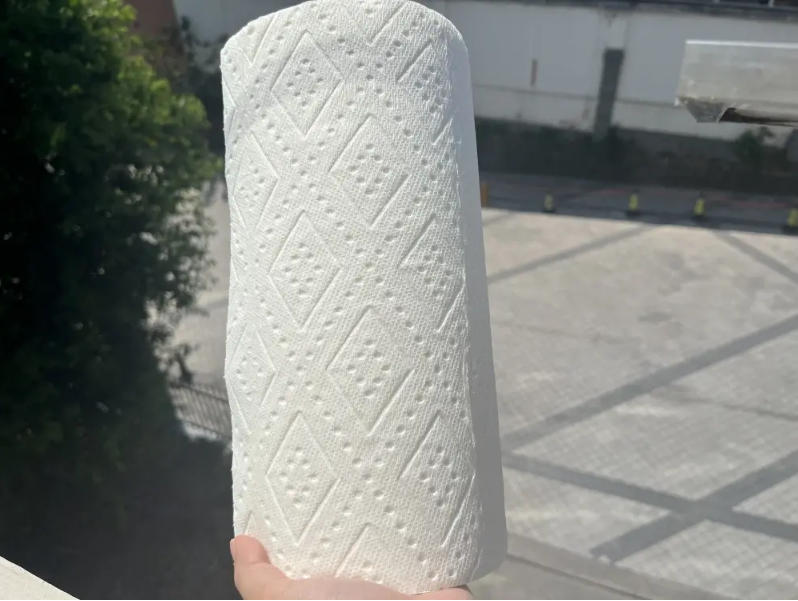
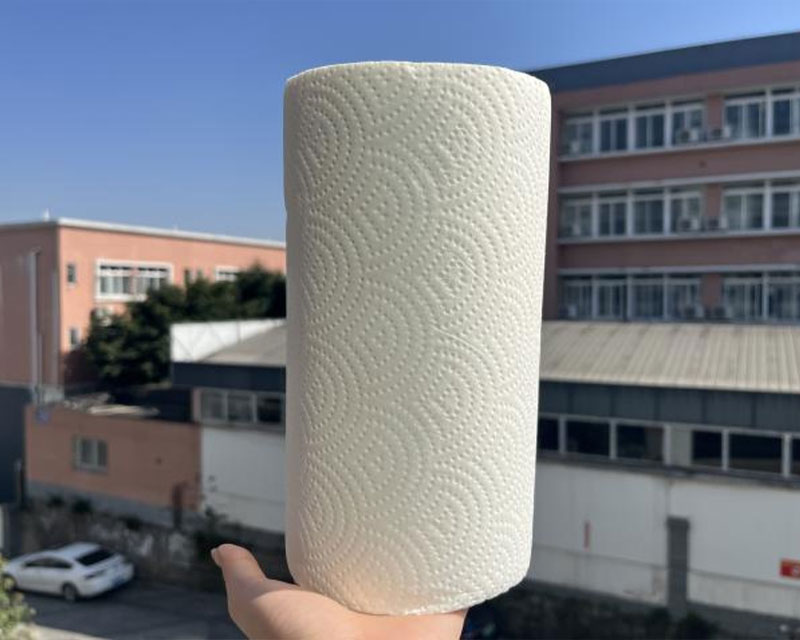
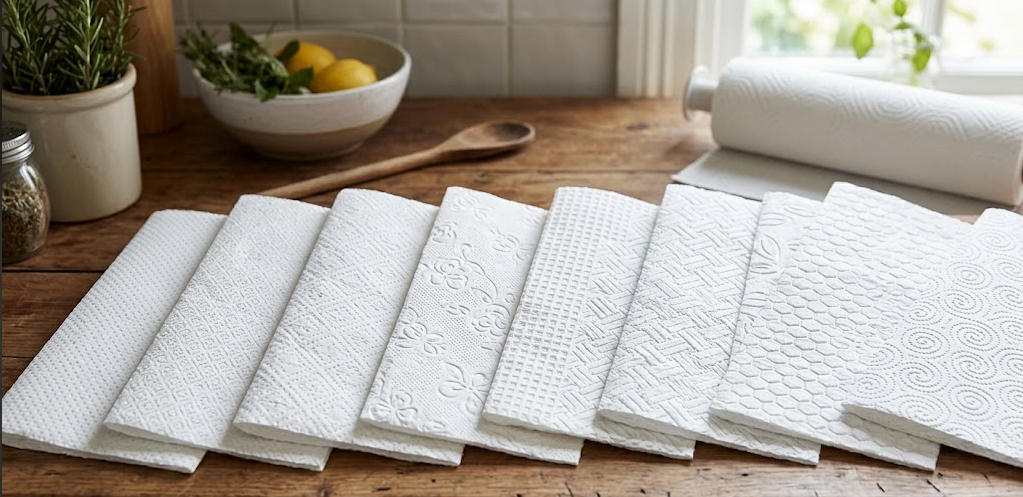
Embossing is a mechanical method. It creates a textured finish on kitchen paper. During the production process, paper is sent through patterned rollers. Those rollers press a set design into the material. Depending on the product goals, different patterns can be used. Common choices include dots, diamonds, waves, grids, and other shapes.
The embossing pattern changes what you can see and feel. It also changes how the paper behaves in use. Small patterns placed close together can make a more even surface. Bigger or deeper patterns can add more texture. They can also make the sheet feel different in terms of flexibility and bulk.
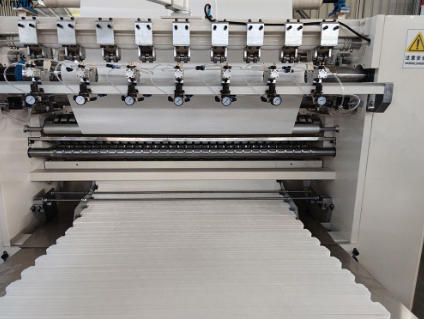
Embossing can also be used along with lamination or ply bonding. This helps link layers of paper together. That is useful for two-ply and three-ply kitchen paper. In those products, the layers must hold steady while being used.
However, embossing is not a magic fix for every trait. The final outcome depends on more than the pattern alone. Fiber type, basis weight, how many plies are used, emboss depth, roller pressure, and the bonding approach all matter. Makers have to pick the right mix to reach the target paper properties.
Key Advantages of Embossing for Improving Kitchen Paper Performance
1. Improving Kitchen Paper Absorbency
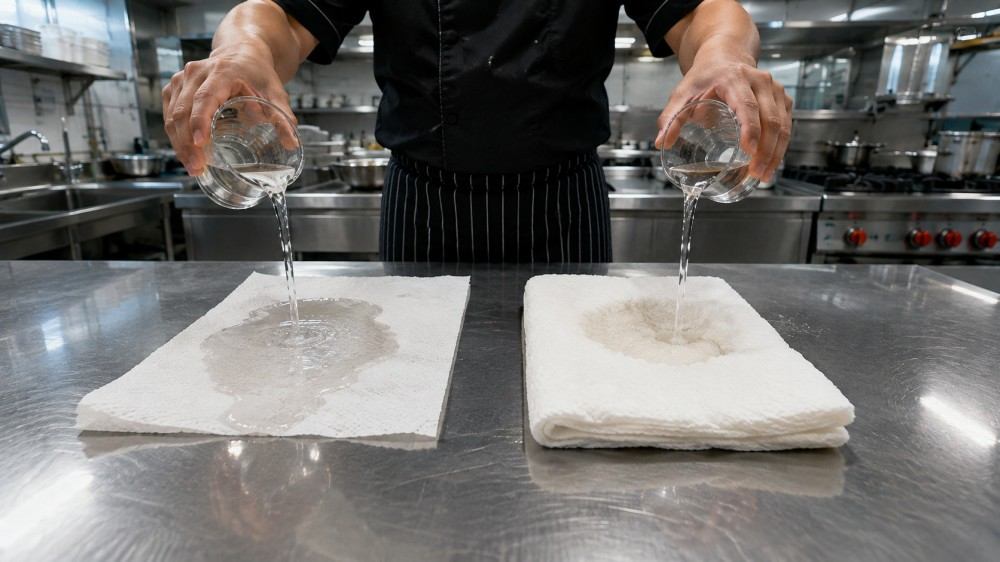
Absorbency is a key measure for kitchen paper. People expect paper towels to take in water fast. They also want help with cooking oil and wet spills.
Embossing can change absorbency. It does this by forming a raised and lowered layout on the surface. That kind of layout can spread liquid across more of the sheet. It can also create extra room to hold liquid. The pattern details and the paper makeup can change how quickly liquid moves through the towel.
For instance, a small dot or diamond layout can add surface texture. That texture can help the sheet deal with splashes, while still letting the paper keep its body. With multi-ply products, embossing can also tie the layers together. At the same time, it can keep the sheet from becoming too thin or too flat.
That said, embossing by itself does not set how absorbent the paper will be. Many other factors matter. These include which fibers are used, how good the pulp is, how the sheet is creped, how dense the sheet becomes, and how the pores are arranged inside the paper. If embossing pressure is too high, fibers can get pressed down. This can shrink pore space and can lower how much liquid the sheet can take in.
To get higher absorbency, manufacturers should tune the embossing design and the applied pressure. They also need to consider the fiber make-up under the surface.
2. Enhancing Softness and Texture
Softness shapes how people judge kitchen paper. Even though it is made for wiping and cleaning, not for personal care, a nice feel still matters. It can help the product seem better and more comfortable to use.
Embossing changes the surface shape. These small height differences make the paper feel less smooth. The raised parts can feel distinct in the hand. The gaps between them can help the sheet keep some of its thickness and bend.
The softness you end up with depends on several production choices. Fiber type plays a role. So does how the sheet forms, the creping steps, embossing depth, and the pressure used during making. If embossing is controlled well, the paper can feel softer. This can happen without harming its main job of cleaning.
Still, deeper embossing does not always equal softer paper. If the pressure is too strong, or if the pattern is too bold, the sheet may feel stiff. It may also feel rough. So kitchen paper towel manufacturers need to balance texture with flexibility. That balance helps match different preferences.
3. Improving Bulk and Sheet Thickness
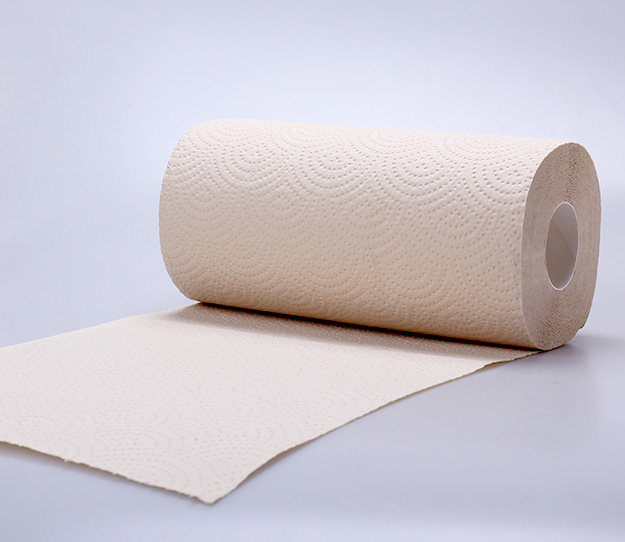
Bulk is another key feature for kitchen paper. It describes the amount of space a set mass of paper takes up. People often link bulk with the look of thickness and with a cushioning feel.
Embossing can raise the apparent thickness. It does this by forming raised zones and a more three-dimensional look. Because of that, the paper can feel fuller and more solid. This does not always require a higher basis weight.
In multi-ply kitchen paper towels, embossing can also help keep layers apart in picked spots. This supports a thicker overall feel. If it is paired with suitable ply-bonding, the result can be a sheet that holds together better. It is also easier to handle during use.
A higher bulk can make the paper seem more absorbent and better. But bulk does not guarantee higher liquid uptake. Builders should look at bulk together with absorbency, tensile strength, softness, and sheet density. This helps judge if the embossing plan truly improves performance.
4. Strengthening Multi-Ply Kitchen Paper
Kitchen paper products often use two or more layers. The goal is to balance absorbency, strength, and feel. When the plies shift or do not stay together, the sheet can split while wiping. It can also get hard to manage once the paper is wet. That is why keeping the layers aligned and firmly linked matters.
Embossing can help keep plies bonded. It does this by pressing the layers into contact at set spots or in a chosen layout. In some paper production lines, manufacturers use a mix of embossing and added adhesive. The idea is to improve how well the layers stay attached.
A good bonding pattern can let the plies act like one sheet. That can help during wiping, folding, and tearing. It can also support the product’s stiffness and lower the risk of separation during normal use.
Even so, bonding results are not driven by the embossed look alone. Adhesive type matters, as does how much adhesive is used. Roller setup, paper moisture, and the machine pressure also play a role. If the bonding pressure is too high, the paper can become overly compressed. That can change softness and may reduce absorbency.
For that reason, manufacturers should set embossing and bonding settings based on how many plies are used and what the kitchen paper will be used for.
5. Improving Cleaning Efficiency
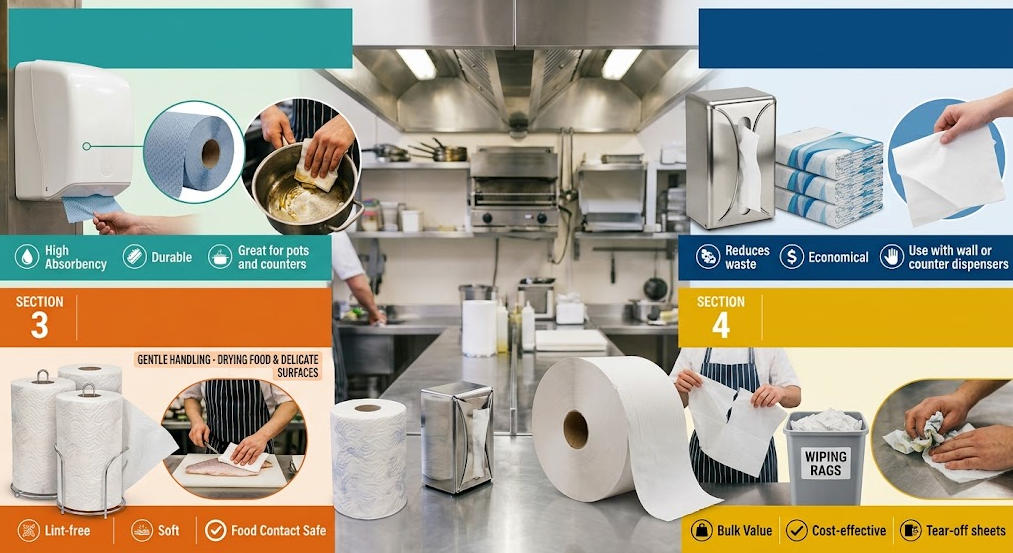
Kitchen paper needs to work on many cleaning tasks. It may be used on countertops. It may clean cooking areas. It may also handle daily spills.
Embossing creates a textured face. This can change how the paper touches a surface. It can also affect how liquids and light residue spread across the sheet. Raised parts can create small touch zones. These zones may help gather moisture and tiny debris while wiping. Recessed parts add texture and can make the sheet feel more flexible.
For oily spills, performance depends on the fiber layout and the pore traits. The oil type also matters. Embossing can shape how the sheet fits to a surface. It may help it hold residue. Still, embossing alone does not ensure better grease removal.
Embossing can also help the paper keep its form during regular cleaning. This is more likely when the paper has suitable tensile strength and sound ply bonding. When that balance is right, the sheet is less prone to flatten too much or become awkward to use.
The best design depends on the job. A pattern for common home wiping may not match a pattern for strong kitchen towels made for larger spills.
6. Enhancing Product Appearance and Brand Value
Embossing does more than support function. It gives makers a way to stand out in crowded markets.
Decorative layouts can make paper towels seem more polished. They can also make products easier to recognize. Diamond, floral, wave, and geometric designs can signal different styles. Some patterns fit basic everyday towels. Others suit higher-end household cleaning products.
Embossing can strengthen brand recall when the same relief pattern shows up across different product ranges. In stores, the way the surface feels and looks thick to shoppers can shape their first judgment about quality.
For brands that sell through retailers and for makers of kitchen paper, custom embossing can set items apart. It can do this even when they do not want to depend only on ink graphics or packaging tweaks. It also adds a clear option for building a product line people recognize.
Still, decoration should not override how the sheet works. A good design aims for a nice look while keeping absorbency, strength, and softness on track. It should also use the material in a sensible way.
You also need to watch the process all the time. If the base paper changes, if moisture drifts, if production speed shifts, or if the rollers wear, the result can change too.
Key Factors to Consider for Optimizing Kitchen Paper Embossing
Manufacturers need to consider several technical factors when developing an effective embossing process.
| Key Factor | Description | Impact on Performance | Optimization Strategy |
| Embossing Pattern | The design applied to the paper surface, such as dots, diamonds, waves, or grids. | Influences texture, bulk, ply bonding, and appearance. | Select patterns according to the desired absorbency, softness, and product application. |
| Embossing Depth | The depth of the raised and recessed areas created during embossing. | Affects apparent thickness, flexibility, and surface texture. | Adjust embossing depth to create sufficient texture without damaging fibers. |
| Roller Pressure | The force applied by embossing rollers to the paper web. | Influences pattern definition, bulk, strength, and absorbency. | Maintain consistent pressure and avoid excessive compression. |
| Paper Fiber Quality | The fiber composition, pulp quality, and initial sheet structure. | Determines the paper’s strength, softness, and liquid absorption potential. | Choose suitable pulp and adjust embossing settings to the base paper’s characteristics. |
| Basis Weight | The mass of paper per unit area, usually measured in g/m². | Affects thickness, material consumption, strength, and overall product feel. | Match basis weight with the target performance and embossing design. |
| Ply Configuration | The number of paper layers, such as single-ply, two-ply, or three-ply. | Influences total thickness, absorbency, strength, and layer stability. | Optimize embossing and ply bonding according to the number of layers. |
| Ply-Bonding Method | The mechanical or adhesive method used to connect multiple paper layers. | Helps prevent layer separation during wiping and handling. | Coordinate embossing patterns with adhesive application or mechanical bonding requirements. |
| Moisture Content | The moisture level of the paper during processing. | Influences flexibility, embossing definition, and dimensional stability. | Maintain consistent moisture conditions and monitor variations in the paper web. |
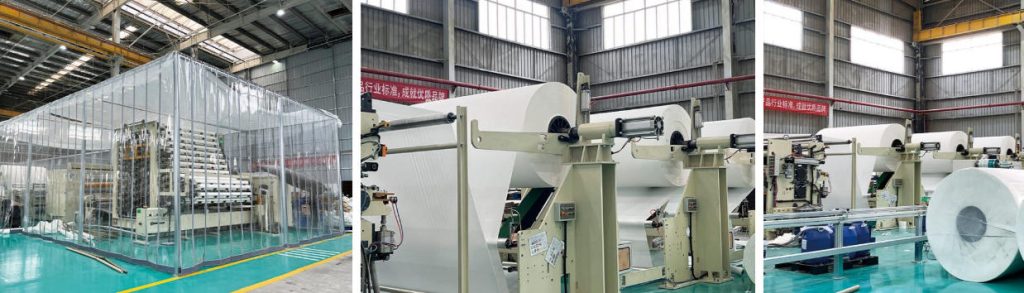
| Equipment Maintenance | The condition, alignment, and wear of embossing rollers and related components. | Affects pattern uniformity, product defects, and production downtime. | Inspect rollers regularly, maintain alignment, and replace worn components. |
| Quality Control | Testing of finished kitchen paper against performance requirements. | Ensures consistent absorbency, wet strength, softness, bulk, and bonding. | Establish standardized inspection procedures and monitor key performance indicators. |
| Material Efficiency | The relationship between product performance and fiber consumption. | Influences manufacturing costs, resource use, and sustainability. | Test optimized embossing patterns that maintain performance while minimizing unnecessary material use. |
By managing these factors systematically, manufacturers can improve product consistency while reducing the risk of excessive fiber damage, uneven patterns, and unnecessary material waste.
Common Embossing Challenges and Their Solutions in Kitchen Paper Production
Embossing can introduce production challenges if the process is not properly controlled.
| Challenges | Possible Causes | Impact on Quality | Solutions |
| Uneven Embossing Patterns | Inconsistent roller pressure, roller misalignment, or worn embossing tools. | Creates an inconsistent surface texture and reduces product appearance quality. | Regularly inspect rollers, adjust alignment, and maintain uniform pressure across the paper web. |
| Reduced Absorbency | Excessive embossing pressure compresses paper fibers and reduces available pore space. | Limits liquid absorption and reduces cleaning efficiency. | Optimize embossing depth and pressure while preserving the paper’s porous structure. |
| Weak Ply Bonding | Inappropriate embossing patterns, insufficient bonding pressure, or uneven adhesive application. | Causes layers to separate during wiping and handling. | Optimize bonding patterns, calibrate pressure, and control adhesive application when applicable. |
| Reduced Paper Strength | Excessive pressure, overly deep embossing, or damage to paper fibers. | Increases tearing risks, particularly during wet use. | Adjust embossing parameters and test tensile and wet-strength performance. |
| Excessive Paper Stiffness | Aggressive embossing patterns or excessive roller compression. | Makes kitchen paper less flexible and less comfortable to handle. | Select suitable patterns and balance embossing depth with softness requirements. |
| Inconsistent Product Thickness | Variations in base-paper basis weight, roller settings, or web tension. | Produces uneven bulk and inconsistent consumer experiences. | Monitor base-paper quality, control web tension, and maintain stable machine settings. |
| Embossing Roller Wear | Prolonged operation, inadequate maintenance, or surface damage. | Leads to blurred patterns, defects, and inconsistent production quality. | Establish preventive maintenance schedules and replace damaged or worn rollers. |
| Production Downtime | Equipment faults, web breaks, roller cleaning, or frequent parameter adjustments. | Reduces output and increases manufacturing costs. | Improve equipment maintenance, optimize operating parameters, and train operators in troubleshooting. |
| High Material Waste | Incorrect pressure settings, misaligned rollers, and defects during startup. | Increases fiber consumption and production costs. | Standardize setup procedures, inspect initial output, and use in-process quality monitoring. |
| Difficulty Balancing Performance and Cost | Attempts to increase bulk or absorbency through additional material or aggressive embossing. | Can increase costs without delivering proportional performance improvements. | Test different patterns and basis weights to identify the best balance of quality, cost, and material efficiency. |
| Moisture Variations | Changes in paper moisture content or environmental conditions. | Affects embossing definition, flexibility, and dimensional stability. | Monitor moisture levels and maintain consistent production conditions. |
Continuous monitoring is essential because changes in base-paper quality, moisture, production speed, or roller condition can affect the final result.
Final Words
Embossing is a key method that can improve the performance, appearance, and perceived quality of kitchen paper. By forming a raised surface, it can affect absorbency, softness, bulk, cleaning efficiency, and the bonding of multiple paper layers. In addition, embossing can support bonding between stacked paper layers. It gives manufacturers a way to stand out with clear patterns and textures.
Even so, embossing depends on tight setup. It requires careful control of pattern design, roller pressure, embossing depth, paper quality, and ply configuration. Too much force, or a pattern picked without care, can lower absorbency, harm fibers, or make the sheet less easy to handle.
For kitchen paper manufacturers, the aim is not only a sharper texture. The goal is a process that stays steady and delivers a practical mix. That mix includes function, production speed, smart use of material, and appeal to consumers. When properly optimized, embossing can help kitchen paper meet everyday home needs and help manufacturers stay competitive in an increasingly quality-focused market.