
How to Evaluate a Private Label Tissue Paper Manufacturer
The decision to partner with a private label tissue paper manufacturer is just the beginning. The real challenge is taking your idea for a product and turning it into a consistent, market-ready product. The sample might look perfect. But will the bulk order be the same? Will the packaging be suitable for your needs? Can the factory take repeat orders without any surprises?
These questions matter to importers, wholesalers and retail brands. Not just to compare prices of suppliers, but to check manufacturing readiness before mass production. This guide discusses the checks that help you prevent mistakes that can be expensive when you introduce or expand a private label tissue product line.
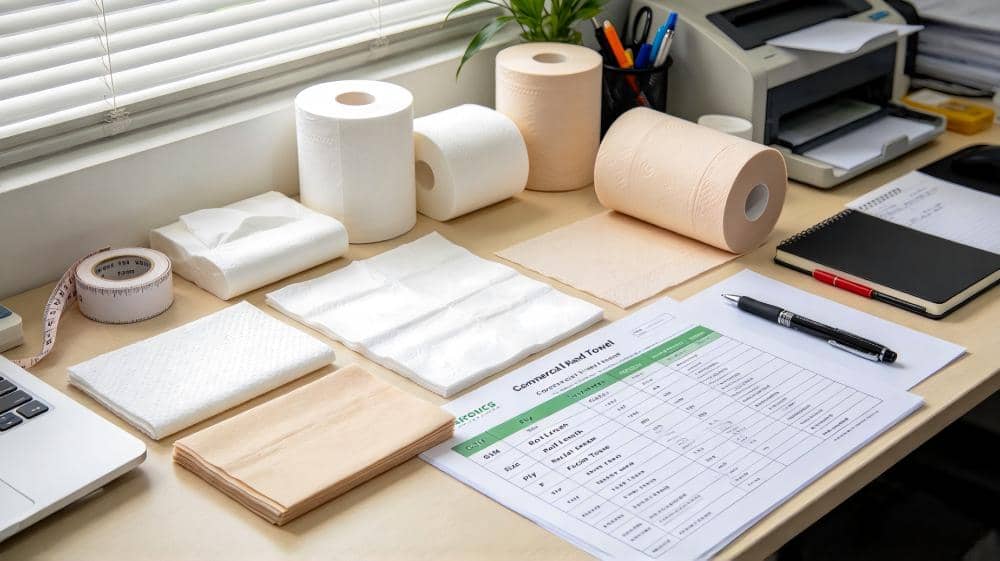
Turn Your Product Idea Into a Clear Specification
Start with a product brief. Do not rely on descriptions such as “premium,” “soft,” or “eco-friendly.” These terms mean different things to different buyers. Define the specifications that affect product performance, packaging, and cost.
| Product | Specifications to confirm |
| Bamboo toilet paper | Ply, GSM, sheet size, roll length, core diameter, and packaging |
| Facial tissue | Sheet count, dimensions, ply, folding style, and dispensing performance |
| Kitchen paper towels | GSM, absorbency, wet strength, sheet size, and roll configuration |
| Commercial hand towels | Fold type, dimensions, strength, and dispenser compatibility |
Don’t ask for a final quote until you’ve agreed on measurable specifications. Also tell which parameters are mandatory and which are optional. This gives some leeway to the manufacturer to offer practical alternatives without sacrificing your basic requirements.
For instance, changing the sheet size or packaging format might impact the material usage, carton size and shipping costs. Get these details early.
Explore Donsea Paper’s product range to identify suitable tissue categories for your project.
Check Whether Customization Is Production-Ready
Private label customization goes beyond adding a logo. Your manufacturer must be able to produce the agreed product and package within its actual production capabilities.
Discuss these points before approving a design:
- Material: Bamboo pulp, recycled fiber, virgin wood pulp, or an agreed blend.
- Paper construction: GSM, ply, sheet count, and dimensions.
- Appearance: Embossing, color, and other available product features.
- Packaging: Printed wrappers, soft packs, tissue boxes, and shipping cartons.
- Branding: Logo placement, artwork, barcodes, and labeling.
- Production limits: Available formats, minimum quantities, and customization restrictions.
Ask the manufacturer to state any non-standard requirements. Some options may require special materials, added setup, or higher minimum order quantities. Ask for a confirmation in writing of what can be made. Don’t assume that a feature you see in a design mockup is already on the production line.
For custom tissue products, Donsea Paper’s private label customization service is a useful starting point for discussing product and packaging requirements.
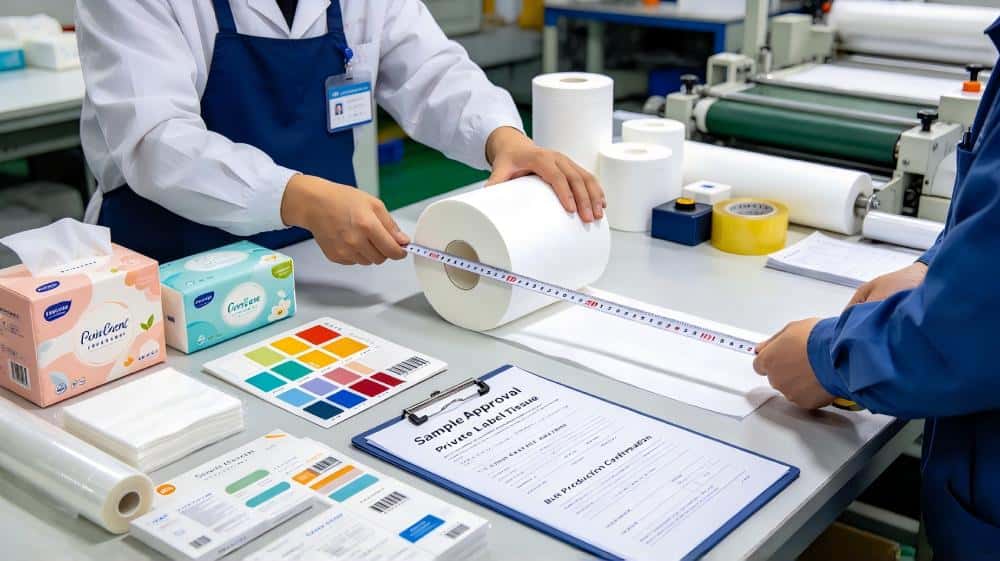
Approve the Sample Before Bulk Production
Sample approval is a key control point. It defines what the manufacturer is supposed to provide.
First, verify the physical product versus your specs. Measure the dimensions of the sheet or roll. Check sheet count and ply. When relevant, check softness, strength, and dispensing performance.
Test kitchen towel absorbency under consistent conditions. For toilet paper, check perforation, roll dimensions, and tearing behavior. When comparing samples from different suppliers, use the same test method.
Then verify the packaging separately. Check artwork, colors, logo position, printed information, barcode, and markings on the carton. Check that the final design is consistent with the approved file.
Use this simple approval process:
- Review the product sample against the agreed specification.
- Record any deviations and request corrections.
- Approve the final packaging proof before printing.
- Keep a labeled reference sample for future comparisons.
- Confirm approval in writing before mass production begins.
If the manufacturer changes a material, paper construction, or packaging component, ask whether a new sample or approval is required. Never assume that approving one sample automatically approves every later change.
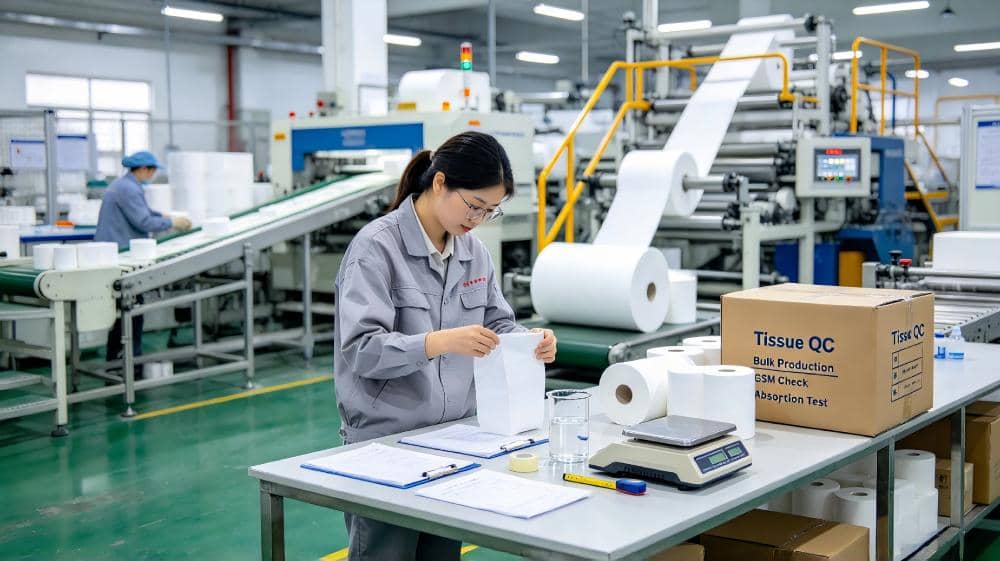
Verify Quality Control During Production
A good sample does not prove that every production batch will meet your requirements. You need to understand how the manufacturer controls consistency.
Ask which checks are performed during production and before shipment. Relevant checks may include:
- GSM and sheet dimensions.
- Ply construction and bonding.
- Absorbency and wet strength, where applicable.
- Roll diameter, core size, and perforation.
- Sheet count and packaging accuracy.
- Printing quality and carton condition.
Ask for relevant inspection records or test reports when available. For critical specifications, agree on the test method and acceptance criteria before the order is placed.
You also need to know how defective products are handled. Can the factory pinpoint which batch is defective? Does it take note of the corrective measures taken? Who determines whether the product is reworked or scrapped?
For bamboo tissue products, see Key Quality Standards for Bamboo Tissue Paper. The purpose is not to collect as many documents as possible. It is to confirm that the approved product can be reproduced under a defined quality-control process.
Check Packaging and Market Requirements
Packaging problems can delay a launch even when the tissue itself is acceptable. Before approving production, confirm the retail packaging, outer cartons, shipping configuration, and destination-market requirements.
For products intended for the European Union, packaging compliance deserves particular attention. The EU Packaging and Packaging Waste Regulation (PPWR) generally began applying on 12 August 2026, with specific requirements and implementation dates depending on the relevant provisions.
Read the European Commission’s PPWR guidance and updates. Determine which obligations apply to your packaging and role in the supply chain. Do not assume that the tissue manufacturer alone is responsible for every requirement.
Also check any required labeling languages, barcode formats, packaging dimensions, and shipping marks.
If you plan to make sustainability claims, request supporting evidence. For FSC-related claims, use the official FSC certificate search to check relevant certificate information. A packaging design is not proof of regulatory compliance. Confirm the applicable requirements before printing large quantities.
Compare the Full Cost of Your Private Label Project
Once the specifications are clear, compare quotations on the same basis.
A lower unit price may reflect a different GSM, sheet count, packaging format, or order quantity. It may also exclude setup or shipping costs. Ask each manufacturer to break down the main cost components.
| Cost item | What to confirm |
| Product | Material, specifications, and quantity |
| Customization | Embossing, printing, artwork, and setup |
| Packaging | Retail packs, cartons, and pallets |
| Samples | Sample production and courier charges |
| MOQ | Minimum quantity per SKU and packaging design |
| Logistics | Shipping terms, freight, and destination charges |
The minimum order quantity deserves special attention. A low MOQ may help you test demand, but the price per unit may be higher. A large order may reduce the unit price while increasing inventory risk. Compare the total cost of getting the product to market, not just the factory price.
For a detailed breakdown of quotation factors, see Private Label Tissue Paper Cost: What Determines the Final Quotation.

Confirm Delivery and Repeat-Order Controls
This isn’t just the first shipment of a successful launch. Your MFG should be able to hold the approved specs for future orders.
Before you start producing, agree on a realistic timeline that includes sample approval, artwork approval, material preparation, manufacturing, inspection, and shipment. Ask what might delay the schedule. Delivery can be affected by packaging materials, late artwork changes, and specification revisions.
For repeat orders, check the factory’s method of recording approved specs and changes. Questions to ask: Will I be informed before material or production changes that affect my product?
Keep a copy of the approved sample, artwork, product specification, inspection criteria, and purchase order. This can help identify differences in shipments and resolve problems quickly.
Final Pre-Production Checklist
Before releasing a private label tissue paper order, confirm the following:
- Product specifications are complete and measurable.
- Customization options and production limits are confirmed.
- Product samples have been approved.
- Packaging artwork and labeling have been approved.
- Quality checks and acceptance criteria are documented.
- Relevant certificates and compliance documents have been verified.
- MOQ, total cost, and delivery terms are clear.
- Repeat-order specifications and change controls are agreed.
If any critical item remains unresolved, address it before mass production.
FAQ
Q1: What is the biggest risk when ordering private label tissue paper?
One major risk is a difference between the approved sample and the bulk shipment. Clear specifications, documented approvals, and agreed quality checks help reduce this risk.
Q2: Should product and packaging samples be approved separately?
Yes, where applicable. The tissue may meet your requirements while the packaging contains incorrect artwork, labeling, or dimensions. Separate checks help catch these problems before production.
Q3: How can I compare two manufacturers fairly?
Send both manufacturers the same product brief. Compare specifications, customization costs, MOQ, quality controls, delivery terms, and supporting documents. Avoid choosing based on unit price alone.
Q4: Can I change the product after sample approval?
Changes may be possible, but they can affect cost, lead time, and performance. Ask the manufacturer to document the change and confirm whether a revised sample and new approval are needed.
Prepare Your Next Private Label Tissue Project
A reliable private label project starts with clear specifications and ends with a product that matches the approved requirements.
Donsea Paper supplies bamboo toilet paper, facial tissues, kitchen paper towels, and other tissue products for international buyers. If you are developing a new brand or updating an existing product line, discuss your product format, customization needs, order quantity, and target market with the team.
Request a quotation based on your actual specifications to make the next step clearer and reduce avoidable production risks.