
Ply vs. Softness in Choosing Toilet Paper
When it comes to choosing toilet paper, two of the most talked-about factors are ply and softness. At first, it might feel obvious, but the way they work together kinda changes what you should pick. It helps to know how comfort, efficiency, and cost all end up getting mixed in.
Understanding Ply in Toilet Paper
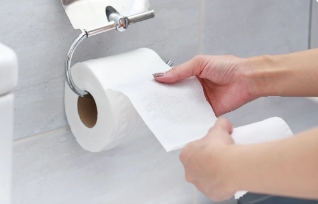
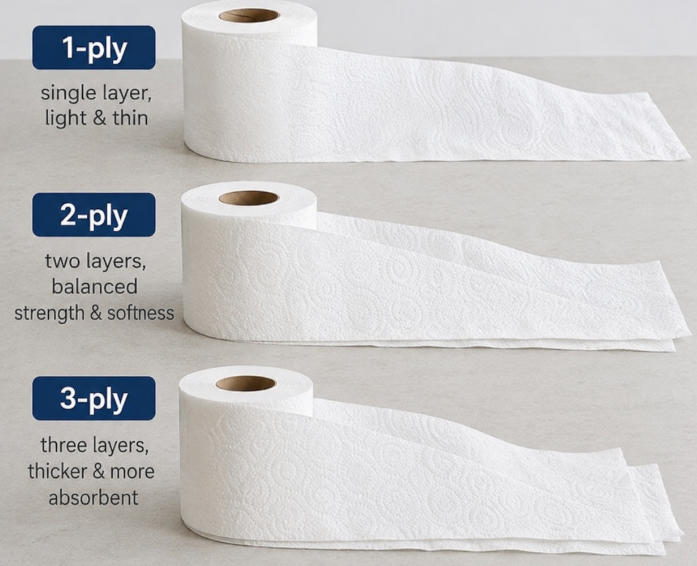
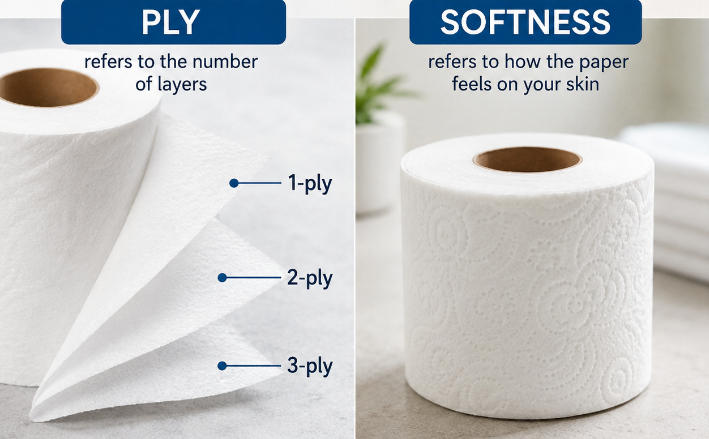
“Ply” is basically how many layers of toilet paper are inside one sheet. Single-ply toilet paper has one layer, while two-ply or three-ply varieties have multiple layers. The number of plies affects both strength and absorbency.
| Ply Count | Description | Thickness | Absorbency | Advantages | Drawbacks |
| Single-Ply | One layer of paper per sheet | Thin, less durable | Lower absorbency, may need more sheets | Economical, flushes easily | Less comfortable, may require more sheets |
| Two-Ply | Two layers of paper per sheet | Moderate thickness and strength | Good absorbency | Comfortable, strong, absorbent | Slightly higher cost than single-ply |
| Three-Ply | Three layers of toilet paper per sheet | Thick and very strong | High absorbency | Very soft, highly absorbent, fewer sheets needed | Higher price, may clog older plumbing if overused |
| Four-Ply or Higher | Four or more layers per sheet | Extra thick and very strong | Excellent absorbency | Maximum softness and strength | Expensive, may not flush easily |
The Role of Softness in Toilet Paper
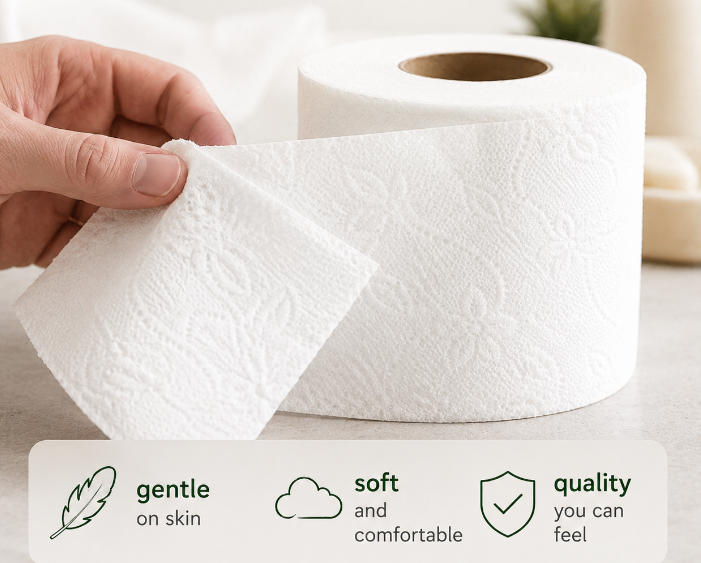
Softness is important for toilet paper, since it changes how comfortable the paper feels during use. Softness can depend on fiber quality, the way it’s made, and extra finishing steps like embossing or a lotion type treatment.
This chart shows the main factors that influence softness and how tissue paper manufacturers balance comfort, durability and cost.
| Factor | How It Affects Softness | Examples | Considerations |
| Fiber Type | Natural fibers like virgin pulp are softer; recycled fibers may feel rougher | Virgin wood pulp, bamboo fibers, recycled paper | Softer fibers increase comfort but may cost more |
| Ply Count | Multiple plies can be layered to enhance softness and cushioning | 2-ply, 3-ply, or 4-ply | Higher ply improves softness but may increase cost and potential plumbing issues |
| Embossing & Texture | Patterns and embossing create a softer feel and improve thickness perception | Quilted, embossed sheets | Adds comfort but may slightly reduce absorbency |
| Chemical Treatments | Added lotions or softeners can make paper feel smoother | Aloe, lotion-infused toilet paper | Enhances comfort but may not be eco-friendly; can increase cost |
| Manufacturing Process | Creping and refining processes can make paper more pliable and soft | Mechanical pressing, drying techniques | Proper processing is essential to avoid weak or thin sheets |
| Moisture Content | Controlled moisture in manufacturing ensures paper remains flexible and soft | Pre-conditioning during production | Too much moisture may weaken sheets; too little may make paper stiff |
| Thickness | Thicker sheets with lower fiber density feel softer | Multi-ply, low-density pulp | Balances strength and softness; excessive thickness may affect flushability |
Softer toilet paper often shows up with a higher ply count, since several layers can be paired with delicate, higher-quality fibers to make a more cushioned touch. Still, softness does not always line up with strength; some “super gentle” options might rip or weaken if they’re used too much, while sturdier styles can feel a bit rough even if they’re durable, and that can be surprising for people.
The Comparison of Ply and Softness in Choosing Toilet Paper
This chart provides a practical comparison to help consumers balance comfort, strength, and absorbency when choosing toilet paper.
| Ply Count | Softness | Strength | Absorbency | Comfort Level | Notes |
| Single-Ply | Low to Moderate | Weak; tears easily | Low; may require multiple sheets | Moderate; can feel rough | Budget-friendly, flushable, suitable for public restrooms; may require more sheets |
| Two-Ply | Moderate to High | Moderate; reasonably strong | Good | Comfortable for most users | Most common for household use; balances comfort, durability, and cost |
| Three-Ply | High | Strong; resists tearing | High; fewer sheets needed | Very soft and cushioned | Premium option; luxurious feel, good toilet paper for sensitive skin; may require cautious use with older plumbing |
| Four-Ply or Higher | Very High | Very strong | Very high | Extremely soft and plush | Luxury use; maximum comfort and absorbency; may clog plumbing if used excessively |
| Eco-Friendly Options | Low to Moderate (can vary) | Moderate | Moderate | Slightly rougher than virgin pulp | Made from recycled or sustainable fibers; may compromise some softness for environmental benefits |
Balancing Ply and Softness in Choosing Toilet Paper
Understanding how to balance ply and softness can help consumers make decisions that maximize comfort, performance, and cost-effectiveness.
1. Prioritizing Comfort Without Sacrificing Performance
For many households comfort comes first, and softer toilet paper can feel more pleasant during use, especially for people with sensitive skin. Yet softness should not be traded away for durability. If the toilet paper is extremely soft but also tears too easily, you might end up using extra sheets, which lowers the overall value and reduces effectiveness.
A better approach is choosing a product that includes both softness and enough strength. This way, you keep a comfortable experience while still getting practical performance. Many premium two-ply and three-ply options are built to reach that middle ground; they combine high-quality fibers with improved manufacturing methods.
2. Considering Household Needs
Finding the ideal balance between ply count and softness often comes down to what the household actually needs. Families with children might lean toward durability and good absorbency, while people wanting a more spa-like bathroom experience usually give more weight to softness.
In busy places like offices, schools, and public restrooms, things like cost efficiency and plumbing compatibility tend to matter more than maximum softness. Here, a single-ply option or a regular two-ply product can be a practical middle path between performance and affordability.
3. Evaluating Plumbing Compatibility
Even though higher-ply toilet paper usually feels more comfortable, it can also create extra strain on plumbing. Older plumbing lines, septic setups and low-flow toilets may struggle with thicker, highly absorbent toilet paper, especially when it is used too frequently.
Consumers should think about what their plumbing system can handle when they’re picking toilet paper. In a few situations, a gentler two ply choice can end up being the wiser middle ground, compared with an ultra-thick three ply or four ply roll. If you choose toilet paper that breaks down in a good way while still feeling comfortable, it can help reduce clogs and also lower the amount of maintenance headaches later.
4. Balancing Cost and Value
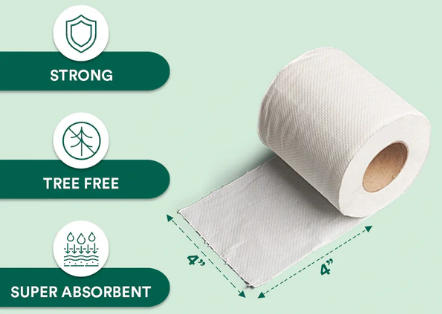
Toilet papers with higher ply counts and softer textures, are usually priced higher than the basic alternatives. Still, the cheapest thing on the shelf is not always the best deal. A sturdier and more absorbent toilet paper can take fewer sheets per trip, so the roll keeps going longer, and that can offset the bigger price tag.
For value, it helps to look at sheet strength, absorbency, roll length, and how people feel using it. Instead of only chasing the price per package. The best value often shows up where softness, durability, and efficiency are working together in the same product.
5. Environmental Considerations
People who care about sustainability may also need to juggle softness with environmental responsibility, yes. Recycled fibers and manufacturing practices that are more eco-friendly can sometimes lead to toilet paper that feels a bit less plush than options produced from virgin pulp. Still, improvements in production technology have boosted the softness of many environmentally friendly choices a lot.
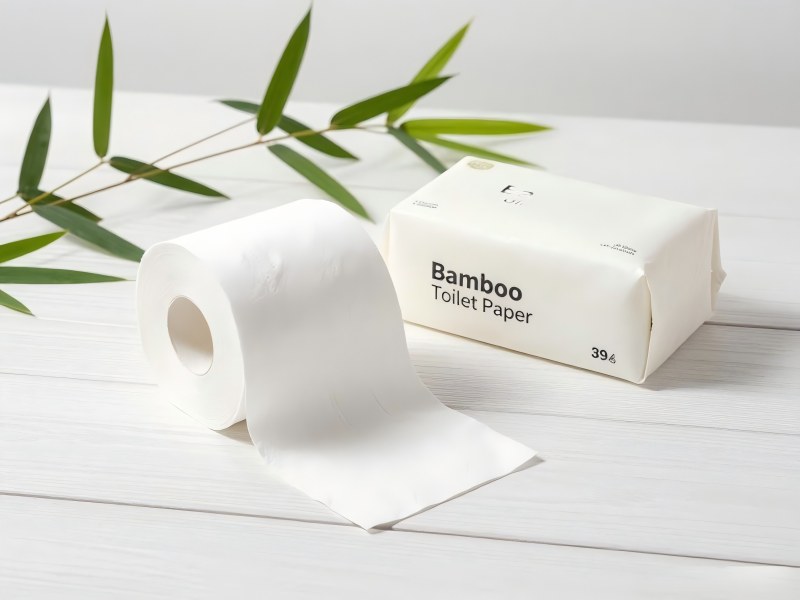
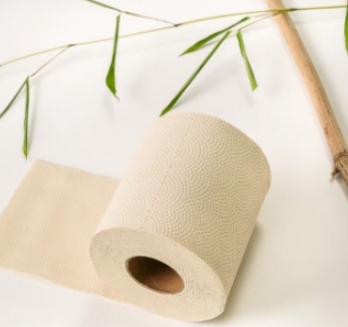
Choosing sustainably sourced toilet paper, such as bamboo toilet paper, recycle toilet paper, etc, and matching it with a suitable ply count, helps consumers get comfort that is still acceptable while also lowering their environmental impact.
Summary
- Multi-ply toilet paper options are ideal for luxury and sensitive skin, but older plumbing may require moderate ply.
- Sustainable toilet paper is improving in softness but may feel slightly rougher than virgin options.
Final Thoughts
Ply and softness are two basic factors that really shape the quality and usability of toilet paper. If you compare single-ply, double-ply, and triple-ply choices, along with their corresponding softness levels, you can select a product that fits your comfort needs, household routines and the environmental story. When you balance these factors together, it tends to lead to a more pleasant and effective bathroom experience.