How Long Does Bamboo Toilet Paper Take to Decompose?
In recent years, the global personal care and tissue industry has experienced a massive paradigm shift. As awareness of climate change, deforestation, and plastic pollution reaches an all-time high, more consumers, commercial retailers, luxury hotels, and eco-conscious brands are switching to biodegradable bamboo toilet paper. Traditional toilet paper production is notoriously destructive, clear-cutting millions of acres of ancient Boreal forests annually to satisfy the global demand for virgin wood pulp. In response, eco-friendly toilet paper made from fast-growing bamboo has emerged as a premium, guilt-free alternative.
While the sustainability benefits of bamboo during its agricultural growth cycle are widely recognized, modern procurement specialists, waste engineers, and environmentalists look deeply at the post-consumer lifecycle of the product. Specifically, the core question driving green purchasing decisions is: how long does bamboo toilet paper take to decompose? Biodegradability is one of the most compelling reasons behind its skyrocketing popularity, yet the actual bamboo toilet paper decomposition timeline is not uniform. It depends heavily on a complex matrix of biological variables, physical environments, and manufacturing processes. Understanding why decomposition matters, distinguishing between common eco-labels, and analyzing how bamboo fibers interact with natural microbes are essential steps to grasping why bamboo tissue paper represents the future of sustainable sanitation.
What Does “Biodegradable” Mean?
Before discussing decomposition time, it is important to understand what biodegradable actually means.
A biodegradable material can be naturally broken down by microorganisms such as bacteria, fungi, and other microbes into simple substances including water, carbon dioxide, and organic matter. Unlike plastics or synthetic fibers that may persist in the environment for decades or even centuries, biodegradable products return to nature through normal biological processes.
For tissue paper, biodegradability depends primarily on the composition of the fibers. Products made from 100% natural bamboo pulp contain cellulose fibers that microorganisms can easily digest, making bamboo tissue one of the most environmentally friendly disposable paper products available.
However, not all tissue products marketed as “green” decompose at the same rate. The manufacturing process and added ingredients can significantly affect biodegradation.
Characteristics of Truly Biodegradable Bamboo Toilet Paper
A high-quality biodegradable bamboo toilet paper should contain:
- 100% virgin bamboo pulp or sustainably sourced bamboo fiber
- No plastic or synthetic fibers
- No wet-strength resins that inhibit decomposition
- Minimal or chlorine-free bleaching
- No unnecessary chemical coatings
- No petroleum-based binders
These characteristics allow microorganisms to access and digest the cellulose fibers quickly, accelerating the natural decomposition process.
Biodegradable vs. Compostable: What’s the Difference?
Although the terms are often used interchangeably, biodegradable and compostable are not identical.
Biodegradable:
A biodegradable product will naturally decompose over time through microbial activity. However, there is no universal requirement specifying how quickly this process must occur. Depending on environmental conditions, biodegradation may take weeks, months, or even years.
Compostable:
A compostable product is a special category of biodegradable material that decomposes under controlled composting conditions within a relatively short period while leaving no harmful residue.
Compostable products typically break down into:
- Water
- Carbon dioxide
- Nutrient-rich organic matter (humus)
without releasing toxic substances into the soil.
Every compostable product is biodegradable, but not every biodegradable product is certified compostable.
For bamboo toilet paper, products made from pure bamboo pulp without chemical additives are generally suitable for composting under appropriate conditions.
Biodegradable vs. Flushable: What’s the Difference?
Another common misconception is that flushable automatically means biodegradable.
In reality, these are two different performance characteristics.
- A flushable product is designed to disperse rapidly in water so it can move through household plumbing without causing blockages.
- A biodegradable product is designed to decompose naturally through microbial activity after disposal.
While many 100% bamboo toilet papers are both biodegradable and septic-safe, some products marketed as flushable may contain synthetic reinforcing fibers that slow decomposition.
Consumers should always review product specifications rather than relying solely on marketing claims.
How Long Does Bamboo Toilet Paper Take to Decompose?
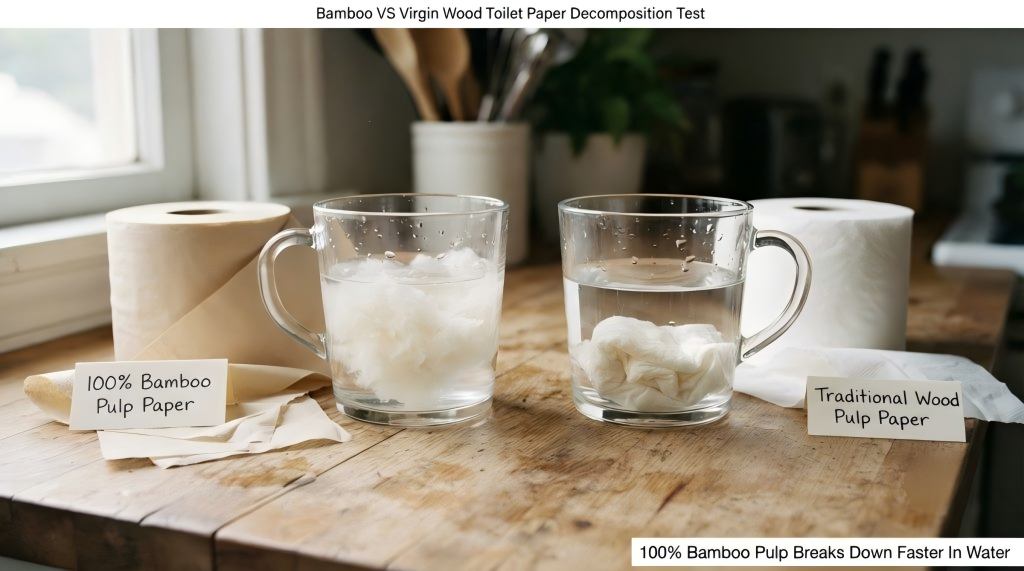
The core scientific baseline for high-grade bamboo tissue paper is that it breaks down remarkably fast under most conditions. However, the precise answer to how long bamboo toilet paper takes to decompose varies based on environmental factors such as oxygen availability, moisture levels, temperature, and microbial density. In standard municipal sewage systems or localized plumbing, the mechanical shear force of water combined with microbial action causes the material to begin dissolving and dispersing within mere minutes or hours.
To visualize how these timelines diverge across various natural and artificial disposal endpoints, consider the comprehensive matrix below:
| Disposal Environment | Estimated Decomposition Time | Primary Biological Mechanism |
| Septic System | Begins breaking down within hours; fully dissolved in days | Rapid mechanical dispersion & anaerobic digestion |
| Industrial Composting | 2–6 weeks | Optimized thermophilic aerobic microbial decomposition |
| Home Compost Pile | 1–3 months | Mesophilic aerobic breakdown dependent on pile turning |
| Natural Soil / Burial | 2–5 months | Ambient subterranean fungal and bacterial digestion |
| Landfill Conditions | Several months to over 1 year | Slow, compressed anaerobic decay yielding methane |
As illustrated, the decomposition rate is highly variable. The variance is driven by four structural environmental pillars. Oxygen determines whether rapid aerobic digestion or sluggish anaerobic decay occurs. Moisture acts as the cellular solvent required for microbial movement and enzymatic transport. Temperature dictates the metabolic speed of decomposing organisms; warm environments catalyze molecular breakdown, whereas freezing temperatures halt it entirely. Lastly, the baseline microbial activity inherent to the environment provides the specialized enzymes required to sever the cellular bonds of the paper.
Why Does Bamboo Toilet Paper Decompose Faster Than Conventional Toilet Paper?
The superior speed of bamboo toilet paper decomposition compared to traditional options is rooted in botanical anatomy and green chemistry. At the cellular level, bamboo is classified as a grass rather than a tree. Consequently, bamboo fibers possess a naturally shorter, more flexible matrix compared to the long, rigid tracheid fibers found in softwoods like pine or spruce. When exposed to water, these shorter bamboo fibers lack the dense structural interlocking found in virgin tree pulp, allowing water molecules to quickly penetrate and separate the sheets.
Furthermore, premium eco-friendly toilet paper brands eliminate the hazardous chemical cocktail used by traditional mills. Conventional toilet paper frequently incorporates synthetic binders, artificial fragrances, heavy lotions, and wet-strength chemicals designed to prevent the paper from ripping when wet. While this increases structural strength during use, it forms a synthetic barrier that shields the cellulose from microbial breakdown. Bamboo tissue relies strictly on the natural mechanical strength of bamboo pulp, requiring no plastic coatings or synthetic structural additives. Additionally, bamboo has a lower structural lignin content compared to certain dense hardwoods; since lignin is the rigid organic polymer most resistant to decay, its low presence makes it exceptionally easy for microorganisms to digest the remaining cellulose rapidly.
| Material Type | Average Decomposition Speed | Structural Impediments to Decay |
| 100% Bamboo Tissue | Fast (Minutes to weeks) | None; short raw grass fibers, zero additives |
| Virgin Wood Pulp | Medium (Weeks to months) | Longer structural tree fibers; moderate lignin retention |
| Recycled Tissue | Medium (Weeks to months) | Short fibers but contains residual de-inking agents/fillers |
| Wet-Strength Paper | Slow (Many months to years) | Heavy synthetic resins and cross-linking chemicals |
Factors That Affect Bamboo Toilet Paper Decomposition
Even the highest-quality biodegradable tissue will not decompose at the same speed under every condition. Several environmental variables determine how quickly microorganisms can break down bamboo fibers.
1. Moisture
Water is the fundamental catalyst for all biological decay. High moisture levels allow the paper fibers to swell, breaking the hydrogen bonds holding the tissue sheet together. Once the paper undergoes mechanical dispersion, higher humidity and direct moisture accelerate microbial growth, creating a fluid medium through which decomposing bacteria can proliferate.
2. Temperature
Microbes are highly temperature-dependent organisms. In warm environments, microbial metabolism increases exponentially, resulting in rapid enzyme production that shears the bamboo fibers. Conversely, in cold or frozen environments, biological processes drop to near-zero, drastically extending the lifespan of the paper.
3. Oxygen
The presence of oxygen dictates the metabolic pathway of decomposition. Aerobic decomposition (in the presence of oxygen) is exceptionally fast, clean, and highly efficient, producing carbon dioxide and water. In contrast, anaerobic conditions (lacking oxygen, such as deep within compressed landfills) force microbes to operate at a fraction of the speed, leading to prolonged decay timelines.
4. Chemical Additives
The inclusion of post-processing chemicals alters the structural integrity of the paper. Additives like petroleum-based lotions, synthetic fragrances, chemical dyes, and chlorine bleach residues act as antimicrobial agents. They temporarily sterilize the immediate area surrounding the paper, warding off the very bacteria needed to break it down. This is why certified chemical-free bamboo toilet paper decomposes the fastest and represents the gold standard for plumbing safety.
Is Bamboo Toilet Paper Compostable?
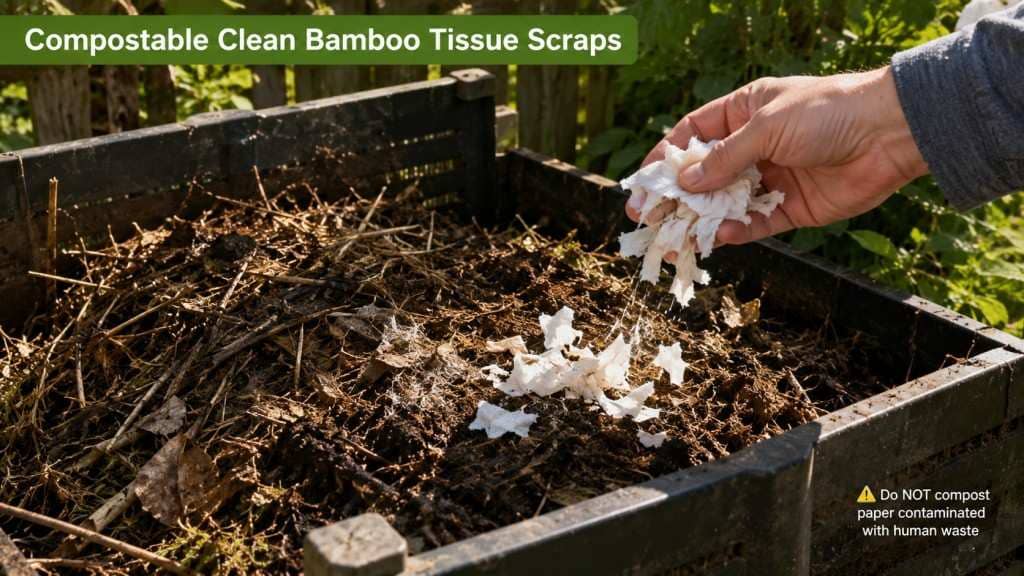
Yes, premium bamboo tissue is fully qualified as a compostable toilet paper choice. Because it originates from organic plant biomass, it serves as an excellent carbon-rich “brown” material for composting systems. However, a batch of paper is only suitable for standard home composting if it satisfies strict manufacturing parameters: it must contain strictly 100% natural bamboo pulp, water-based non-toxic inks (if patterned), zero chemical lotions, and absolutely no plastic packaging residue.
There is, however, an absolute epidemiological line that must be drawn regarding safety. Never compost tissue contaminated with human waste in a residential backyard compost pile. Human feces contain dangerous pathogens, coliform bacteria, and potential parasites that require highly specific, sustained internal temperatures (above 55°C or 131°F) to neutralize. Residential compost piles rarely reach or maintain these thermophilic thresholds uniformly. Therefore, home composting of bamboo toilet paper should be limited strictly to unused scraps, clean outer paper wrappings, or tissues used purely for wiping up non-hazardous spills. For toilet-soiled sheets, traditional plumbing or specialized municipal eco-waste infrastructure must be used.
Is Bamboo Toilet Paper Safe for Septic Systems?
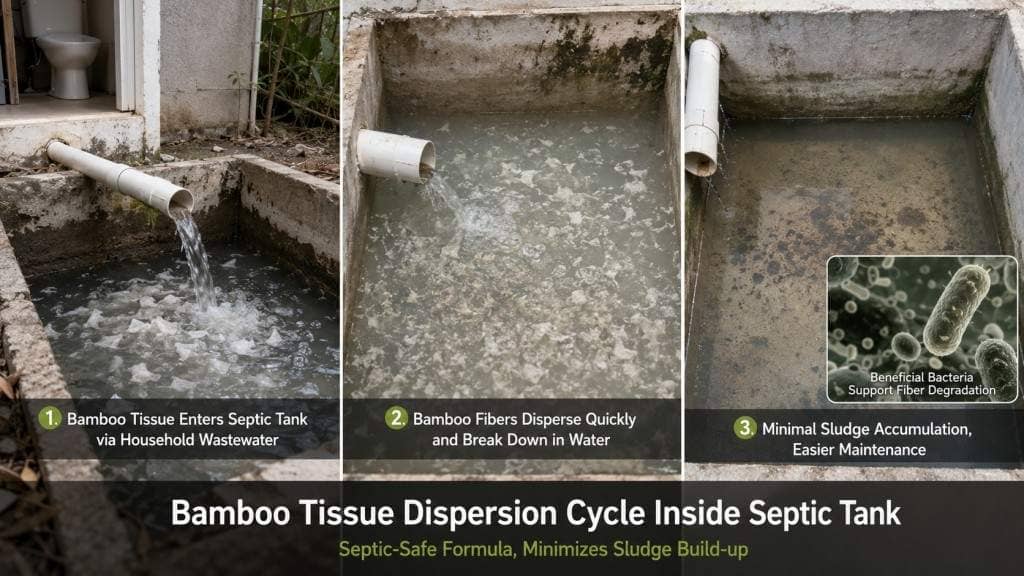
For rural homeowners and properties detached from municipal sewage lines, maintaining septic system health is a critical financial and operational priority. Fortunately, high-quality alternatives are engineered specifically as septic-safe bamboo toilet paper. The principal threat to a septic tank is accumulation: if paper fails to dissolve, it floats as scum or drops to the bottom as an undegraded mass, filling up the tank capacity and resulting in catastrophic system backups.
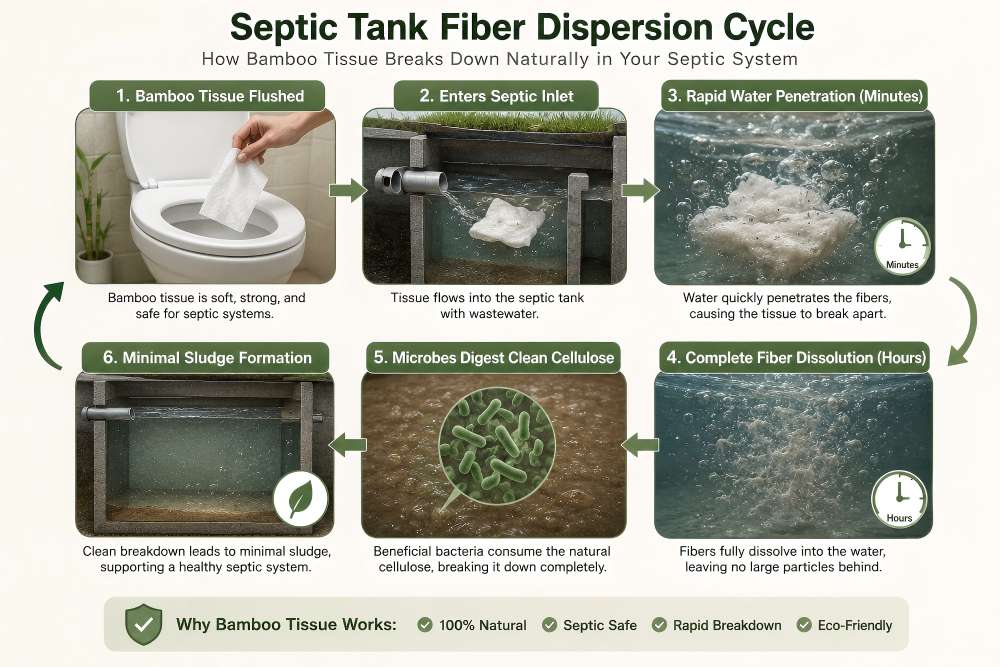
Bamboo tissue mitigates this entire problem through rapid fiber dispersion. The instant it hits the turbulent waters of a toilet flush and enters the septic inlet, the short fibers unbind and dissolve. This rapid breakdown guarantees a reduced clogging risk in intricate residential drainage lines and leachfields. Furthermore, because the raw grass fibers lack artificial plastic resins, they undergo efficient anaerobic digestion inside the tank, resulting in less sludge accumulation and a balanced microbial biome that requires less frequent, expensive pumping services.
Bamboo Toilet Paper vs Traditional Toilet Paper: Which Is Better for the Environment?
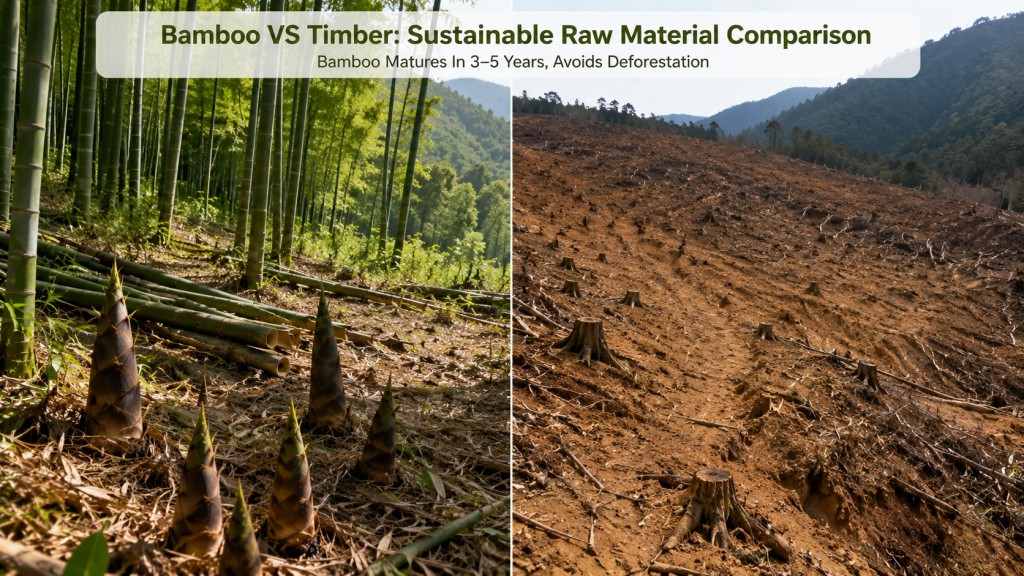
Evaluating the holistic ecological balance sheet reveals a stark contrast between grass-based tissue and old-growth wood pulp. The environmental benefits extend far beyond post-consumer decomposition speed, covering the entire cradle-to-grave lifecycle.
| Environmental Metric | 100% Pure Bamboo Toilet Paper | Traditional Virgin Wood Pulp Paper |
| Renewable & Sustainable Source | Yes (100% Certified Eco-friendly) | No (Relies heavily on clear-cutting trees) |
| Agricultural Growth Cycle | Rapid (3–5 years to full maturity) | Sluggish (20–80 years for harvestable trees) |
| Water Consumption Profile | Extremely Lower (Rainwater sufficient) | Massive (Demands heavy industrial irrigation) |
| Carbon Footprint Metric | Minimal (Generates up to 30% less CO2) | Severe (Aggravated by forest canopy loss) |
| Decomposition Efficiency | Excellent (Breaks down swiftly without trace) | Good to Poor (Restricted by chemical finishes) |
| Septic System Compatibility | 100% Septic-Safe and Clog-Free | Variable (Risk of structural binder clogs) |
Bamboo holds an unmatched ecological advantage due to its growth dynamics. Traditional tree harvesting destroys root systems, causing soil erosion and total habitat loss. Bamboo, as a grass, is harvested by cutting the stalks while leaving the extensive underground rhizome root system completely intact. This allows the plant to naturally regenerate and shoot up new stalks immediately without replanting. This rapid regeneration enables bamboo to capture up to four times more carbon dioxide than an equivalent stand of trees, drastically reducing the net carbon footprint of the manufacturing cycle.
Does Bamboo Toilet Paper Leave Microplastics Behind?
A critical crisis threatening modern wastewater treatment systems and global marine life is the proliferation of microplastics. Many consumers assume that all personal hygiene products naturally dissolve, but the tissue industry is saturated with hybrid fiber blends. Wet wipes, facial tissues, and low-grade toilet papers frequently mix cellulose with polyester, polypropylene, or synthetic chemical binders to increase tear resistance.
When these blended products flush down the drain, the organic wood portions decay, but the plastic meshes break apart into millions of invisible microscopic plastic shards. These microplastics pass right through municipal treatment filters, entering rivers, oceans, and ultimately the food chain. In contrast, 100% pure bamboo toilet paper contains absolutely zero plastic fibers or synthetic structural glues. Because it is completely plant-derived, it decomposes cleanly into organic matter, leaving behind zero microplastic pollution.
How to Choose Truly Biodegradable Bamboo Toilet Paper
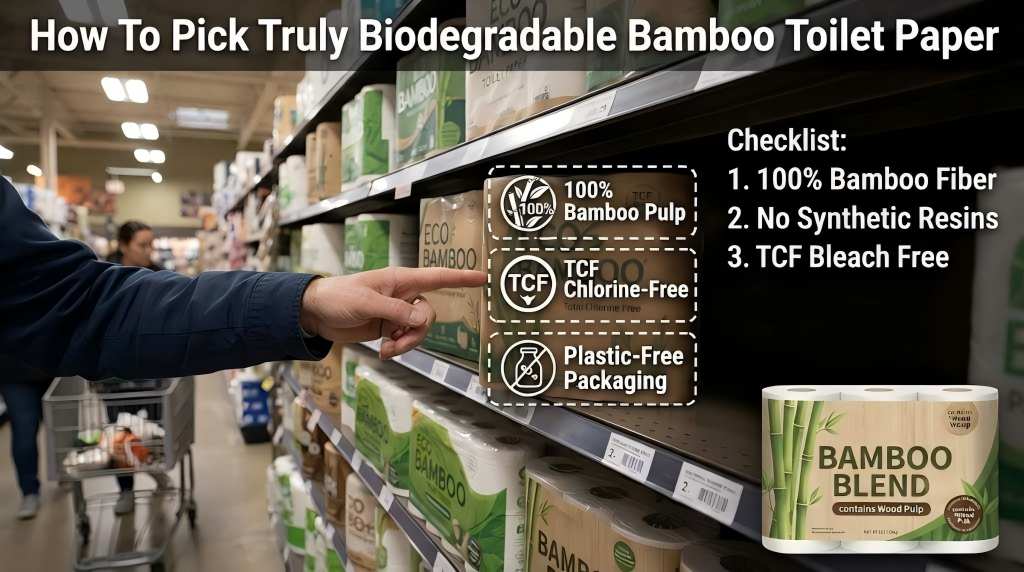
Due to the commercial success of eco-friendly products, “greenwashing” has become rampant. Some brands display bamboo imagery on their packaging but include only a fraction of bamboo fibers mixed with bleached virgin wood pulp. To ensure you purchase authentic, highly biodegradable products, utilize this strict consumer checklist:
Certified Eco-Friendly Procurement Checklist
- 100% Bamboo Pulp: Verify the product label explicitly states “100% Organic Bamboo Pulp” or “100% Bamboo Fibers” to rule out hidden tree-pulp or synthetic blends.
- No Chlorine Bleaching: Look for “Totally Chlorine-Free” (TCF) or “Elemental Chlorine-Free” (ECF) labels to prevent toxic dioxin discharge into soil and waterways.
- Zero Plastic Fibers: Ensure the product explicitly guarantees a plastic-free manufacturing line.
- No Lotions or Artificial Fragrances: Avoid products with added scents or moisturizers, as these chemicals delay natural microbial decomposition.
- FSC Certification: Check for the Forest Stewardship Council (FSC) seal, ensuring the bamboo was sourced from responsibly managed, sustainable farms rather than natural wildlife habitats.
- Plastic-Free Outer Packaging: A truly green product should be wrapped in recycled paper or compostable starch wrapping rather than single-use plastic wrap.
- Certified Septic-Safe: Check for official plumbing approval seals confirming rapid water dispersion.
Frequently Asked Questions
Does bamboo toilet paper decompose faster than regular toilet paper?
Yes, 100% bamboo toilet paper generally decomposes faster than conventional regular toilet paper. Because bamboo consists of naturally shorter grass fibers and avoids the heavy synthetic wet-strength glues often added to tree-based papers, it undergoes mechanical dispersion and microbial digestion much more rapidly when introduced to water.
Can bamboo toilet paper be composted?
Absolutely. Bamboo tissue is inherently compostable because it is crafted from pure, organic plant matter. However, for human health and safety reasons, you should never compost tissue contaminated with human waste in residential composting bins, as home piles do not maintain the uniform heat required to eradicate human pathogens.
How long does bamboo toilet paper last in a landfill?
In a typical landfill, bamboo toilet paper will last from several months to well over a year. Landfills are compressed, oxygen-starved environments designed for long-term storage rather than active decomposition. This anaerobic environment drastically retards the natural decay cycle of even the most eco-friendly materials.
Is bamboo toilet paper safe for septic tanks?
Yes, it is exceptionally safe for septic tanks. Due to its swift dispersion properties, septic safe bamboo toilet paper quickly breaks apart into tiny particles upon flushing. This prevents structural blockages within plumbing traps, reduces solid sludge buildup at the bottom of the tank, and supports an active, healthy bacterial biome.
Is bamboo toilet paper flushable?
Yes, it is 100% flushable. Unlike thick synthetic wet wipes or heavy-duty paper towels, premium bamboo tissue disintegrates smoothly upon contact with water, allowing it to traverse standard domestic plumbing fixtures and municipal sewer networks seamlessly without causing blockages.
Does bamboo toilet paper contain plastic?
Authentic, premium-tier bamboo tissue paper contains absolutely no plastic. However, consumers must remain vigilant against greenwashed products that blend bamboo fibers with synthetic binders. Always review product specifications to confirm the tissue is manufactured from 100% pure plant fibers.
Can bamboo toilet paper be recycled?
Technically, the fibers are organic, but toilet paper should never be thrown into recycling bins post-use due to biological contamination hazards. Additionally, toilet paper fibers are already short and designed to dissolve; attempting to mechanically re-pulp them through traditional recycling streams is highly inefficient.
Does dyed toilet paper decompose more slowly?
Yes, toilet paper treated with heavy chemical dyes decomposes at a slower rate. The chemical compounds found in synthetic pigments often exhibit mild antimicrobial properties that temporarily repel or suppress local decomposing bacteria, stalling the natural breakdown process compared to unbleached, undyed bamboo options.