Why Bamboo Tissue Paper is the Ultimate Safe Choice for Baby Skin
Baby skin is very delicate. The barrier of a newborn’s skin is 30% thinner than an adult’s, making it more susceptible to irritation, dryness and chemical absorption. There are a lot of parents who spend a lot of money on organic baby lotions and hypoallergenic soaps, but still use regular wood paper products to wipe up their babies every day.
Traditional wood pulp tissues and chemical-laden wet wipes often cause contact dermatitis, nappy rash and respiratory irritation. The best thing you can do to get rid of these hidden chemical and physical irritants from your baby’s daily care routine is to switch to premium bamboo tissue paper.
Why Bamboo Fibers Are Gentle on Sensitive Skin
To understand why bamboo facial paper is superior for baby care, we must look at the microscopic structure of the fibers.
1. Long-Fiber Integrity Prevents Inhaled Allergens (Dust-Free)
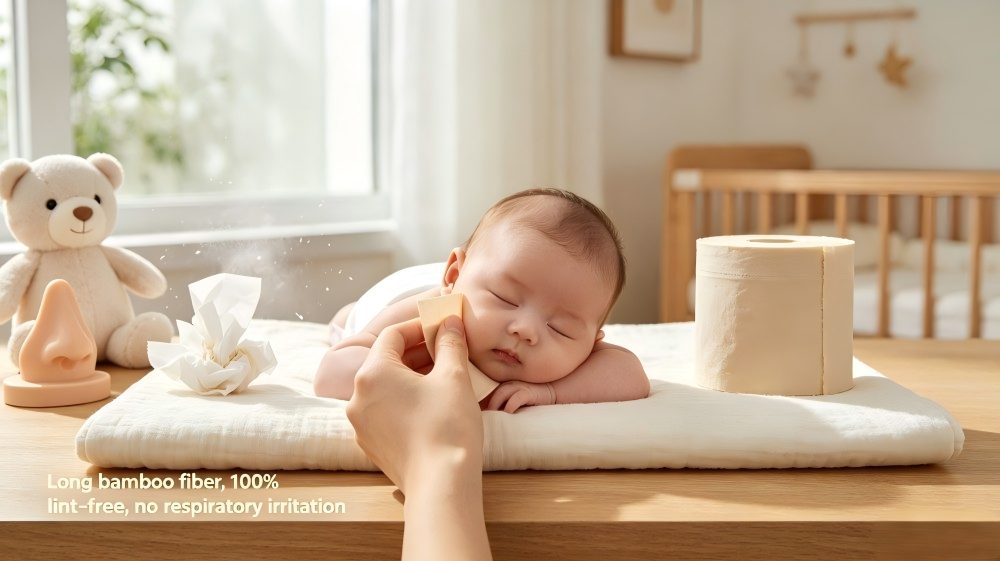
The conventional paper tissue is made from wood pulp, which is composed of short, brittle fibres. When pulled from a box or rubbed against the skin, the short fibres are released and scatter in the air as thousands of microscopic airborne particles called paper dust or lint. When you wipe a baby’s face, this dust is inhaled straight into their delicate airways, often causing sneezing, nasal congestion, and respiratory discomfort.
Bamboo, in contrast, is a grass with very long and flexible vascular fibres. These long fibres form a very cohesive web that will not break apart under friction. 100% dust-free and lint-free use with premium bamboo tissue paper. No microscopic debris is left behind on your baby’s eyelashes, nostrils, or skin folds.
2. Microscopic Smoothness Eliminates Micro-Abrasions
Under scanning electron microscopes, wood pulp fibres are very irregular with sharp, jagged edges. When rubbed repeatedly against a baby’s skin during diaper changes or mealtime cleanups, these rough fibres create micro-abrasions (invisible microscopic tears in the stratum corneum, the outermost skin layer). This mechanical friction disrupts the skin barrier, causing redness and inflammation.
Bamboo fibres are naturally smooth, round and uniform. Bamboo facial paper glides on an infant’s skin with less friction, thus preserving the integrity of the natural lipid barrier.
3. The Natural Antimicrobial Properties of “Bamboo Kun”
Living bamboo plants contain an organic bio-agent called “Bamboo Kun” that naturally protects the plant from pests, fungi, and bacterial infestation in the wild. If the raw pulp is processed properly and without harsh chemical degradation, these natural antibacterial and hypoallergenic properties remain. Bamboo tissue paper naturally prevents bacterial growth on wet paper, which reduces the risk of secondary infections on already irritated skin or diaper rash zones.
Zero Chlorine, Zero OBAs
The manufacturing process of standard white paper tissues poses significant chemical risks to developing infants.
Elemental Chlorine Bleaching (ECB) is used to bleach the white tissues to give a bright white look. The process creates toxic byproducts called dioxins, persistent organic pollutants that can deposit on the paper fibres. Often, manufacturers also add Optical Brightening Agents (OBAs) to make tissues appear artificially vivid under light. These chemicals can easily transfer to the damp skin of babies and cause allergic contact dermatitis.
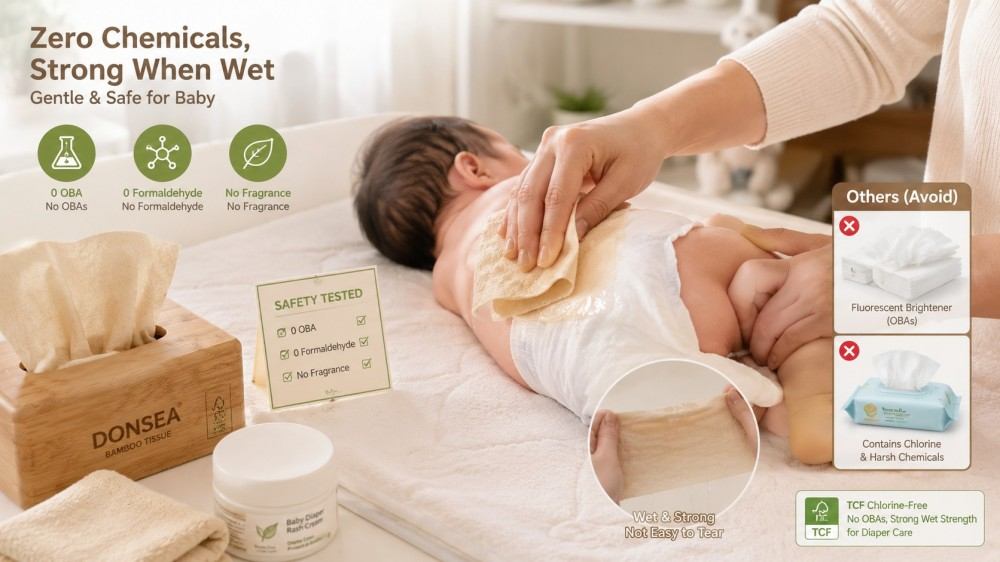
Premium bamboo tissue paper is processed using Totally Chlorine Free (TCF) processes or no bleaching at all to leave the bamboo tissue paper in its natural pale-tan state. It contains 0% OBAs, 0% formaldehyde and 0% artificial fragrances. That chemical-free purity means no synthetic toxins are absorbed through your baby’s delicate skin barrier.
Physical Comparison: Bamboo vs. Wood Pulp vs. Cotton
The following structured comparison illustrates the material differences between the three most common wiping materials used in infant care:
| Material Characteristic | Pure Bamboo Facial Paper | Traditional Wood Pulp Paper | Cotton Pads / Synthetic Wipes |
| Fiber Structure | Long, smooth, round grass fibers | Short, jagged, brittle wood fibers | Interlocked seed-hair fibers / synthetic polyester |
| Dust & Lint Release | None (100% lint-free) | High (Releases micro-dust into air) | Low, but prone to shedding fuzzy threads |
| Wet Tensile Strength | High (Maintains structure when wet) | Low (Disintegrates instantly upon contact with water) | High (Often contains non-biodegradable plastics) |
| Bleaching Method | Totally Chlorine Free (TCF) / Unbleached | Elemental Chlorine Bleaching (ECB) | Chlorine-bleached / synthetic binder agents |
| Biodegradability | 100% Biodegradable & Septic-Safe | 100% Biodegradable | Biodegradable (natural cotton) / Non-biodegradable (wipes) |
Key Everyday Scenarios in Baby Care
1. Wet-Wiping for Diaper Rash Prevention
Liquid preservatives, surfactants and fragrances are used in commercial baby wet wipes to extend their shelf life. These chemicals cause a burning feeling and extend the healing period for sensitive skin babies, and active nappy rash babies.
Its high wet strength allows parents to dip dry bamboo tissue paper into warm, pure water to create an instant, chemical-free wet wipe. It does not fall apart when wet and you can clean the nappy area thoroughly without leaving soap residues or tearing the paper.
2. Cleaning Milk Spills and Drool
Infants frequently drool and spit up milk, requiring constant wiping around the mouth and neck creases. Regular wiping with rough wood-pulp tissues rubs the skin raw, leading to painful drool rashes. The ultra-soft texture of bamboo facial paper absorbs moisture rapidly while remaining incredibly soft on the baby’s sensitive lips and cheeks.
Environmental Sustainability
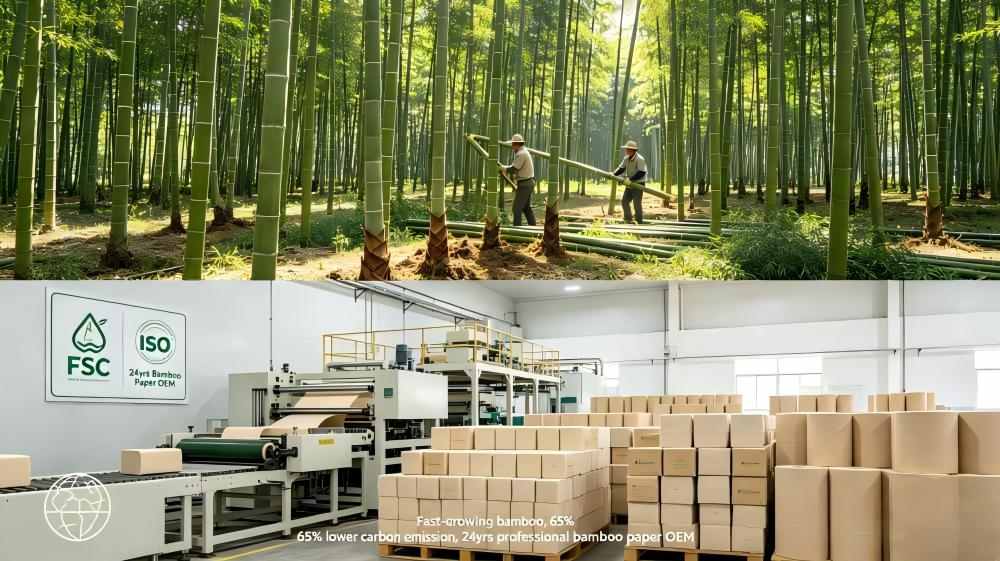
Choosing bamboo products means choosing a healthier planet for your child’s future. Bamboo is the fastest growing woody plant on earth; some species grow up to 3 feet a day.
Bamboo is a grass ( not a tree ) , which takes 30 – 50 years to mature and has to be completely uprooted ( leading to soil erosion ) . The stalks are cut at the base, leaving the root system intact to regenerate new shoots quickly.
Also, bamboo groves take in about 4 times more carbon dioxide, and they let go of around 35% more oxygen than an equivalent block of trees, sort of the same idea. When it comes to making bamboo tissue paper, it creates roughly 65% fewer carbon emissions compared with producing virgin wood pulp paper.
Sourcing Certified Bamboo Tissue Paper for Private Label Brands
As global demand for clean, non-toxic baby products keeps growing—at least in my mind it does, retail brands, e-commerce companies, and baby care distributors are quietly expanding their catalogs to bring in sustainable alternatives. In practice, partnering with a seasoned, certified manufacturer is really essential because it helps ensure product safety.
Chongqing Donsea Paper Co., Ltd. (Donsea Paper) has specialized in manufacturing high-grade bamboo paper products for over 24 years. We offer fully customizable OEM/ODM services for brands looking to launch their own private-label lines of baby-safe paper products:
- FSC Certified Supply Chain: Guarantees that the bamboo is sourced from sustainably managed forests without harming wildlife habitats.
- FDA & ISO Compliance: Ensures every batch of bamboo facial paper meets strict international health, sanitation, and safety regulations.
- Custom Packaging Options: We provide fully customizable zero-plastic packaging and paper-wrapped packaging options to meet modern environmental standards.
Frequently Asked Questions
Q1: Is bamboo tissue paper soft enough for a newborn baby?
A1: Yes. High-quality bamboo tissue paper goes through a mechanical calendaring phase, so the fibers get smoothed out kinda evenly. It tends to feel way softer than the usual recycled paper, and it is also more gentle on baby skin compared to standard wood pulp tissues.
Q2: Does harvesting bamboo for tissue paper deplete the food source of pandas?
A2: No. The bamboo species that ends up as paper pulp (for example, Neosinocalamus affinis) is actually not the same as the wild bamboo that the giant pandas eat. Also, the commercial “paper bamboo” is raised on managed farms for agriculture, not inside protected places or wild panda sanctuaries.
Q3: Is bamboo toilet paper safe for household plumbing and septic systems?
A3: Yes. 100% bamboo tissue paper is really biodegradable. It tends to decompose pretty fast when it’s put under water, so it’s considered fully safe for everyday household toilets, RVs, marine sanitation systems, and also septic tanks.