
What are the Key Applications of Commercial Toilet Paper
Commercial toilet paper is a hygiene product made for high-traffic places where large numbers of people require convenient and reliable sanitation solutions. Compared with standard household toilet roll, commercial toilet paper is produced for business needs, public settings and industrial environments. focusing on durability,cost efficiency, solid hygiene, and consistent supply.
You will see commercial toilet paper in office towers, hotels, healthcare sites, and factories. It helps keep restrooms clean and makes daily visits feel more comfortable. Use keeps growing as workplaces pay more attention to cleanliness habits, sustainability, and smoother daily operations.
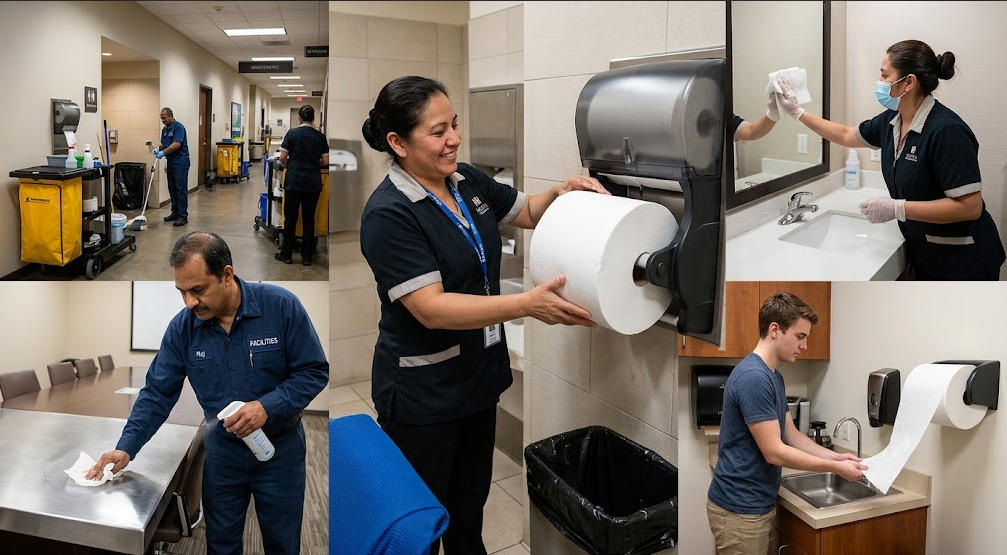
9 Common Applications of Commercial Toilet Paper
1. Office Buildings and Corporate Facilities
A very common use is in offices and corporate sites. Daily restroom use can be high since many staff members come through. That creates a need for paper that holds up during frequent use and does not cause constant restocking.
Many companies pick commercial toilet paper because it fits both budget and quality. Jumbo rolls and large packs can lower how often staff replace supplies. Better dispensers also reduce the time spent on restroom upkeep.
Clean restrooms matter for comfort. They also shape how people view the workplace. When supplies are kept in good order, hygiene goals are easier to meet.
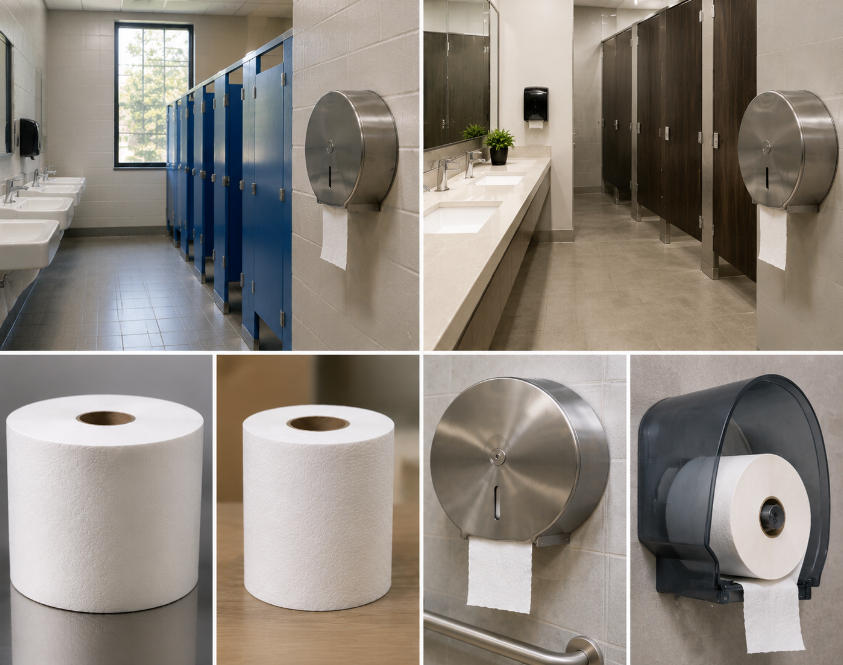
2. Hotels and Hospitality Facilities
Hotels and similar businesses depend on commercial toilet paper for guest comfort. People notice restroom conditions, and that affects how guests feel about the place. For that reason, solid hygiene supplies are a key part of how hospitality teams manage their spaces.
Different properties may pick different options. Some hotels prefer softer, premium multi-ply rolls. Others choose more budget-friendly paper that works well with fast refill systems.
Commercial toilet paper is used in guest bathrooms, public restrooms, meeting areas, dining rooms, and other visitor zones. Keeping it available helps these businesses hold steady cleanliness standards across the site.
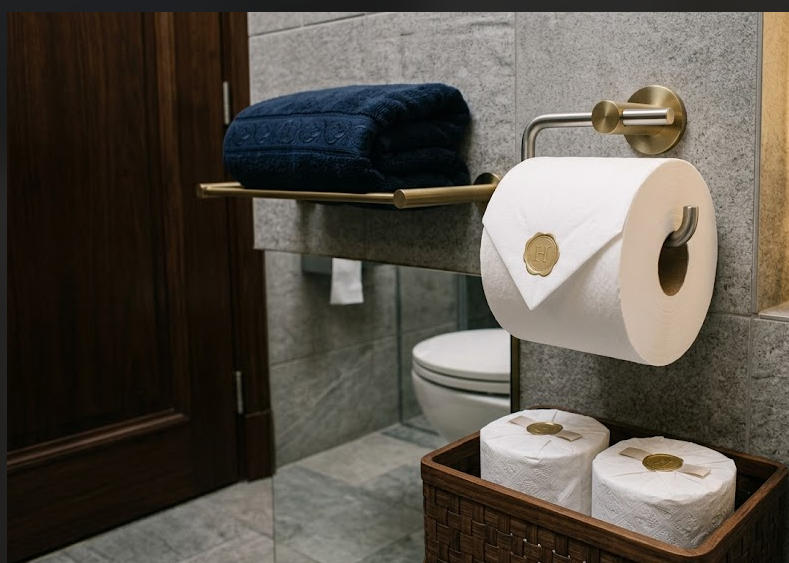
3. Healthcare Facilities
In healthcare settings, hygiene rules are strict. Hospitals, clinics, nursing homes, and rehab centers need dependable restroom supplies. Commercial toilet paper is used often because it supports regular cleaning and meets higher sanitation needs.
Healthcare sites usually pick toilet paper that is easy to store and handle. It should work well with standard dispenser units. It also needs to hold up during day after day use. Some toilet paper options are made to cut down on waste. They can also make supply tracking simpler. In many places, they are chosen to fit infection control rules.
In hospitals and care centers, restroom cleanliness links directly to patient well-being. It also supports the general cleanliness of the area. When a facility uses dependable commercial toilet paper, staff can keep restrooms in a clean state for patients, guests, and coworkers.
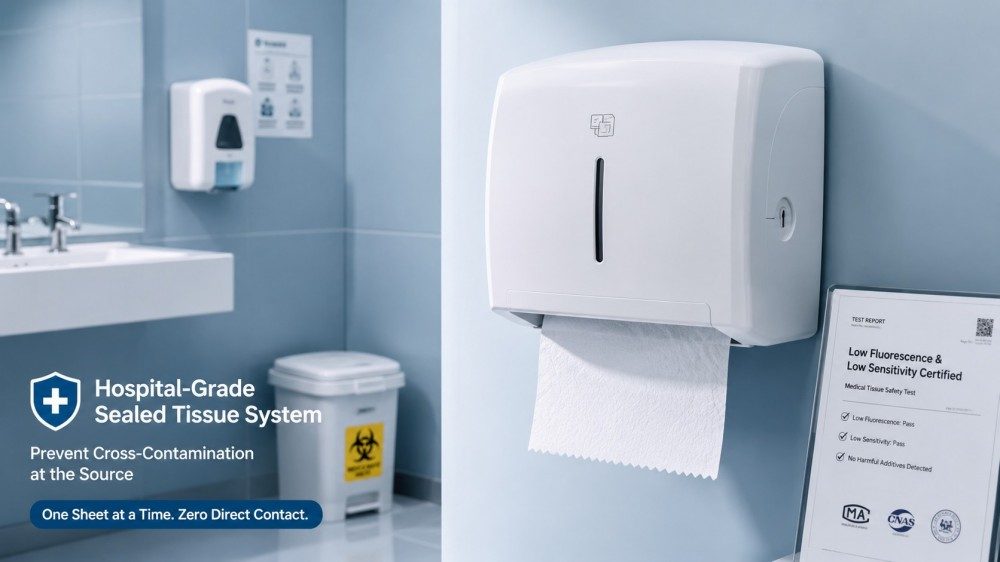
4. Schools and Educational Institutions
Schools, colleges, and training sites see heavy toilet paper use each day. Because of that, they need tough hygiene paper that lasts. Commercial rolls are often put in student bathrooms, staff restrooms, classrooms, labs, and other campus areas.
Many schools cannot spend much on upkeep. For that reason, lower cost commercial toilet paper is a big help. Jumbo rolls and bulk packing can mean fewer change outs. They also make stock checks less work.
When schools keep supplies on hand, students tend to follow better hygiene routines. That supports a safer and more comfortable learning space.
5. Public Facilities and Transportation Hubs
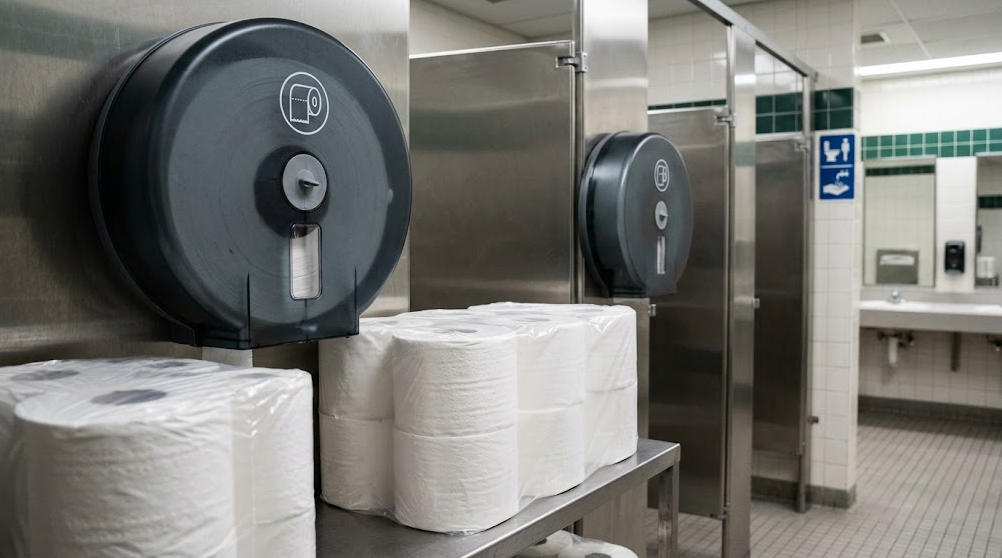
Airports, train stations, shopping centers, museums, and government sites see many restroom visits daily. Commercial toilet paper matters there because it is built for steady use. It is also meant for high volume needs.
With larger commercial toilet paper setups, operators can keep restrooms open longer. This can lower the amount of time spent on frequent refills. These products matter a lot in places where restroom service affects how visitors judge the site.
Many public venues pair commercial toilet paper with automatic dispensers. Some also use upkeep schedules and systems for restroom care. This approach can limit waste and improve day to day hygiene.
6. Industrial and Manufacturing Facilities
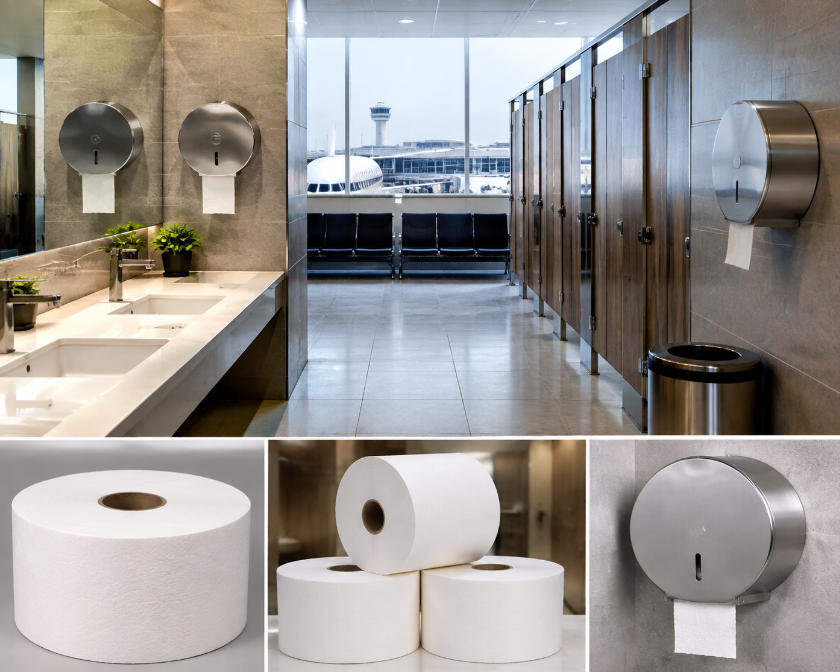
Warehouses, factories, workshops, and plants rely on commercial toilet paper for workers. These sites want practical and low cost hygiene supplies. They also need products that can serve large groups of people.
Toilet paper is placed in worker restrooms, locker and changing areas, work floors, and office spaces. When the paper is made to dispense well and last, companies can manage supplies without pushing up costs.
In industries where clean conditions are required, restroom hygiene still plays a role. This includes food processing, medicine work, and electronics manufacturing. Clean restrooms help back overall workplace hygiene efforts.
7. Restaurants and Food Service Businesses
Restaurants, cafes, and catering venues need commercial toilet paper for both staff bathrooms and customer restrooms. In places that serve people all day, having the paper ready on schedule matters.
Toilet paper made for restaurant use usually aims at quick, smooth dispensing and less wasted paper. It is also made to fit common restroom dispenser setups. Better paper can support steadier hygiene and a more pleasant visit for guests.
Some restaurant owners also pick greener commercial toilet paper. They do this to show they care about the environment and run their business responsibly.
8. Commercial Cleaning and Facility Management
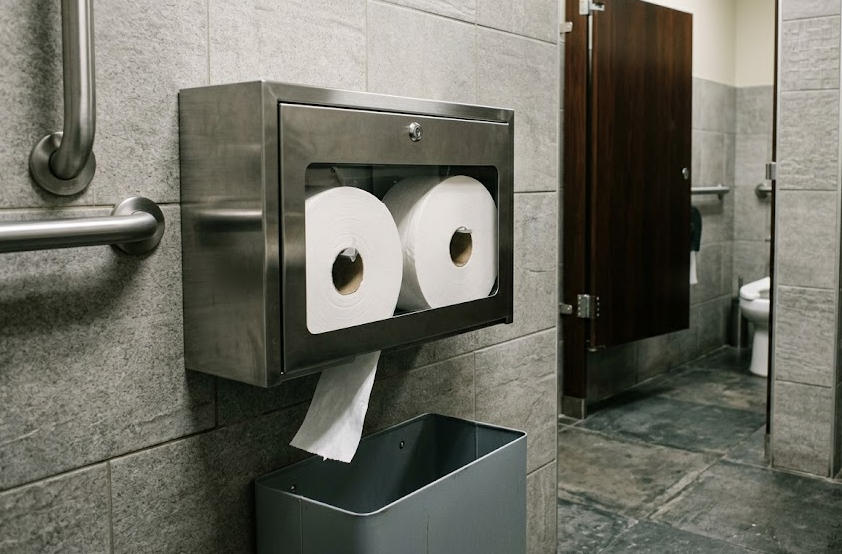
Cleaning firms and facility managers often include commercial toilet paper in their hygiene routines. They handle restrooms in more than one building, so the product must be simple to store, hand out, and swap out when needed.
These toilet paper systems can help cleaning staff keep restroom supplies consistent. Teams can track use and run day to day tasks with fewer disruptions. Some facilities use dispensers linked to stock tracking, which can help prevent sudden shortages and extra waste.
9. Sustainable and Eco-Friendly Hygiene Projects
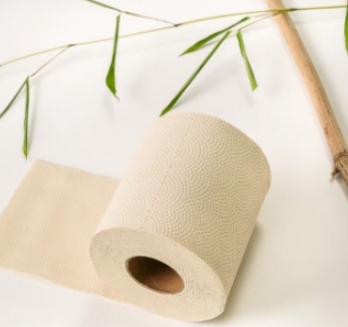
As environmental concerns grow, more sites are using commercial toilet paper in sustainability plans. Many businesses and institutions want products made from recycled fibers, bamboo, or paper sourced in a careful way.
Eco-friendly toilet paper can help meet sustainability targets without losing cleaning performance. Some suppliers now offer options with less packaging, materials that break down more easily, and certifications tied to responsible production.
Sustainable toilet paper is also common in green building work. Companies that focus on lower impact, plus public agencies, often include these products in wider environmental plans.
Types of Commercial Toilet Paper for Different Applications
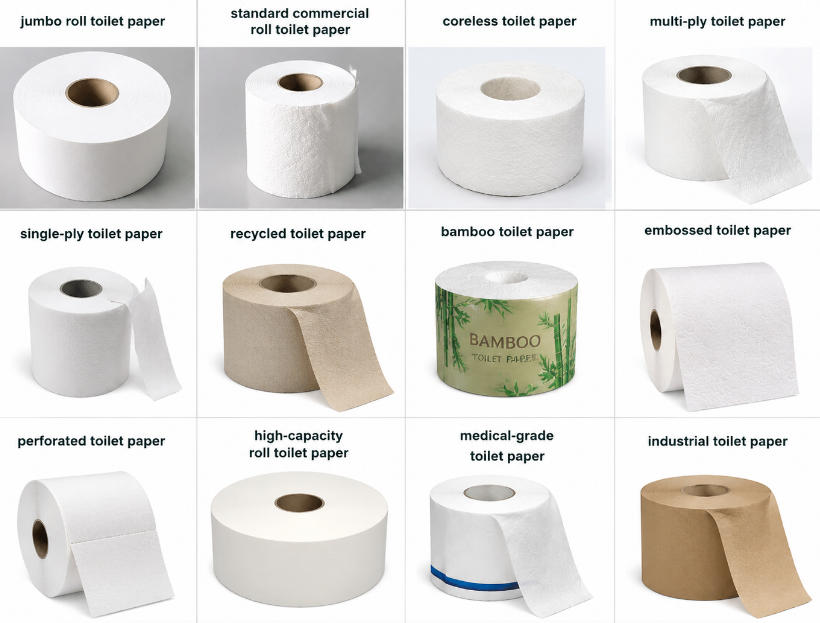
| Type of Commercial Toilet Paper | Key Features | Main Advantages |
| Jumbo Roll Toilet Paper | Large roll capacity, fewer roll replacements, designed for high-volume use | Reduces maintenance frequency and improves restroom efficiency |
| Standard Commercial Roll Toilet Paper | Similar to household rolls but with stronger commercial-grade materials | Easy to install, cost-effective, suitable for moderate traffic areas |
| Coreless Toilet Paper | No cardboard core, increased tissue capacity, less waste | Maximizes paper usage, reduces waste, and improves storage efficiency |
| Multi-Ply Commercial Toilet Paper | Two or more layers for improved softness, strength, and absorbency | Provides better comfort and user experience |
| Single-Ply Commercial Toilet Paper | Lightweight, economical, designed for controlled consumption | Lower cost, efficient for large-scale usage |
| Recycled Commercial Toilet Paper | Made from recycled fibers, environmentally friendly materials | Supports sustainability goals and reduces environmental impact |
| Bamboo Commercial Toilet Paper | Made from renewable bamboo fibers, biodegradable options available | Renewable material choice with reduced dependence on traditional paper sources |
| Embossed Commercial Toilet Paper | Textured surface improves softness and absorption | Enhances comfort and premium restroom experience |
| High-Capacity Roll Toilet Paper | Extra-long rolls designed for extended service intervals | Reduces labor costs and improves supply management |
| Medical-Grade Commercial Toilet Paper | Designed for hygiene-sensitive environments with strict quality requirements | Supports sanitation standards and healthcare hygiene practices |
| Industrial Commercial Toilet Paper | Durable, economical, suitable for heavy daily consumption | Provides reliable performance in demanding work environments |
Selection Guide by Application
| Application Area | Recommended Commercial Toilet Paper Type | Reason for Selection |
| Office Buildings | Standard rolls, coreless rolls, multi-ply rolls | Balances comfort, cost, and maintenance efficiency |
| Hotels and Resorts | Multi-ply, embossed, premium rolls | Improves guest comfort and service quality |
| Hospitals and Clinics | Medical-grade, high-capacity rolls | Supports hygiene management and continuous availability |
| Schools and Universities | Jumbo rolls, single-ply rolls, recycled rolls | Handles high usage while controlling costs |
| Restaurants and Food Service | Standard rolls, embossed rolls, recycled rolls | Provides comfort while supporting sustainability goals |
| Airports and Public Facilities | Jumbo rolls, high-capacity rolls | Designed for heavy traffic and reduced maintenance |
| Factories and Warehouses | Industrial rolls, single-ply rolls | Offers economical and durable hygiene solutions |
| Green Buildings | Recycled rolls, bamboo toilet paper | Helps achieve environmental sustainability targets |
Final Thoughts
Commercial toilet paper is used in many places, like offices, hotels, clinics, schools, public buildings, factories and restaurants. It is not only about cleanliness. Its importance goes beyond basic sanitation, as it supports hygiene management, operational efficiency, user comfort, and sustainability goals.
Choosing the right type of commercial toilet paper matters as well as roll style and material quality. When a facility gets these right, restrooms tend to stay cleaner. Services run more smoothly as well. The overall impact can be less harmful to the environment.