
Innovations in Coreless Toilet Paper
Coreless toilet paper has turned into a more and more popular selection in commercial and home hygiene settings. Where traditional toilet paper rolls still use that cardboard middle tube, coreless toilet paper is made so the roll stays fully usable , like the center tube is just gone. That change helps cut down on material waste, but it also tends to make storage easier, boosts roll capacity, and generally supports sustainability goals. Since environmental worries and operational efficiency keep getting more attention across many industries, tissue paper manufacturers are rolling out advanced technologies and design to improve the performance and convenience of coreless toilet paper products.
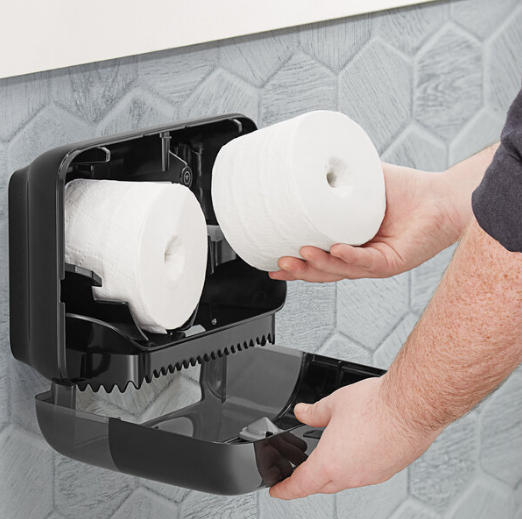
Getting the Basics of Coreless Toilet Paper
Coreless toilet paper gets made with special winding approaches , so the tissue roll keeps its form without relying on a cardboard core. The middle is tightly compressed or built with a structured arrangement, meaning the paper comes out in a smooth way from dedicated dispensers, or holders that are compatible. This layout avoids the cardboard tubes that are usually thrown away after use. So in practice , nearly the entire roll can be used, which reduces waste and increases material efficiency at the same time.
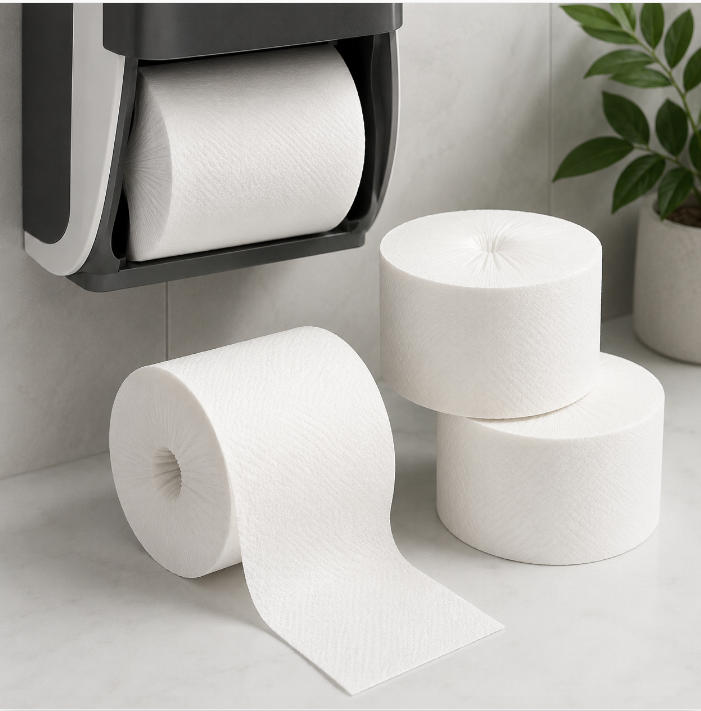
The Evolution of Coreless Toilet Paper
| Development Stage | Key Characteristics | Main Innovations | Benefits |
| Traditional Toilet Paper Era | Toilet paper rolls used cardboard cores for structural support | Standard winding and paper converting methods | Easy dispensing and stable roll structure |
| Early Coreless Toilet Paper Development | Initial attempts to remove cardboard cores | Compact roll winding techniques | Reduced cardboard waste and improved sustainability |
| Improved Structural Design Stage | Better roll stability without cores | Reinforced inner winding and embossing technology | Stronger rolls with smoother dispensing |
| High-Capacity Roll Innovation | Larger paper volume per roll | High-density winding systems | Longer-lasting rolls and reduced replacement frequency |
| Sustainable Material Integration | Increased use of eco-friendly fibers | Recycled pulp and bamboo fiber technologies | Lower environmental impact and improved biodegradability |
| Advanced Dispensing Systems | Specialized dispensers designed for coreless rolls | Controlled dispensing and touch-free systems | Better hygiene and reduced paper waste |
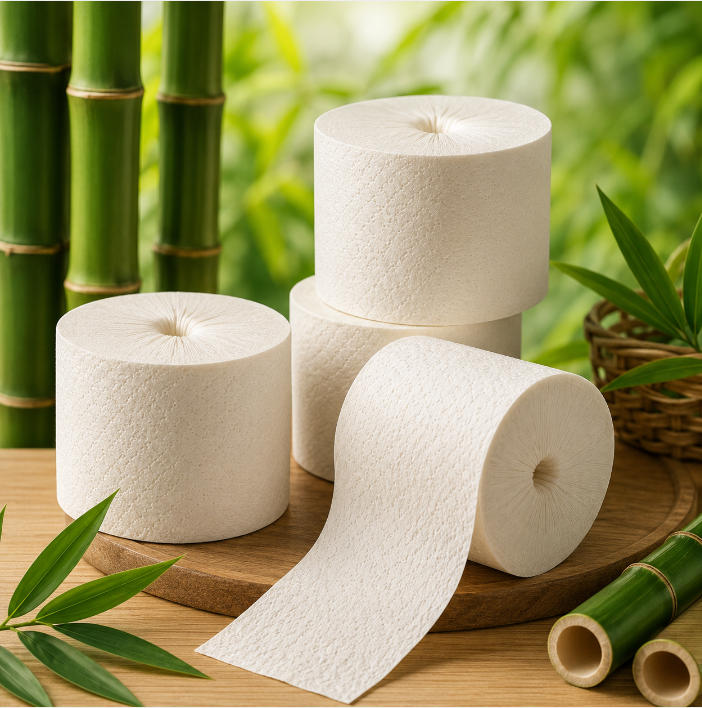
Key Advancements in Coreless Toilet Paper
1. Improved High-density Winding System
A major step forward in coreless toilet paper is the creation of high-density winding methods. Early coreless rolls often felt less stable, because they did not include cardboard support in the center, and this made the inside structure harder to hold together. Today winding technology lets tissue makers compress the paper layers tightly while still keeping the softness people want, and keeping it practical in everyday use.
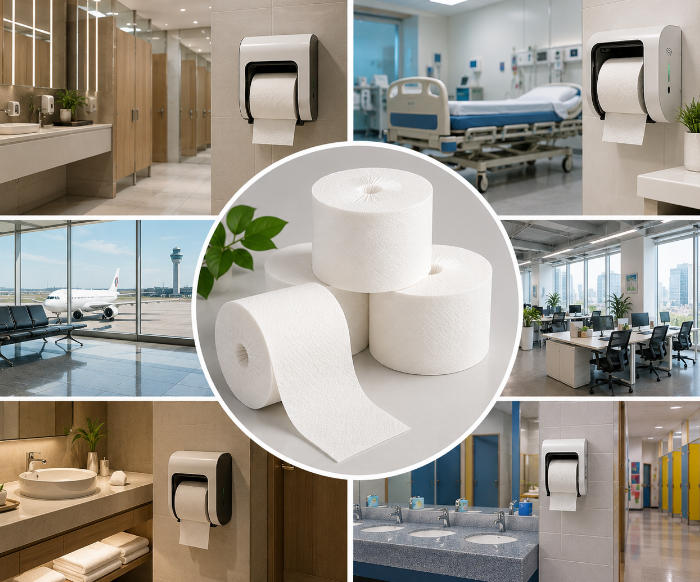
Better tension regulation systems, carefully manage the winding pressure during manufacturing. As a result the roll becomes tougher and more compact, so it can carry more tissue without collapsing. High-density winding also helps lengthen roll life, which reduces how often replacements are needed in busy environments like airports, hotels, retail shopping centers and office buildings.
2. Additional Structural Reinforcement
Keeping roll stability when there is no cardboard core is tricky, so engineers have been forced into more creative structural solutions. Over time, manufacturers introduced reinforced embossing patterns, and they also added multilayer bonding techniques that help support the inner build of coreless rolls, instead of relying on a central tube.
The embossing process does more than improve softness and absorbency. It also boosts the stiffness of the tissue sheets so the whole roll stays steadier. With multi-ply bonding, there is less risk of sagging or twist during shipping, warehousing, and dispensing. Because of this, coreless toilet paper can still hold its shape and remain usable even when conditions are tough.
3. Sustainable Fiber Innovations
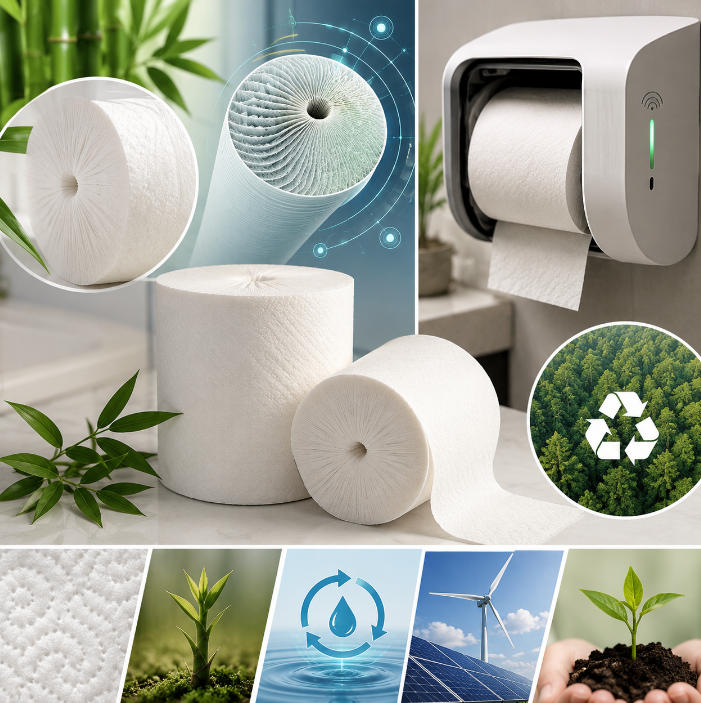
Environmental sustainability is one of the primary driving forces behind the growth of coreless toilet paper. Manufacturers are increasingly adopting renewable and recycled materials to reduce environmental impact.
| Sustainable Material Innovation | Description | Key Materials Used | Environmental Benefits |
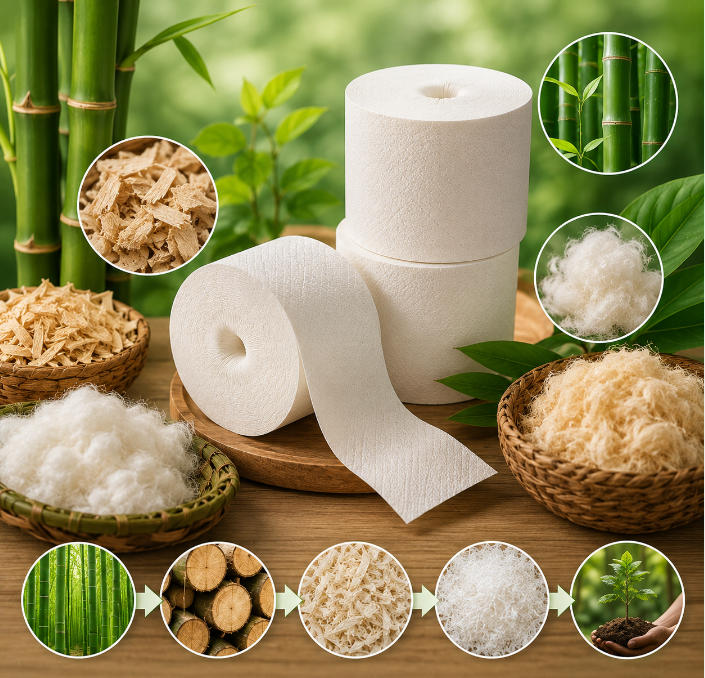
| Bamboo Fiber Technology | Use of rapidly renewable fibers to produce soft and durable bamboo toilet paper | Bamboo pulp | Reduces deforestation and supports renewable resource usage |
| Recycled Fiber Processing | Advanced recycling technologies improve the quality of recycled tissue | Post-consumer recycled paper and recovered pulp | Minimizes landfill waste and conserves natural resources |
| FSC-Certified Virgin Pulp | Use of responsibly sourced wood pulp from certified forests | FSC-certified wood fibers | Encourages sustainable forest management |
| Chlorine-Free Bleaching | Adoption of safer bleaching processes that avoid chlorine chemicals | Oxygen-based or hydrogen peroxide bleaching agents | Reduces water pollution and toxic chemical discharge |
| Biodegradable Additives | Development of eco-friendly additives that decompose naturally | Plant-based softeners and biodegradable binders | Improves environmental compatibility after disposal |
| Water-Efficient Pulping | Advanced pulping systems designed to reduce water consumption | Closed-loop water recycling systems | Conserves water resources and lowers wastewater generation |
| Low-Carbon Manufacturing Materials | Use of renewable energy and lower-emission production inputs | Biomass energy, renewable electricity, sustainable fibers | Reduces carbon footprint during production |
| Lightweight High-Strength Tissue | Improved fiber engineering creates thinner but stronger tissue | Refined cellulose fibers and multilayer bonding materials | Reduces raw material consumption and transportation weight |
| Compostable Coreless Tissue Design | Fully biodegradable coreless rolls designed for minimal waste | Natural fibers and biodegradable processing materials | Eliminates cardboard core waste and supports compostability |
4. Smart Manufacturing and Automation
Automation has changed the way coreless toilet paper is made. Today’s plants often run intelligent production systems, they rely on sensors and machine learning algorithms, plus automated quality checks that catch defects early, before anything ships.
These systems keep checking things like roll diameter, paper thickness, winding stability, moisture conditions, and sheet alignment while the line is running. Automated spotting of defects supports more steady product quality, so raw material waste goes down and production downtime is reduced.
Artificial intelligence along with predictive maintenance approaches are also showing up more and more. These systems allow manufacturers to tune machine output, boost day to day operational efficiency, and reduce maintenance expenditures.
5. Advanced Dispensing Systems
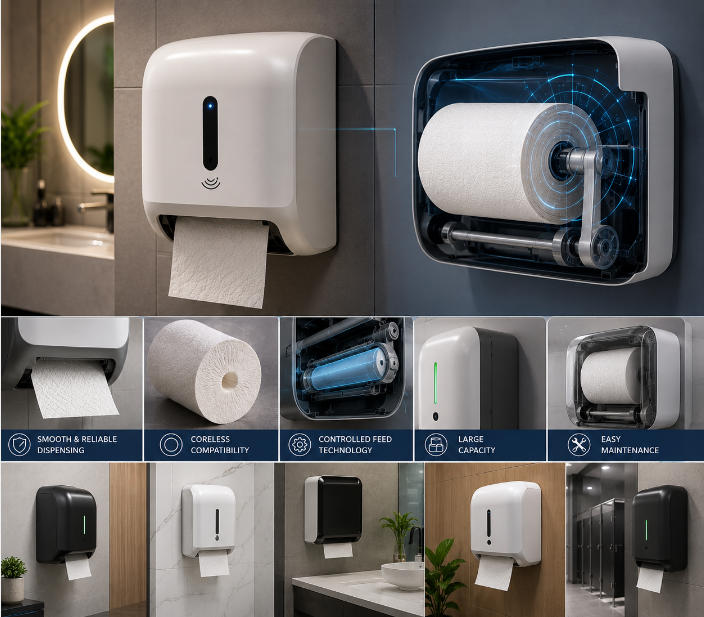
The development of specialized dispensing systems has played a major role in the success of coreless toilet paper. Since coreless rolls differ structurally from traditional rolls, manufacturers have created dispensers specifically designed to support smooth and reliable dispensing.
| Advanced Dispensing System | Key Features | Typical Applications | Innovation Focus |
| High-Capacity Coreless Dispenser | Designed to hold larger coreless rolls with extended paper capacity | Airports, shopping malls, office buildings | Operational efficiency |
| Controlled Dispensing System | Releases a limited amount of tissue per use | Commercial restrooms and public facilities | Consumption control |
| Touch-Free Sensor Dispenser | Uses motion sensors for automatic paper dispensing | Hospitals, healthcare facilities, smart buildings | Sanitation and user safety |
| Smart IoT-Connected Dispenser | Monitors usage levels and refill status in real time | Smart commercial buildings and transportation hubs | Digital restroom management |
| Dual-Roll Backup Dispenser | Automatically switches to a second roll when the first is depleted | High-traffic facilities and educational institutions | Continuous availability |
| Compact Space-Saving Dispenser | Designed with a smaller footprint for limited restroom spaces | Hotels, small offices, residential bathrooms | Space optimization |
| Anti-Jam Dispensing Mechanism | Prevents paper tangling and uneven tearing | Public restrooms and industrial facilities | Dispensing reliability |
| Transparent Refill Monitoring Dispenser | Features visible indicators for remaining tissue levels | Commercial cleaning operations | Maintenance efficiency |
| Eco-Friendly Dispenser Design | Manufactured using recyclable or sustainable materials | Green-certified buildings and eco-friendly facilities | Sustainable restroom solutions |
| Modular Dispenser System | Allows interchangeable parts and flexible installation options | Multi-site commercial operations | Adaptability and scalability |
6. Compact Storage and Transport Efficiency
Coreless toilet paper brings real logistical gains compared to regular tissue products. Since cardboard cores do not take up extra space, producers can fit more usable tissue in each roll, and pack additional rolls into shipping cartons.
This compact design improves warehouse storage efficiency, and it also cuts down transportation costs. Less shipments are needed to move the same amount of usable tissue, which helps lower fuel consumption and even carbon emissions. These benefits, they matter a lot for big commercial facilities and distribution networks.
7. Smart Restroom Integration
The rise of smart building techs has, in a way, opened up new chances for restroom management. A lot of modern coreless toilet paper dispensers now plug into Internet of Things systems, they can watch how much paper is being used and track refill levels in real time.
These smart units can automatically push maintenance alerts when supplies start running low , so building teams can dodge sudden shortages. And that also helps overall operations move more smoothly, less interruption more control. Plus the information analytics coming from these setups makes it easier for facility managers to plan inventory better, while also cutting down on unnecessary waste.
8. Consumer-Focused Product Improvements
Manufacturers keep boosting user comfort and daily convenience through improved tissue design. Current coreless toilet paper is made to feel gentler, last longer, and absorb more effectively than older options.
Hypoallergenic materials, fragrance free options, and antibacterial tissue technologies are becoming more common too, mainly in healthcare, and in premium hospitality markets. These consumer focused changes help broaden the appeal of coreless toilet paper for a wider group of people, because yeah, usage patterns are changing.
Challenges and Potential Solutions in Coreless Toilet Paper Innovations
| Challenge | Description | Impact on Industry | Technological Solutions |
| Maintaining Roll Stability | Coreless rolls lack the structural support provided by cardboard tubes | Rolls may deform during storage, shipping, or dispensing | Reinforced embossing, multilayer bonding, and high-density winding technologies |
| Advanced Manufacturing Requirements | Producing stable coreless rolls requires highly precise equipment | Increased investment in specialized machinery and automation | Intelligent tension control and AI-assisted production systems |
| Dispenser Compatibility | Traditional dispensers are often unsuitable for coreless rolls | Additional costs for dispenser replacement or upgrades | Development of universal and specialized coreless dispensers |
| Consumer Acceptance | Some consumers are unfamiliar with coreless products | Slower market adoption in certain regions | Eco-awareness campaigns and improved product design |
| Transportation Durability | Coreless rolls may be more sensitive to compression during logistics | Increased risk of damaged products during delivery | Protective packaging and enhanced roll reinforcement techniques |
| Moisture Resistance | Humidity can affect the shape and dispensing performance of rolls | Reduced product quality in damp environments | Moisture-resistant packaging and improved fiber bonding |
| Balancing Softness and Strength | Soft tissue may become structurally weaker without a core | Product performance inconsistencies | Advanced fiber blending and embossing technologies |
| Sustainable Material Sourcing | Securing enough eco-friendly raw materials can be difficult | Supply chain fluctuations and production cost increases | Greater use of bamboo, recycled fibers, and certified pulp sources |
| Packaging Sustainability | Reducing packaging waste while protecting rolls remains challenging | Environmental concerns related to plastic packaging | Compostable, recyclable, plastic-free packaging and paper-based packaging innovations |
| High Initial Equipment Costs | Transitioning to coreless production systems can be expensive | Financial barriers for smaller manufacturers | Long-term operational savings and scalable automation solutions |
| Efficient Dispensing Control | Improper dispensing may lead to tissue waste or tearing issues | Reduced user satisfaction and higher consumption rates | Controlled dispensing mechanisms and smart dispenser technologies |
| Quality Consistency | Maintaining consistent roll density and paper quality is technically demanding | Potential production defects and customer complaints | Automated inspection systems and predictive quality analytics |
| Carbon Reduction Goals | Manufacturers face pressure to reduce emissions throughout production | Need for greener manufacturing operations | Renewable energy adoption and low-carbon manufacturing processes |
| Waste Reduction Across Supply Chains | Eliminating all unnecessary waste in production and logistics is difficult | Sustainability targets may be harder to achieve | Circular economy initiatives and closed-loop recycling systems |
Final Words
Coreless toilet paper innovations are changing the tissue paper industry, by way of sustainable materials, advanced manufacturing technologies, practical dispensing systems, smart restroom integration, etc. By getting rid of the cardboard cores, these products cut down on waste, make storage easier and support environmentally responsible practices.