
How Tissue Paper Manufacturers Control Batch Consistency
Meeting the specs one time is not sufficient for tissue paper buyers. The real test is to ensure that every repeat order delivers the same quality, appearance, and user experience.
Batch consistency of tissue paper is the ability of a manufacturer to produce the same product specifications across multiple production cycles. Because we know here at Donsea Paper that this consistency can not come from just inspecting the final product. It is based on standardised production specifications coupled with ongoing tracking of the process and deviations to achieve the chosen specifications, and systematic management of batches.

What Causes Variations Between Tissue Paper Production Batches?
Different production batches may differ (even when produced from a single tissue product). These differences are generally due to variations in production conditions rather than a single quality problem.
Common causes are:
- Raw material differences: Variations between batches of pulp or fibre characteristics may affect the behaviour of production.
- Production variation: Speed variation and equipment adjustments.
- Equipment conditions: Component wear, maintenance, or equipment adjustments may lead to production fluctuations.
- Production changeover: Variations in production changeover due to product changes shall be controlled.
For example, switching to bamboo toilet paper may introduce variability into future production runs due to differences in batches of material or in the conversion environment. In an effort to improve the consistency of our tissue paper batches, we first need to understand the sources of variation.
Standardized Production Specifications: The Foundation of Consistency
A reliable product begins with a well-documented manufacturing standard. Repeat orders for production at Donsea Paper should be based on product specifications and requirements of the customers. Without standard specifications, teams in production may have different interpretations of the same product requirements.
A good standardisation process includes:
- Approved product specifications: Consistent product requirements for each product model.
- Recorded production settings: Recording machine settings and processing conditions.
- Standard operating procedures: Providing consistent operating instructions for production teams.
- Order requirement records: Storing approved customer requirements for repeat production.
For example, repeat orders for bamboo facial tissue should refer to previously recorded product specifications instead of informal product descriptions. Manufacturers should also maintain clear records of product specifications such astissue paper GSM and other agreed-upon requirements.
Written production standards will help minimise variations caused by inconsistent instructions, settings, and order communication.
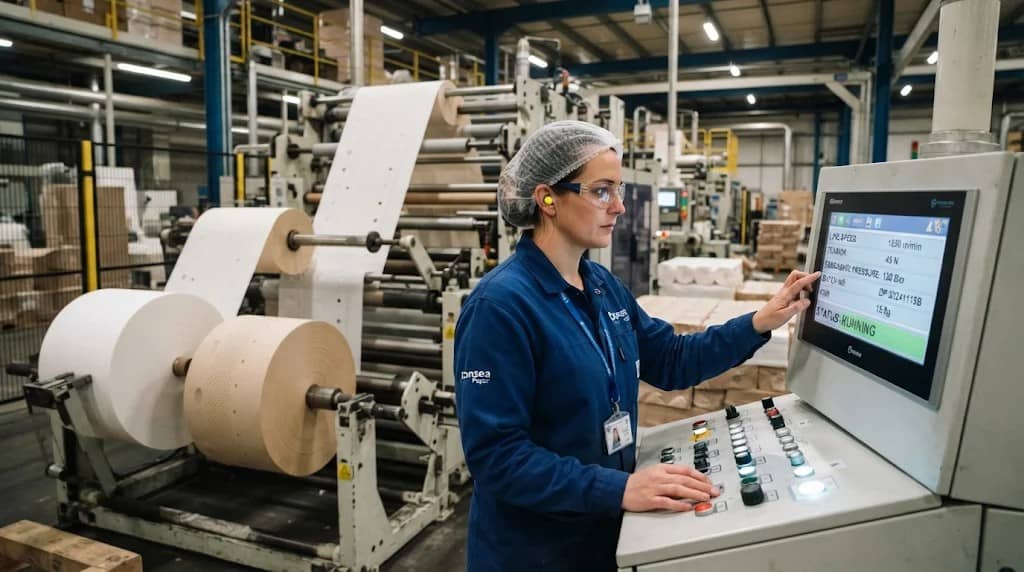
Production Process Monitoring: Identifying Variations Early
Standardisation provides the target of production, while process monitoring helps the manufacturers to achieve it. Tissue paper manufacturers should inspect the finished product and monitor operating conditions of importance during the production process.
Important management activities include:
- Reviewing operating conditions of equipment.
- Comparing production variables to accepted standards.
- Spotting major deviations in production.
- Detecting abnormal trends before they affect larger runs of product.
For instance, variations in converting machines may impact the consistency of a continuous run of bamboo facial tissue. With timely monitoring, production personnel can investigate the problem and make the appropriate adjustments. Close monitoring of production prevents minor operational variations from transforming into batch-wide quality issues.
This is particularly relevant to tissue paper producers that produce more than one product type and that alter product specifications or bulk orders.
In-Process Control: Why Final Inspection Alone Is Not Enough
The final inspection is in checking and ensuring meeting the requirements by finished products. It does not replace good manufacturing control, however.
Quality management in tissue paper is a 3-fold effective process:
| Control Stage | Main Activities |
| Before production | Confirm product specifications, approved materials, and production settings |
| During production | Monitor operating conditions and identify process deviations |
| After production | Review production records and verify batch compliance |
In-process control and final inspection are related but different practices for manufacturers. In-process control aims to detect and correct problems in production. Final inspection is a final check before products depart.
Manufacturers can also develop documented procedures based on the ISO 9001 quality management principles (process control, documented information, and continual improvement).
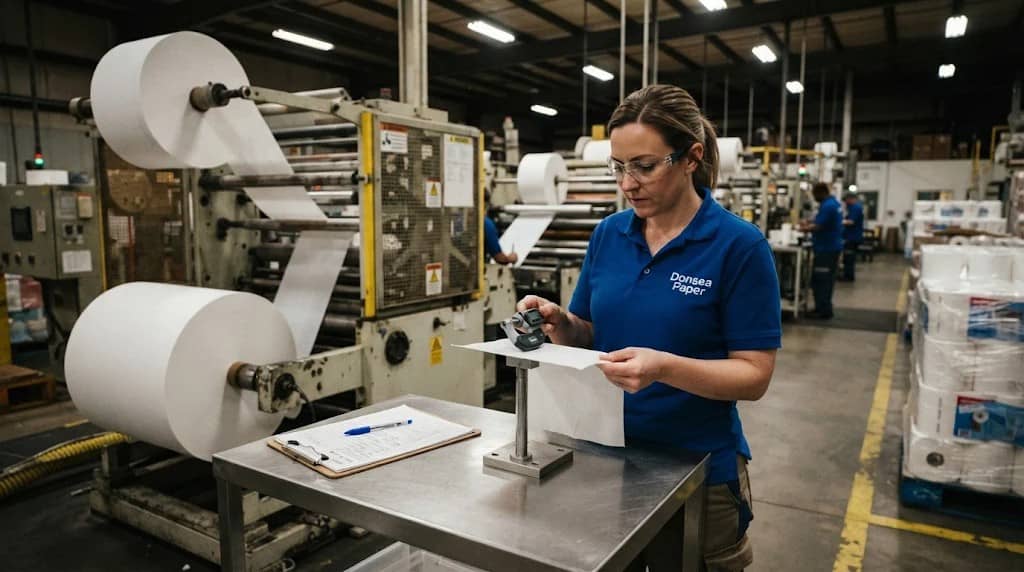
Production Change Management and Corrective Actions
Not all production conditions are the same. Batches of raw material, maintenance of equipment, settings of machines, and product changeovers can all vary. Therefore, clear change management procedures must be part of an effective tissue paper batch management process.
1. Change Management for Raw Materials
From the first incoming batch of a new material or supplier, manufacturers must assess if the change is affecting any existing production conditions. Some further verification may be needed before resuming routine production.
2. Records of equipment adjustments
Document all repairs and replacement of components, as well as any significant adjustments to the machine itself. Production teams can then compare revisions to ensure steady product quality.
3. Investigations of deviation.
If an approved batch is out of specification, manufacturers should search its production records to identify the probable cause.
4. Corrective measures for prevention
After determining the cause, manufacturers should take corrective action and monitor it for effectiveness in future production.
Such actions prevent the recurrence of such production issues during subsequent orders.
How Batch Consistency Supports OEM and Repeat Orders
For wholesalers, distributors, and private label companies, a consistent product is important for sustaining a long-term relationship. If your first product does not wow them, and subsequent shipments vary enough to result in complaints and/or inventory headaches, it may not survive long.
Business reasons for maintaining a consistent quality of tissue paper in future shipments include:
- Brand consistency: Buyers are more confident in what they are buying.
- Re-order confidence: Buyers are more confident to re-order products.
- Easier inventory management: Standardised specifications make it easier to replace products.
- Minimized quality disputes: Written production standards provide a common reference point for buyers and manufacturers.
For example, a retailer sourcing her private label bamboo facial tissue will want core shipments to meet the product specs and packaging standards that were agreed upon. At Donsea Paper, we know that OEM manufacturing is not about one-shot samples. So, one part of our focus on developing long-term client relationships is fulfilling repeat orders that always meet the product requirements.
Our tissue paper product range provides a way for a buyer to tell us what he or she wants in terms of product specs, packaging, and other custom orders.
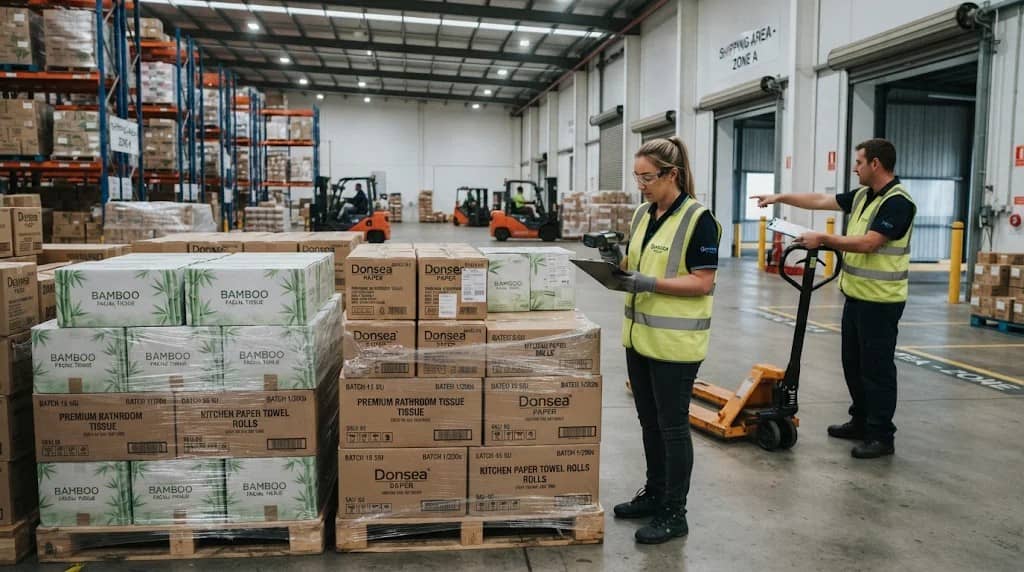
How Donsea Paper Approaches Consistent Tissue Paper Manufacturing
At Donsea Paper, being a tissue paper manufacturer, we focus on the coordination of product requirements, manufacturing process, and quality management to achieve stable production.
Our management concentrates on:
- Product specification control: Reviewing customer specifications prior to production.
- Production process control: Adhering to production procedures.
- Quality management: Inspecting production and validating finished product conformance.
- Production traceability: Recording production details for quality reviews.
- OEM/ODM cooperation: Customer order specifications and packaging.
These manufacturing capabilities back our tissue product line (bamboo toilet paper, bamboo facial tissue, TAD kitchen paper, commercial tissue products).
Good quality is the obvious choice for any distributors, importers, and private label brands, but designers look for the best tissue paper manufacturers that are able to offer excellent products over a period of time. That is why we are always open to repeat orders and custom products from buyers looking for a dependable tissue paper manufacturer. Welcome to contact our team to discuss product specs, packing specs, and bulk purchasing needs.
Frequently Asked Questions
Q1: Why is the tissue paper different in different batches?
Differences can arise from variations in raw materials, equipment conditions, fluctuations in production parameters, or inconsistent operating procedures. Good production standardisation and process monitoring help reduce these differences.
Q2: How do tissue paper manufacturers ensure product specifications are consistent?
Manufacturers ensure different production runs meet the same requirements through approved product specifications, documented operating procedures, production records, and process monitoring.
Q3. Why is it expected to conduct in-process quality controls in tissue paper making?
It helps identify production variations before they result in large quantities of finished goods. Final inspection may not detect issues early enough to prevent large-scale batch variations.
Q4: How can buyers maintain consistency with repeat orders of tissue paper?
Buyers should confirm approved product specifications, save reference samples when possible, communicate any changes clearly, and work with manufacturers who maintain production records and process controls for batch quality.