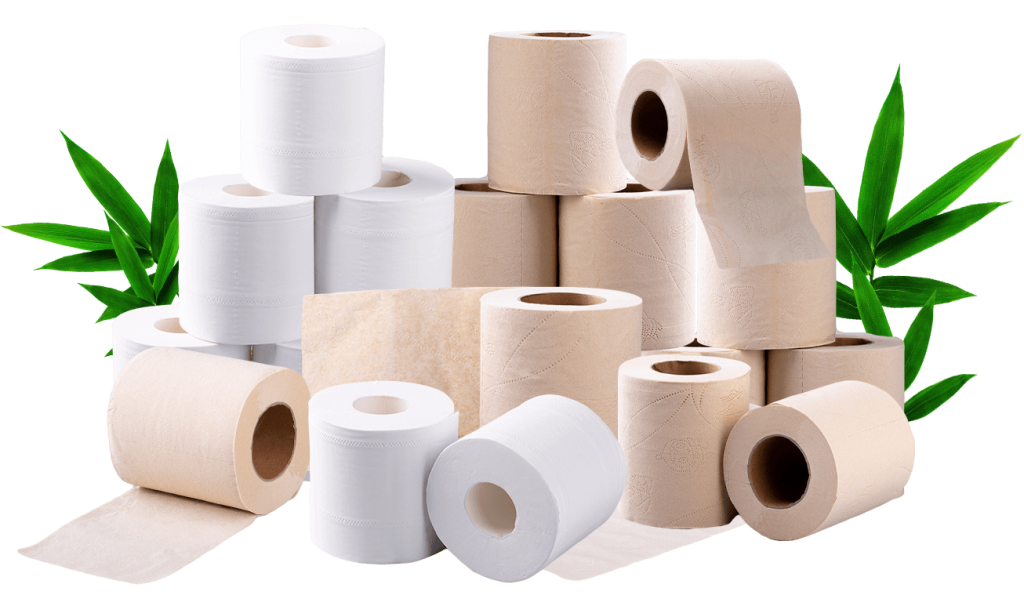
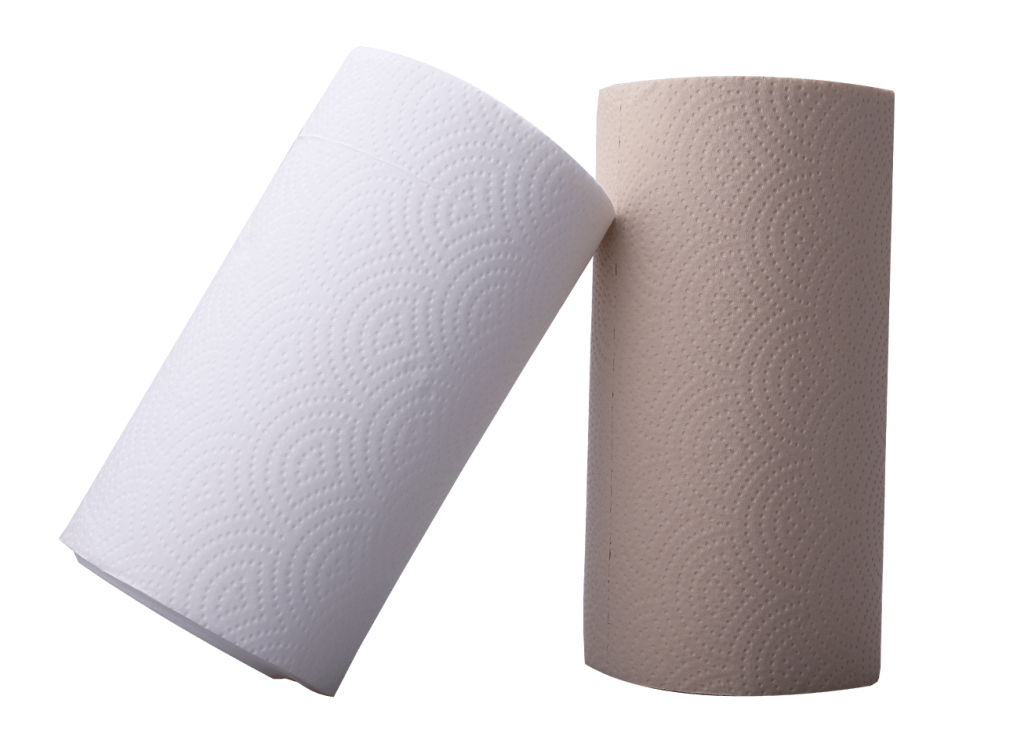
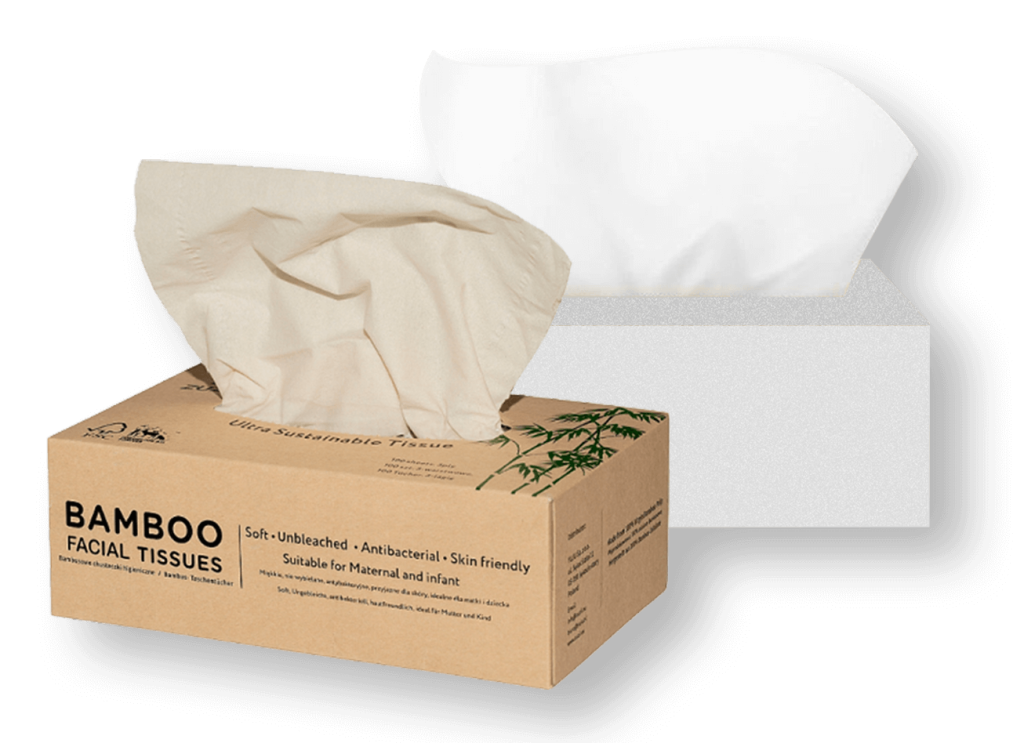
Bamboo Tissue Paper GSM Guide: How to Choose the Right Basis Weight
When sourcing bamboo tissue paper, GSM is one of the first specifications buyers encounter. However, choosing the right basis weight is not as simple as selecting the highest GSM available. A higher GSM generally means more fiber material per unit area, but it does not automatically mean better softness, strength, absorbency, or overall performance.
For bamboo facial tissue, toilet tissue, kitchen paper towels, and hand towels, the appropriate GSM depends on the intended application, ply configuration, fiber composition, sheet dimensions, embossing, and required performance. For OEM and private-label buyers, GSM should therefore be treated as one part of a complete product specification rather than an isolated quality indicator.
This guide explains what bamboo tissue paper GSM means, how it affects product performance and cost, typical GSM considerations for different tissue applications, and how buyers can select an appropriate basis weight for their products.
What Does GSM Mean in Bamboo Tissue Paper?
GSM stands for grams per square meter. It describes the mass of a tissue paper sheet with an area of one square meter and is commonly used to specify the basis weight of tissue products.
In simple terms: GSM = Paper Weight ÷ Paper Area
For example, a tissue paper specified at 15 GSM weighs approximately 15 grams per square meter for a single tissue layer under the applicable measurement conditions. GSM is useful because it provides a standardized way to compare the material basis weight of different tissue papers. However, buyers should be careful when comparing products because GSM alone does not describe the complete physical structure of a finished tissue product.
A 15 GSM 2-ply tissue and a 15 GSM 3-ply tissue can provide different user experiences. Similarly, two tissues with the same GSM can have different thickness, softness, tensile strength, and absorbency because of differences in fiber properties and manufacturing processes. For this reason, professional tissue specifications normally evaluate GSM together with ply, thickness, sheet size, tensile strength, absorbency, softness, and other product requirements.
Does Higher GSM Mean Thicker or Better Bamboo Tissue Paper?
Not necessarily. A higher basis weight means that more material is present per unit area, but the relationship between GSM and thickness is not one-to-one. Tissue manufacturing processes such as refining, creping, pressing, drying, and embossing can significantly change the bulk and caliper of the finished paper. For example, two bamboo tissue papers may both be 15 GSM, while one feels noticeably thicker because its fiber structure has greater bulk.
The same principle applies to softness. A 14 GSM facial tissue manufactured with an appropriate fiber structure and creping process may feel softer than a 17 GSM tissue that has a denser structure.
Therefore, the correct question is not: “What is the highest GSM I can buy?”
It is: “What is the lowest practical GSM that provides the required performance for my application?”
This approach can help balance product quality, material consumption, shipping weight, and manufacturing cost.
Why GSM Matters in Bamboo Tissue Paper
GSM influences the amount of fiber available in a given area of tissue paper, so it can affect several important product characteristics. However, the actual performance depends on how GSM interacts with other design and manufacturing variables.
1. GSM and Softness
For facial tissues and other products that come into direct contact with skin, softness is a major purchasing consideration. Increasing GSM can contribute to greater bulk and substance, but softness is also strongly influenced by:
- Fiber characteristics
- Fiber refining
- Creping
- Tissue structure
- Embossing
- Ply configuration
- Moisture content
This means a higher GSM tissue is not automatically softer.
For facial tissue applications, manufacturers generally need to balance basis weight, fiber structure, surface feel, and bulk rather than simply increasing GSM. This is particularly important for bamboo facial tissue, where buyers may want a combination of natural fiber content, softness, strength, and comfortable facial contact.
2. GSM and Strength
GSM can contribute to the amount of material available to carry mechanical loads, but strength depends on much more than basis weight. Important factors include:
- Fiber length and quality
- Fiber bonding
- Refining conditions
- Ply structure
- Embossing
- Sheet dimensions
- Moisture conditions
- Manufacturing consistency
A higher GSM can potentially provide greater strength, but increasing GSM is not necessarily the most efficient way to solve a strength problem. For example, if a tissue tears too easily, the manufacturer may need to evaluate fiber bonding, refining, ply configuration, or converting conditions instead of simply increasing the basis weight.
For toilet tissue and kitchen towels, this distinction is particularly important because the required strength must be balanced against softness and absorbency.
3. GSM and Absorbency
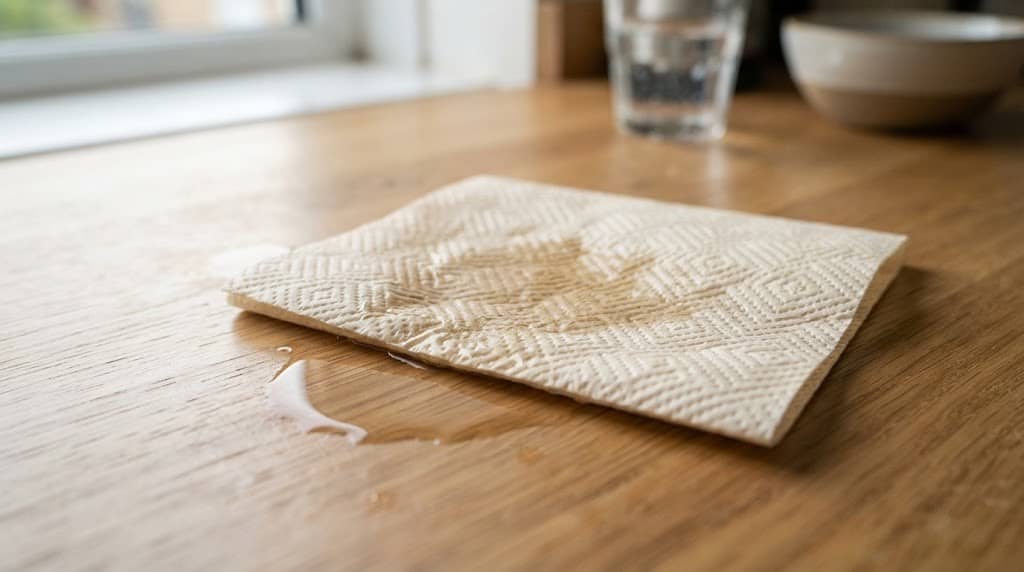
GSM can affect the amount of material available to absorb and retain liquid, but absorbency is not determined by GSM alone. The internal structure of the tissue creates spaces that can hold liquid. Fiber characteristics, refining, creping, embossing, thickness, and ply construction all influence this structure.
For kitchen paper towels, for example, buyers normally prioritize:
- Liquid absorption
- Absorption speed
- Wet strength
- Retention capacity
- Tear resistance
A higher GSM can support a more substantial towel structure, but simply increasing basis weight does not guarantee proportionally better absorbency. This is why a good kitchen towel specification should define GSM together with absorbency and wet-strength requirements.
4. GSM and Product Cost
GSM also has a direct relationship with material consumption. When other variables remain constant, a higher GSM means more fiber material is required to produce the same paper area. This can affect:
- Raw material consumption
- Product weight
- Roll weight
- Transportation cost
- Packaging requirements
- Production cost
However, GSM should never be used as the sole basis for comparing prices. A lower-GSM product may have a higher total material consumption if it uses a larger sheet size or substantially more sheets. Likewise, a higher-GSM product may provide better performance per sheet and reduce consumption during use.
For B2B buyers, cost per roll or cost per pack is therefore less informative than cost relative to sheet count, sheet size, performance, and intended usage.
Typical GSM Ranges for Different Bamboo Tissue Products
There is no single GSM that is suitable for every bamboo tissue product. Facial tissue, toilet tissue, kitchen paper, and hand towels perform different functions and therefore require different material structures.
The following ranges can be used as practical starting points rather than universal industry standards:
| Product | Typical GSM Consideration | Main Performance Priorities |
| Bamboo Facial Tissue | About 12–16 GSM | Softness, comfort, adequate strength |
| Bamboo Toilet Tissue | About 15–20 GSM | Softness, strength, absorbency, flushability |
| Bamboo Kitchen Paper Towel | About 20–30+ GSM | Absorbency, wet strength, durability |
| Bamboo Hand Towel | About 15–25+ GSM | Absorbency, strength, dispensing |
| Bamboo Napkin | About 15–25 GSM | Appearance, softness, absorbency, strength |
These are reference ranges rather than fixed specifications. Actual GSM should be determined according to the product design, target market, ply, fiber composition, sheet size, and required performance.
For example, Donsea Paper’s current bamboo tissue products demonstrate how different applications can use different basis weights. Its bamboo facial tissue is listed at around 14 GSM, while bamboo toilet tissue is offered around 15.5–16 GSM. Its bamboo kitchen paper towel is specified at 25 GSM and 2-ply, reflecting the higher strength and absorbency requirements of kitchen applications.
What GSM Is Best for Bamboo Facial Tissue?
Bamboo facial tissue normally prioritizes softness, surface comfort, foldability, and sufficient strength rather than maximum basis weight. A practical starting range is approximately 12–16 GSM per layer, depending on the desired ply configuration and product design.
For facial tissue, manufacturers need to balance: Low material weight + softness + adequate strength + acceptable bulk
If the GSM is too low, the tissue may feel too thin or lack sufficient strength. If GSM is unnecessarily high, the product can become heavier and more expensive without delivering a proportional improvement in facial comfort. Donsea Paper’s bamboo facial tissue is listed at 14 GSM, illustrating a specification designed around the lightweight and soft characteristics typically required for facial applications.
For OEM facial tissue, buyers should therefore specify GSM together with:
- Ply
- Sheet size
- Sheet count
- Fiber composition
- Softness requirements
- Embossing
- Packaging format
What GSM Is Best for Bamboo Toilet Paper?
Bamboo toilet tissue requires a more complicated balance because it needs to combine:
- Softness
- Strength
- Absorbency
- Appropriate thickness
- Good converting performance
- Suitable flushability characteristics
A practical starting point is approximately 15–20 GSM per layer, although the final specification depends heavily on ply and product design. Donsea currently offers bamboo toilet paper around 15.5–16 GSM, with configurations ranging from 2-ply to 4-ply. For example, a 2-ply toilet roll may use a different basis weight strategy from a 3-ply or 4-ply product. Instead of evaluating GSM independently, buyers should assess the complete tissue structure.
For toilet tissue, increasing GSM excessively can also increase roll weight and material consumption. Therefore, the goal is to achieve sufficient strength and softness while maintaining an efficient roll configuration.
What GSM Is Best for Bamboo Kitchen Paper Towels?
Kitchen paper towels generally require more material structure than facial tissue because they are used for absorbing and handling liquids. A practical starting range is approximately 20–30 GSM or higher, depending on ply, sheet dimensions, embossing, and required absorbency.
Donsea’s bamboo kitchen paper towel is listed at 25 GSM and 2-ply, providing an example of a higher-basis-weight specification designed for a more demanding absorbency application. For kitchen paper, buyers should pay particular attention to:
GSM + wet strength + absorbency + sheet size + ply
A kitchen towel with high GSM but poor wet strength may still perform poorly when saturated. Conversely, a well-engineered lower-GSM structure may provide adequate performance while reducing material consumption.
What GSM Is Best for Bamboo Hand Towels?
Bamboo hand towels used in commercial environments have different requirements from facial tissues and toilet rolls.
The tissue needs to:
- Absorb water efficiently
- Maintain adequate strength when wet
- Dispense consistently
- Provide sufficient coverage per sheet
- Resist tearing during hand drying
For this reason, hand towel specifications may use a higher GSM than lightweight facial tissue, particularly when the product is designed for single-sheet dispensing. However, the appropriate GSM also depends on the folding format, sheet size, dispenser design, and expected consumption.
For commercial hand towels, buyers should avoid specifying GSM alone. A complete procurement specification should include GSM, sheet dimensions, fold type, ply, absorbency, wet strength, and dispenser compatibility.
GSM vs Ply: Why Both Specifications Matter
One of the most common mistakes in tissue procurement is comparing GSM without considering ply. Ply describes the number of tissue layers combined into the finished product, while GSM describes the basis weight of the paper layer being specified.
For example:
- 2-ply × 15 GSM
- 3-ply × 14 GSM
- 4-ply × 15 GSM
These products will have different total material structures and user experiences. However, it would be incorrect to conclude that the 4-ply product is automatically four times better than the 1-ply product.
Ply affects:
- Softness
- Bulk
- Strength
- Absorbency
- Hand feel
- Product appearance
But the actual result also depends on how the individual layers are manufactured and bonded.
The most useful way to think about these specifications is:
GSM describes the basis weight of the tissue material, while ply describes how many layers are combined to form the finished tissue structure. Neither specification alone determines product performance.
GSM vs Thickness: What Is the Difference?
GSM and thickness are often confused because both can influence how substantial a tissue feels. However:
- GSM = weight per unit area
- Thickness = physical caliper of the tissue
A tissue can have a relatively low GSM but high bulk, while another tissue with similar GSM can be more compact. Factors influencing thickness include:
- Fiber structure
- Creping
- Pressing
- Drying
- Embossing
- Ply
- Calendering
This is particularly important for OEM buyers who want a tissue that feels thick and premium without unnecessarily increasing the material weight. If a customer specifies only “high GSM,” the manufacturer may not know whether the actual objective is:
- Greater thickness
- Better softness
- Higher strength
- More absorbency
- A heavier product
A better specification clearly identifies the desired performance outcome.
Does Higher GSM Always Mean Better Bamboo Tissue Paper?
No. Higher GSM can provide advantages in certain applications, but it also increases material consumption and product weight.
Higher GSM may help provide:
- Greater material mass
- Higher potential strength
- Greater bulk
- Increased absorbency capacity
- More substantial hand feel
Excessively high GSM may result in:
- Higher material cost
- Heavier products
- Higher shipping weight
- Greater raw material consumption
- Reduced roll efficiency
- Unnecessary product cost
For toilet tissue, excessive material weight can also work against the goal of producing an efficient, comfortable, and practical roll. Therefore, the ideal basis weight is application-specific.
The right GSM is not the highest GSM; it is the basis weight that meets the required performance with the most efficient use of material.
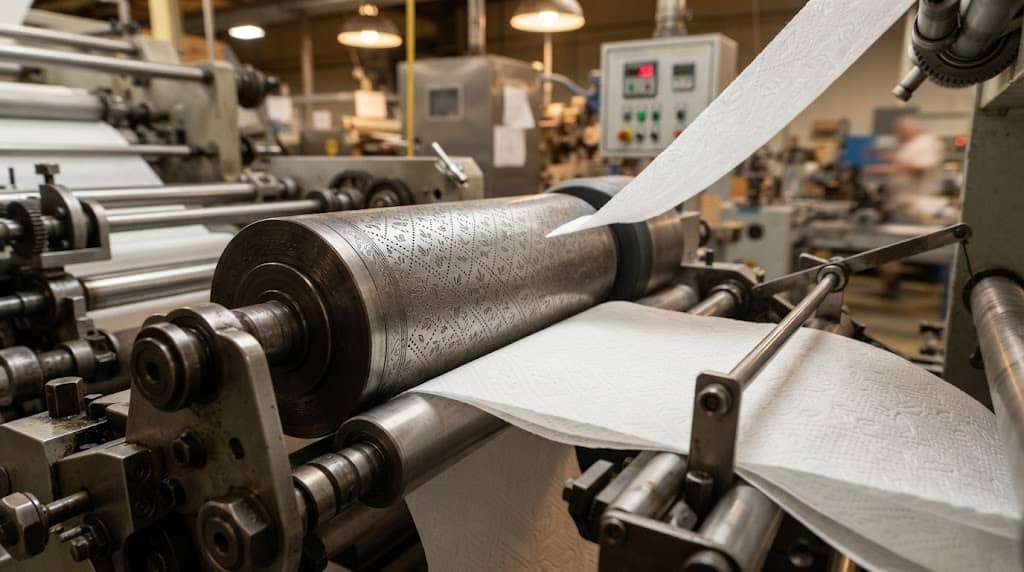
Six Factors to Consider Before Choosing Bamboo Tissue Paper GSM
1. Intended Application
Start with the end use. Facial tissues prioritize skin comfort, toilet tissue needs softness and appropriate strength, while kitchen towels require greater absorbency and wet strength. The application should determine the starting GSM range.
2. Ply Configuration
A 2-ply product and a 4-ply product should not be evaluated using the same GSM criteria. Ply changes the total structure, bulk, softness, and strength of the finished product.
3. Fiber Composition
The source and quality of the pulp can strongly influence tissue performance.
Buyers should clarify:
- Bamboo pulp percentage
- Virgin or recycled fiber
- Bamboo species or pulp source where relevant
- Whether bamboo is blended with other pulps
A high GSM product made with an unsuitable fiber structure may not outperform a lower-GSM product with better fiber characteristics.
4. Required Softness and Strength
Determine which characteristic matters most.
- For facial tissue: Softness → Comfort → Adequate strength
- For kitchen paper: Absorbency → Wet strength → Durability
- For toilet tissue: Softness → Strength → Absorbency → Appropriate flushability
This helps prevent over-specifying GSM simply to compensate for another performance issue.
5. Sheet Size and Sheet Count
GSM cannot be evaluated independently of sheet dimensions. For example, two facial tissue products may both be 14 GSM but have different sheet sizes. The larger sheet uses more material per sheet.
Likewise, a pack containing 100 sheets and one containing 200 sheets cannot be compared based on GSM alone.
6. Target Cost and Logistics
For private-label buyers, GSM also affects:
- Pack weight
- Carton weight
- Container loading
- Freight cost
- Warehouse handling
- Product cost
A well-designed product should meet its target performance without unnecessarily increasing material weight.
How to Choose the Right GSM for Your Bamboo Tissue Product
A practical selection process starts with the intended application rather than the GSM number itself.
If your priority is facial comfort
Start with a lightweight tissue structure and optimize: GSM + softness + ply + surface structure
If your priority is toilet tissue
Focus on: GSM + ply + softness + tensile strength + absorbency + flushability requirements
If your priority is kitchen cleaning
Prioritize: GSM + absorbency + wet strength + durability + sheet size
If your priority is commercial hand drying
Evaluate: GSM + sheet size + absorbency + wet strength + dispenser compatibility
This approach allows buyers to select a specification based on actual use rather than simply choosing the highest available basis weight.
How Is Bamboo Tissue Paper GSM Tested?
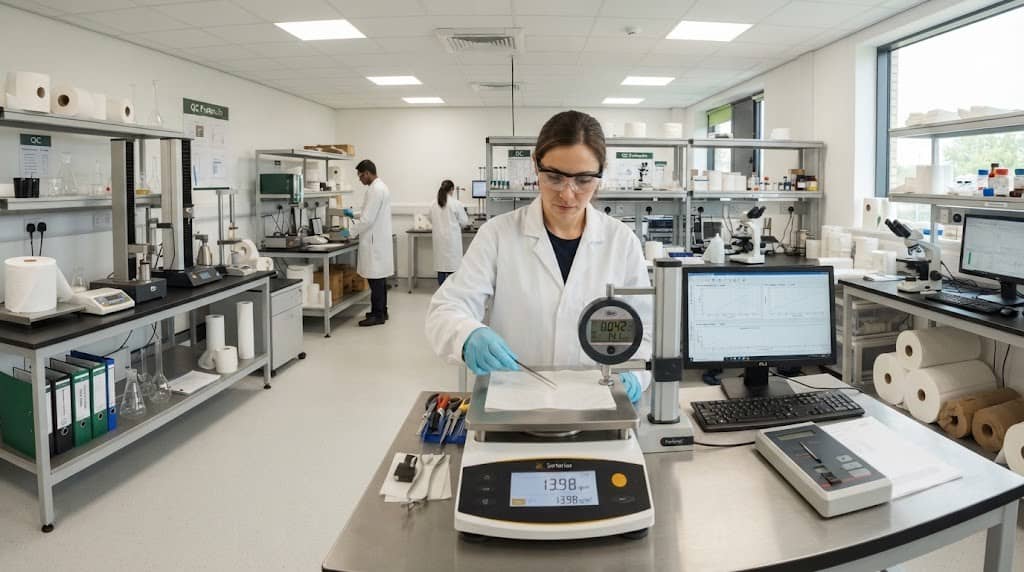
GSM testing is fundamentally a measurement of the mass of a known area of tissue. A typical process involves selecting representative samples, conditioning them under appropriate testing conditions, cutting or measuring a defined area, weighing the sample, and calculating the corresponding mass per square meter.
The basic principle is straightforward: Measured sample weight ÷ measured sample area = GSM
For commercial production, the important issue is not only the average GSM but also consistency between production batches.
Variation can affect:
- Product weight
- Roll length
- Strength
- Thickness
- Consumer perception
- Production efficiency
Tissue paper testing standards such as the ISO 12625 series provide standardized methods for evaluating tissue and tissue-product characteristics. Buyers requiring consistent OEM production should agree on the applicable test methods and specification tolerances with the manufacturer before mass production.
Common GSM Mistakes When Buying Bamboo Tissue Paper
Mistake 1: Choosing the Highest GSM
Higher GSM is not automatically better. The objective should be to meet the required performance efficiently.
Mistake 2: Comparing GSM Without Comparing Ply
A 2-ply and 3-ply tissue with the same individual-layer GSM will have different finished structures.
Mistake 3: Ignoring Sheet Size
GSM describes material weight per unit area. Sheet dimensions determine how much material is consumed per individual sheet.
Mistake 4: Looking at GSM Without Performance Testing
A complete product evaluation should consider:
- GSM
- Thickness
- Tensile strength
- Wet strength
- Absorbency
- Softness
- Ply
Mistake 5: Using One GSM Specification for Every Product
Facial tissue, toilet paper, kitchen towels, and hand towels have different functional requirements. A single GSM target is unlikely to optimize all of them.
Bamboo Tissue Paper GSM Specification Example for OEM Buyers
When developing a private-label bamboo tissue product, buyers should provide a complete specification rather than simply requesting “high-quality bamboo tissue.” For example, a facial tissue specification might include:
| Specification | Example |
| Product | Bamboo Facial Tissue |
| Material | Bamboo Pulp |
| GSM | 14 GSM |
| Ply | 2–4 Ply |
| Sheet Size | Customized |
| Sheet Count | Customized |
| Embossing | Customized |
| Packaging | Box or Soft Pack |
| Color | According to product requirement |
| Core | According to product format |
For bamboo toilet tissue, the specification could additionally define:
- Roll length
- Roll diameter
- Core diameter
- Perforation
- Ply
- Embossing
- Packaging format
For kitchen paper towels, buyers should additionally define:
- Absorbency target
- Wet strength
- Sheet dimensions
- Roll configuration
- Embossing pattern
This level of detail gives the manufacturer enough information to optimize the tissue structure rather than simply adjusting the basis weight.
Frequently Asked Questions About Bamboo Tissue Paper GSM
Q1: What does GSM mean in bamboo tissue paper?
GSM means grams per square meter. It indicates the basis weight of the tissue paper and represents the mass of a defined area of material.
Q2: What GSM is best for bamboo toilet paper?
A practical starting range is approximately 15–20 GSM per layer, but the final specification depends on ply, fiber composition, softness, strength, roll configuration, and other performance requirements.
Q3: What GSM is best for bamboo facial tissue?
Approximately 12–16 GSM per layer can be a useful starting range for facial tissue, with softness and comfort being key considerations. The final specification should also consider ply and sheet construction.
Q4: Is higher GSM bamboo tissue paper better?
No. Higher GSM can increase material mass and potentially improve certain performance characteristics, but it can also increase cost and weight. The appropriate GSM depends on the intended application.
Q5: What is the difference between GSM and ply?
GSM measures basis weight per unit area, while ply describes the number of tissue layers combined in the finished product. Both specifications influence the final tissue structure.
Q6: Does GSM affect bamboo tissue paper softness?
It can influence bulk and hand feel, but softness also depends on fiber characteristics, refining, creping, embossing, ply, and tissue structure. Higher GSM does not automatically mean softer tissue.
Q7: Does higher GSM increase absorbency?
Higher GSM can provide more material and potentially greater liquid-holding capacity, but absorbency also depends on fiber structure, porosity, creping, embossing, thickness, and ply.
Q8: What GSM should I specify when ordering private-label bamboo tissue paper?
Start with the intended application and performance requirements. Then define GSM together with ply, sheet size, fiber composition, absorbency or strength requirements, packaging, and other product specifications.