What Makes a Top Bamboo Facial Tissue Manufacturer: Certified OEM/ODM Solutions
The global hygiene products market is having this paradigm shift thing going on. Like, corporate buyers, brands, and eco-conscious consumers are looking past the usual forestry-related stuff, and the role of a premier bamboo facial tissue manufacturer has gone from a sort of niche alternative into something like a cornerstone for sustainable supply chains. But delivering a truly premium bamboo tissue isn’t just slapping on a “green” label, not at all. It really needs deep know-how in material science, new ways of fiber processing, and very strict regulatory compliance.
To source or scale a sustainable tissue brand successfully, partners must look beyond the surface and evaluate the technical mechanics, chemical frameworks, and manufacturing capabilities that define a top-tier paper mill.
Bamboo Fiber vs. Wood Pulp: The Material Science Behind Premium Softness
From the microscopic standpoint, it is the raw material that defines the ultimate physical characteristics of the final product. Conventional paper made from wood utilizes softwoods such as pine for toughness, while using hardwoods like eucalyptus for their softness. An outstanding tissue producer of bamboo products takes advantage of the distinctive botanical design of the Moso bamboo, Phyllostachys edulis, and combines toughness with softness by applying sophisticated softening techniques.
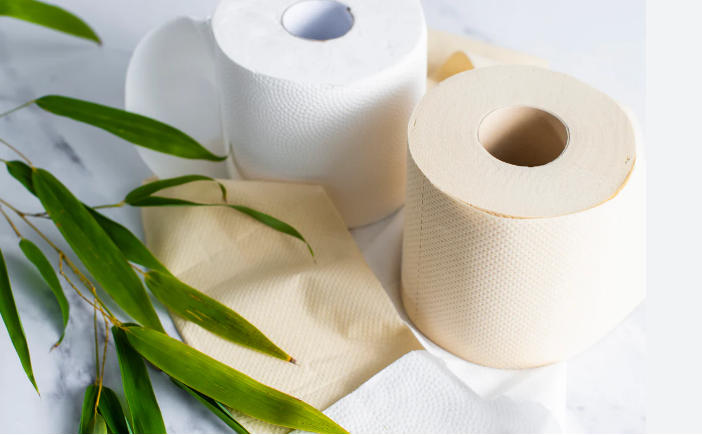
The cells of bamboo fiber contain special microporous structures. The capillary system makes it possible for fluids to pass through rapidly, endowing the bamboo fibers with a higher absorption capacity, which is about 25% greater than wood pulp.
To present this material science transparently, the following technical matrix highlights the operational and ecological contrasts between the two resources:
| Technical Attribute | Bamboo Fiber (Phyllostachys edulis) | Traditional Wood Pulp (Softwood/Hardwood) |
| Growth & Harvest Cycle | 3–5 Years (Regenerative grass, self-matures) | 20–30 Years (Requires clear-cutting and replanting) |
| Tensile Strength (Wet/Dry) | Naturally High due to long-chain cellulose | Medium; often requires synthetic wet-strength agents |
| Microscopic Structure | Micro-porous and hollow (High rapid absorbency) | Solid, dense fibers (Requires mechanical embossing) |
| Carbon Sequestration | Releases 35% more oxygen than equivalent tree stands | Baseline carbon and oxygen cycling profile |
Inside the Factory: The Technical Manufacturing Process of Bamboo Facial Tissue
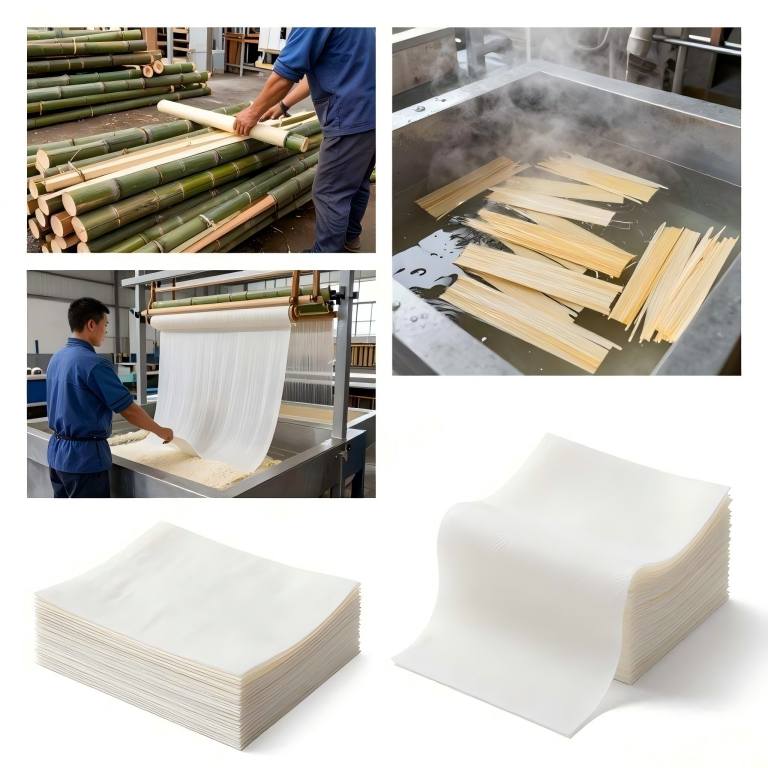
Transforming rigid bamboo culms into cloud-soft facial wipes is a complex chemical and mechanical engineering feat. Reputable manufacturers distinguish themselves by controlling the following three production phases.
1. Mechanical vs. Chemical Pulping: Optimizing Cellulose Extraction
The raw bamboo undergoes a multi-stage cooking process in digesters to isolate pure cellulose. While mechanical pulping preserves more yield, advanced manufacturers use a refined Kraft chemical pulping process paired with specialized mechanical beating (refining). By precisely controlling the beating degree (measured in Schopper-Riegler degrees, °SR), the factory modifies the fiber walls, delaminating the stiff external layers of the bamboo fiber to expose its supple, flexible interior. This achieves a delicate, skin-friendly texture without sacrificing structural integrity.
2. Chlorine-Free Bleaching Frameworks: ECF and TCF Standards
Colour and chemical safety are important criteria because the facial tissues are often in contact with sensitive mucous membranes. Dioxin pollution has caused industry-leading manufacturers to completely abandon elemental chlorine gas. Instead, premium facilities utilize Elemental Chlorine-Free (ECF) or the ultra-premium Total Chlorine-Free (TCF) bleaching sequences. TCF relies exclusively on oxygen, ozone, and hydrogen peroxide. This ensures that the final tissue contains zero detectable organochlorine residues, making it hypoallergenic and safe for sensitive skin types or infant care.
3. Dust-Free and Lint-Free Finishing Technology
A common complaint among consumers—especially contact lens wearers and individuals suffering from allergic rhinitis—is tissue dust. During the high-speed creping process on the Yankee Dryer, advanced mills apply specialized, food-grade synthetic softening agents and precise doctor blade angles. This meticulous control limits micro-fractures in the fiber sheets, yielding a finished tissue that is certified lint-free. When pulled from the box, it generates zero airborne particulate matter.
International Certifications: The Credentials of a Reliable OEM/ODM Partner
For global brands and corporate enterprise buyers, manufacturing claims need to be backed by verifiable data and, sure, external audits. When auditing a bamboo paper mill for longer-term contract manufacturing, specific international benchmarks work as strict quality gates:
- FSC® (Forest Stewardship Council) Chain of Custody (CoC): This certification ensures that 100% of the raw bamboo inputs are sourced from well-managed, certified forests. It serves as a legal guarantee against deforestation and ensures indigenous land rights are protected.
- FDA & CE Food-Grade Contact Compliance: Facial tissue is regularly used to wipe lips, eyes, and skin. Attaining compliance with FDA 21 CFR 176.170 (components of paperboard in contact with aqueous and fatty foods) proves the paper is devoid of heavy metals, optical brightening agents (OBAs), or toxic migration chemicals.
- ISO 9001 & ISO 14001: These frameworks validate that the factory operates under strictized quality management and systematic environmental impact mitigation protocols.
Maximizing Supply Chain Transparency: Customization, GSM, and Packaging
A professional bamboo facial tissue manufacturer operates as an integrated OEM/ODM solution provider, offering precise scaling metrics to international distributors.
Material Configuration and GSM Standards
Standard global configurations typically range from 2-ply to 4-ply formats, constructed utilizing base papers weighing between 13 and 15.5 GSM (Grams per Square Meter) per ply. A professional manufacturer optimizes the ply-bonding process using mechanical knurling or water-soluble, non-toxic lamination adhesives to ensure the layers do not separate during usage.
True Cradle-to-Cradle Packaging
Sustainable products lose their market viability if wrapped in non-recyclable virgin plastics. Leading manufacturers offer 100% plastic-free packaging alternatives, including recycled Kraft paper outer boxes printed with soy-based inks, or home-compostable PLA (Polylactic Acid) film wrappers.
Frequently Asked Questions: Industrial Manufacturing Insights
Q1: Is bamboo facial tissue inherently rougher than premium virgin wood pulp tissue?
A1: Historically, early-generation bamboo papers retained significant fiber rigidity. Today, through advanced micro-fiber softening technologies, optimized mechanical refining, and multi-layer micro-embossing patterns, premier manufacturers achieve a softness profile that matches or exceeds luxury virgin wood tissues, while maintaining a 30% higher wet tensile strength.
Q2: Are bamboo facial tissues 100% biodegradable and compostable?
A2: Yes. Providing the factory uses non-toxic processing methods and refines pure bamboo pulp without adding synthetic wet-strength plastics, the resulting tissue is 100% biodegradable and compostable. In typical industrial composting conditions, the material completely breaks down within 45 to 90 days, leaving no synthetic microplastics or chemical footprints behind.
Q3: How do manufacturers maintain consistency in raw material supply, given seasonal bamboo growth?
A3: High-end mills have long-term purchase contracts with agricultural cooperatives in lush bamboo biomes and have large stocks of raw pulp. Bamboo grows at an exceptional rate, up to several feet per day, and can be harvested annually without destroying the root system. This means a well-managed mill has lower supply chain volatility than traditional timber mills that depend on decadal forestry cycles.