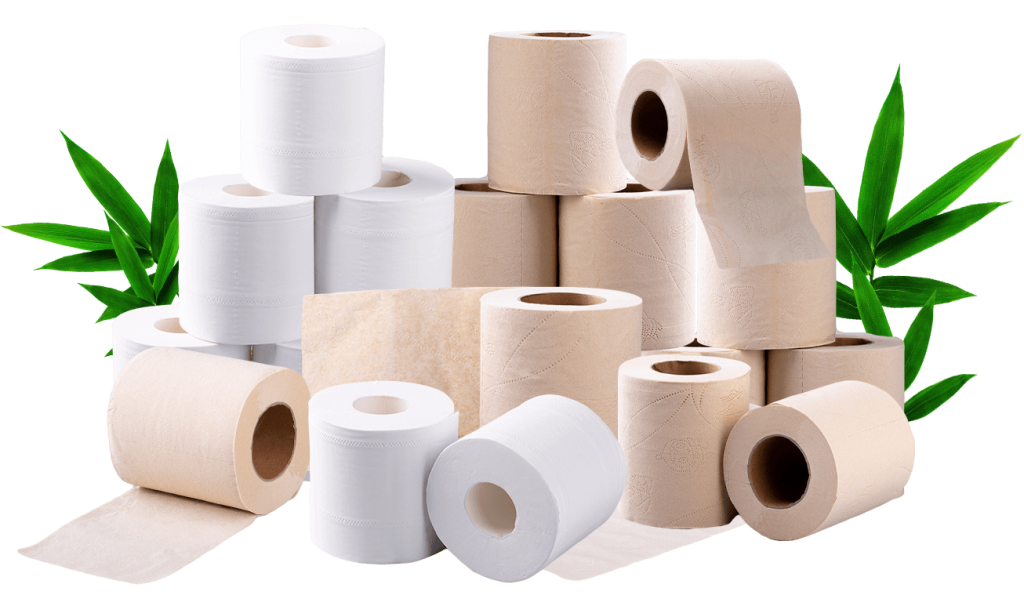
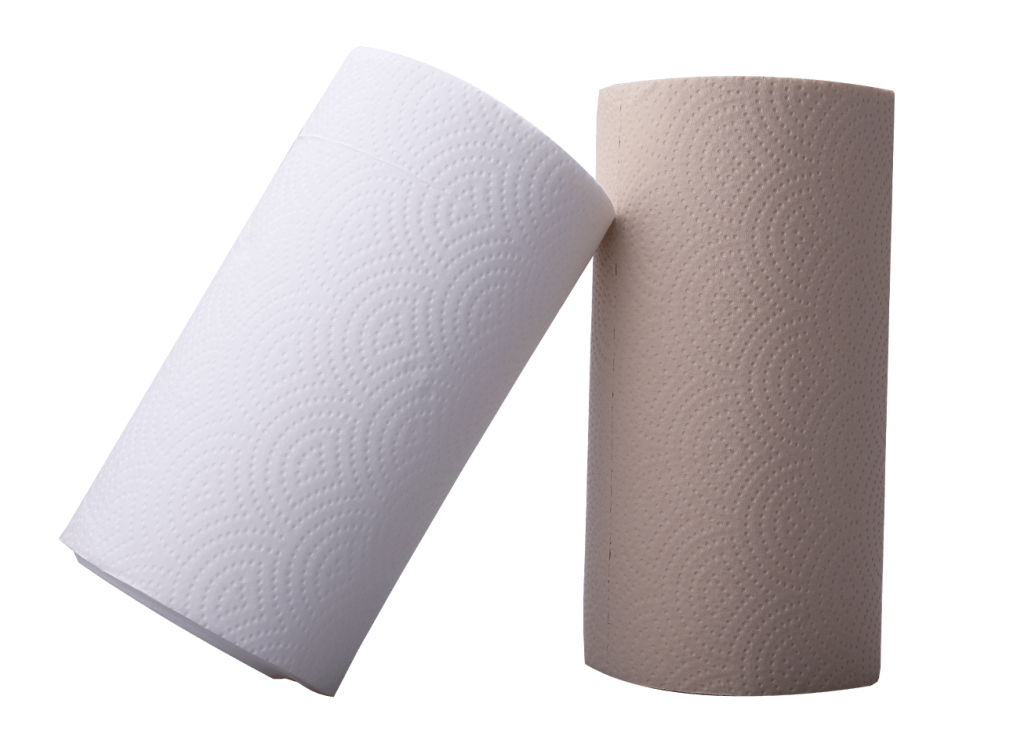
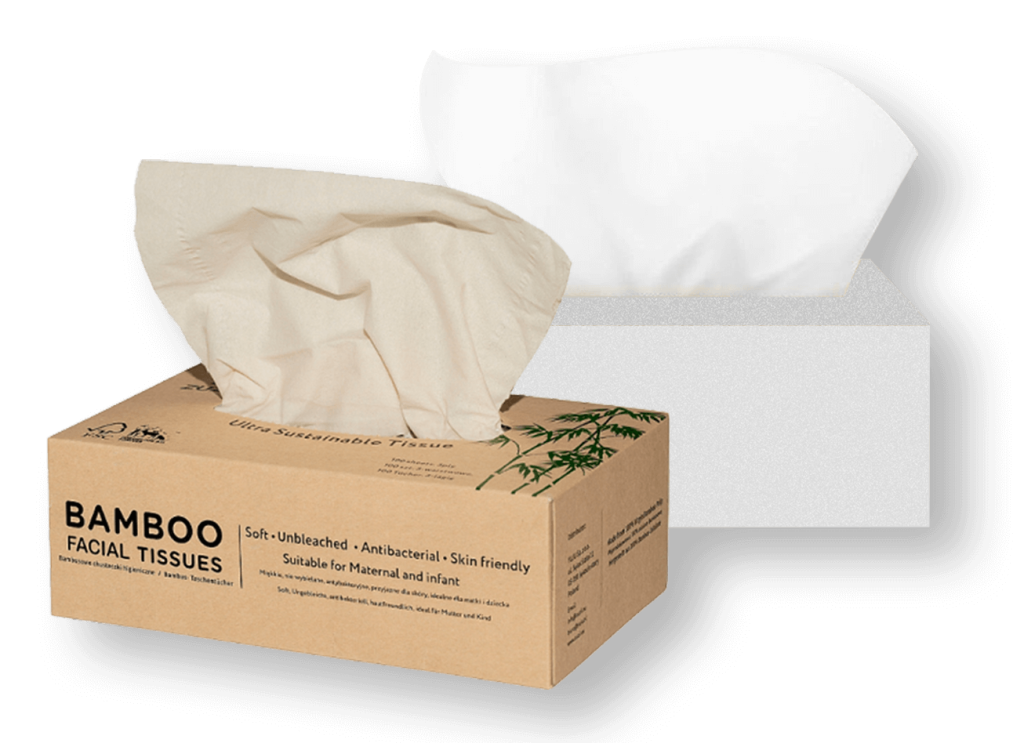
What Makes TAD Kitchen Paper More Absorbent?
When stocking kitchens for home use, busy restaurants, or big, commercial food processing spaces, picking the right kitchen paper is a real operational call. People buying, and also procurement managers, often run into that usual problem: trying to choose a paper towel that soaks up surprise liquid spills, grease, and oil quickly, without tearing right away, falling apart, or leaving that annoying lint behind. A lot of regular paper towels in retail aisles look almost the same at first, but the actual manufacturing approach changes everything—performance, toughness, and how well it holds fluids. One of the more advanced moves in tissue making is Through Air Drying, often called TAD, technology. It’s pretty well-known for creating top-tier, very absorbent paper towels that tend to beat conventional options across basically every metric.
What Is TAD (Through Air Drying) Technology?
To understand why TAD kitchen paper exhibits superior fluid absorption, it is essential to examine the core mechanics of the manufacturing process and how it fundamentally diverges from traditional tissue-making methods.
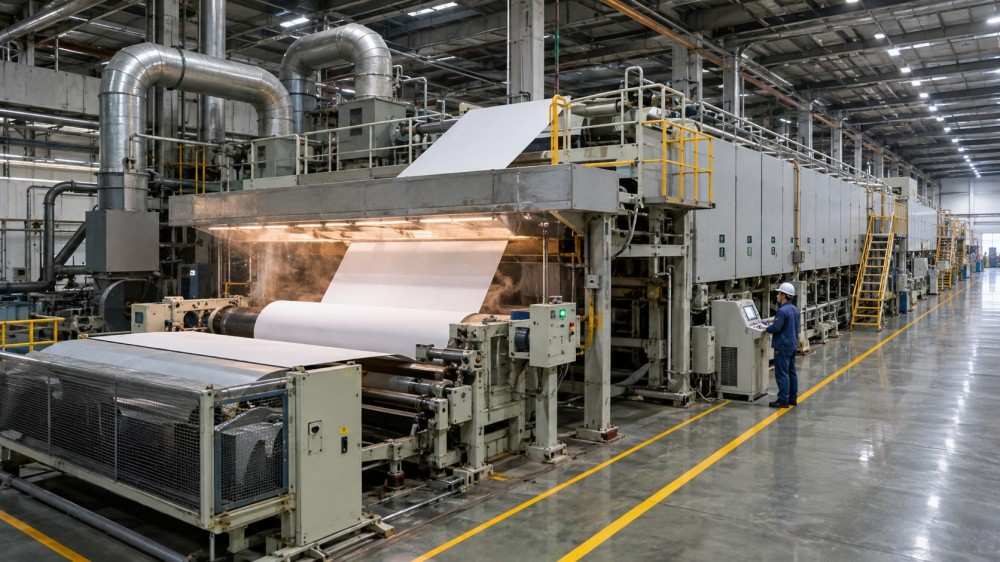
Through Air Drying, or TAD, is a kind of advanced web-drying approach where a fibrous paper sheet is dried by pushing heated air across it, instead of pressing it mechanically onto a hot steam-warmed cylinder (usually the Yankee dryer). In regular tissue manufacturing, the soggy paper web gets pushed with heavy mechanical pressure from press rolls, and that action squeezes water out, but at the same time it flattens, compacts, and crushes the fragile cellulose fibers pretty thoroughly. This mechanical crushing collapses the natural porous voids within the sheet.
Conversely, the TAD process preserves the loose, 3D architecture of the paper web. By drawing or blowing hot air through the moving web supported by a textured drying fabric, moisture is evaporated efficiently without applying compacting pressure. As a result, the fiber structure remains significantly more open, lofty, and voluminous.
How Is TAD Kitchen Paper Manufactured?
The production of premium TAD kitchen paper involves a sophisticated, multi-stage engineering workflow designed to maximize bulk, absorbency, and wet strength:
Step 1: Pulp preparation — High-grade raw cellulose fibers (such as 100% virgin wood pulp or premium bamboo pulp) are refined, beaten, and blended with water to form an aqueous suspension with optimal bonding properties.
Step 2: Sheet formation — The pulp slurry is deposited onto a moving wire screen in the headbox, forming an evenly distributed wet web of fibers.
Step 3: Through-air drying — Instead of the old-school press felts, the wet web gets moved onto a textured TAD fabric, and then it sort of runs over a spinning cylindrical dryer where hot air, at a high temperature, is forced through the sheet, which helps “lock in” both high bulk and porosity.
Step 4: Creping — The dried web is transferred to a creping cylinder where a doctor blade imparts fine micro-folds, enhancing softness, flexibility, and stretchability.
Step 5: Embossing — Mechanical embossing rolls apply patterns to multi-ply sheets, bonding the plies together securely while creating pockets for enhanced liquid trapping.
Step 6: Converting into finished kitchen rolls — The jumbo mother rolls are unwound, slit, perforated into individual sheets, and rewound into consumer or commercial kitchen towel rolls.

Why Is TAD Kitchen Paper More Absorbent?
The exceptional performance of TAD kitchen paper is rooted in polymer science and fluid dynamics. Several interrelated structural characteristics explain why TAD paper towels absorb liquids faster and hold significantly more volume than conventional alternatives.
1. More Open Fiber Structure
Because the TAD drying process avoids heavy mechanical pressing, individual cellulose fibers do not collapse or bind tightly together. This creates a larger pore volume within the internal matrix of the paper. These expansive microscopic pores act as storage reservoirs, enabling the towel to capture and retain much larger volumes of water, cooking oils, and sauce spills.
2. Higher Bulk
Bulk refers to the ratio of thickness to basis weight (caliper). TAD paper towels exhibit significantly higher bulk and thickness compared to standard wet-pressed paper towels of identical weight. This increased thickness means greater air space between fibers, which translates directly to faster liquid intake upon contact, pulling moisture away from surfaces almost instantaneously.
3. Better Capillary Action
Capillary action—or wicking—is driven by the microscopic channels formed by interlocked fibers. In TAD kitchen paper, the open fiber network creates larger and more uniform capillary channels. When a corner of a TAD paper towel touches a liquid spill, water travels rapidly through the fiber network via capillary forces, distributing the fluid evenly throughout the sheet rather than pooling in one spot.
4. Improved Fiber Integrity
Wet strength is just as important as initial absorption speed. Conventional paper towels tend to lose their structural integrity once they get saturated because their compressed fibers basically slide apart pretty easily, like when water acts as a lubricant. TAD paper towels keep a much better fiber bonding network and structural integrity, even after they are fully soaked, so the towel doesn’t fall apart in the user’s hand during hard scrubbing or more vigorous cleaning.
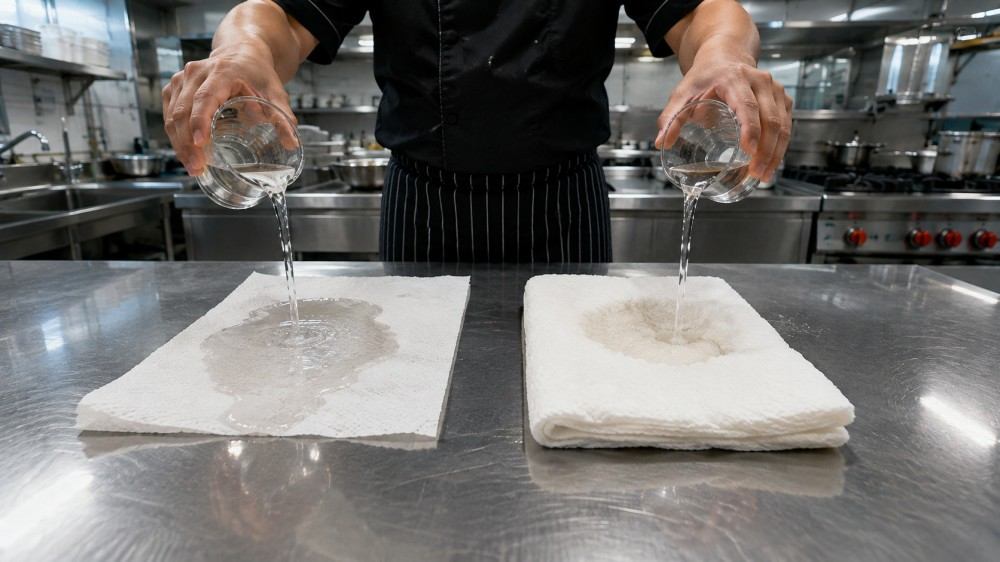
TAD Kitchen Paper vs Conventional Paper Towels
A side-by-side comparison highlights the clear operational and performance advantages of TAD technology over conventional manufacturing:
| Feature | TAD Kitchen Paper | Conventional Paper Towels |
| Water Absorption | Excellent (Rapid & High Volume) | Moderate |
| Oil Absorption | Excellent (Traps heavy grease) | Good |
| Wet Strength | High (Resists tearing when wet) | Medium |
| Softness | Excellent (Plush, cloth-like feel) | Moderate |
| Bulk | High (Lofty and thick) | Lower (Compact and thin) |
| Drying Process | Through Air Drying (Thermal airflow) | Yankee Cylinder (Mechanical press) |
| Fiber Compression | Low (Preserves open pores) | High (Crushes fiber structure) |
| Premium Feel | Yes (Luxury consumer & heavy commercial) | Standard (Economy grade) |
Key Performance Indicators of High-Quality Kitchen Paper
When assessing commercial or retail kitchen towels, procurement people and quality control labs often look at a handful of Key Performance Indicators:
- Absorbency Rate: basically how fast the liquid is taken in the moment it touches the surface, usually timed in seconds
- Absorption Capacity: the top amount of liquid that can be held per gram of paper, which later tells you roughly how many sheets you’ll burn through per spill
- Wet Tensile Strength: how well it holds up against tearing once it’s fully saturated, so it stays dependable in tough cleaning work
- Bulk: the thickness plus that tactile “volume” feeling, which helps signal a more premium feel to the end-users
- Softness: because softness isn’t just comfort, it affects daily wiping, hand drying, and safer cleaning on delicate areas where you don’t want scratching
- Lint Performance: low fiber shedding so the surfaces stay cleaner, meaning glass, stainless steel, and countertops end up streak-free and less messy overall.
Where Is TAD Kitchen Paper Commonly Used?
Due to its elite absorbency and durability, TAD kitchen paper is deployed across diverse high-demand sectors:
- Home Kitchens: Ideal for everyday household cleaning spills, wiping greasy stovetops, and draining excess oil from fried foods.
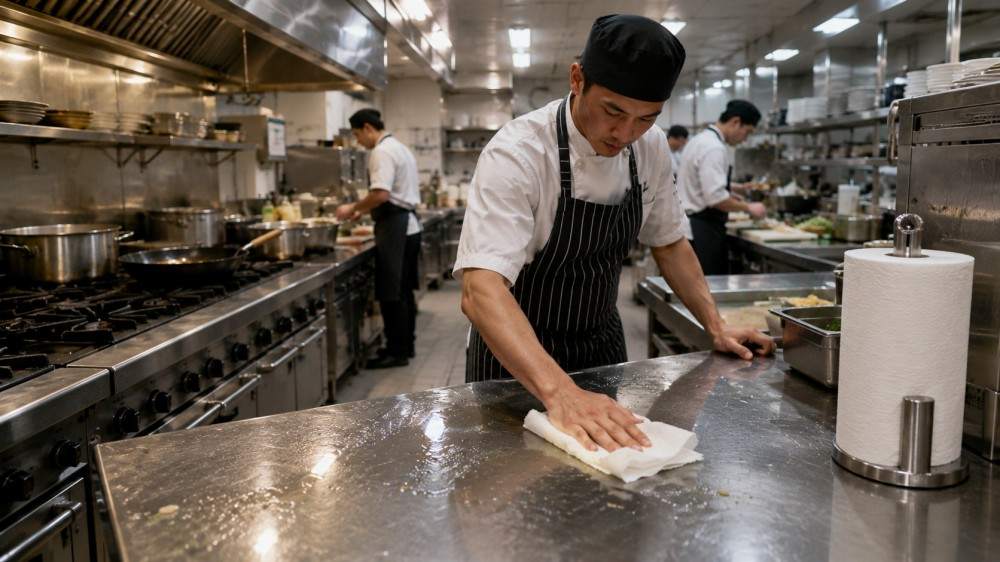
- Restaurants: Essential for fast cleanup during peak service hours, sanitizing prep stations, and wiping down stainless steel appliances.
- Hotels: Utilized in guest rooms, commercial kitchens, and housekeeping carts for premium guest presentation and heavy-duty sanitation.
- Commercial Kitchens: Reliably manages large volumes of oil, grease, and water in industrial catering environments.
- Food Processing Facilities: Provides reliable, food-safe wiping without shedding lint onto processing equipment or food products.
- Healthcare Facilities: Employed for rigorous surface cleaning and sanitation tasks requiring high wet strength and chemical resistance.
TAD Kitchen Paper vs Bamboo Kitchen Paper
A rather common misunderstanding in the tissue market is to see TAD and bamboo as competing types, like they’re stuck in separate boxes or something. But really, TAD is a manufacturing technique, while bamboo is a raw material fiber, you know. So these two things aren’t mutually exclusive at all; they can be blended together to make more capable, superior products.
Possible manufacturing combinations include:
- Virgin wood pulp + TAD
- Bamboo pulp + TAD
- Mixed pulp + TAD
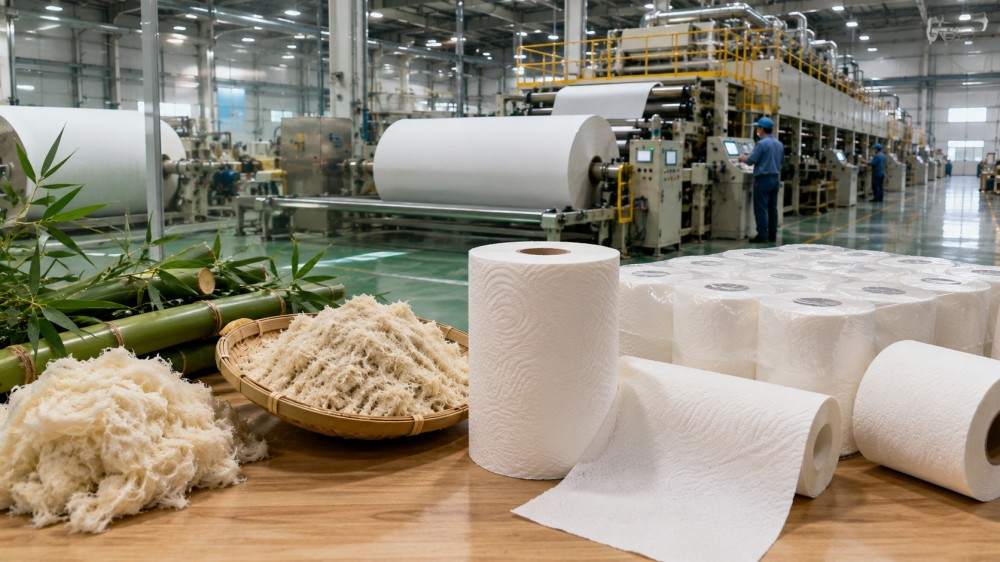
Mixing 100% virgin bamboo pulp with TAD technology kind of gives outstanding results: the bamboo brings natural antimicrobial behavior, renewable growth cycles, and a kind of inherent firmness, and then TAD technology helps enhance bulk, softness, and speeds up fluid absorption in a rapid way.
Does TAD Kitchen Paper Cost More?
Procurement managers frequently ask whether the superior performance of TAD paper justifies its higher unit price. The cost difference is driven by several factors:
- More energy-intensive production requiring specialized hot air blowers and thermal circulation systems.
- Premium capital equipment and complex engineering tolerances.
- Higher basis weight and greater raw material utilization per sheet.
- Unmatched user experience and reduced waste in professional settings.
When evaluating the Total Cost of Ownership (TCO), the higher initial unit price is heavily offset: because TAD paper towels absorb significantly more liquid and resist tearing, users consume fewer sheets per cleanup task, resulting in lower overall consumption and reduced waste disposal costs.
How to Choose the Right Kitchen Paper for Your Business
Selecting the optimal paper towel for commercial distribution or institutional use requires analyzing key technical criteria:
- Absorbency and Wet Strength ratings based on standardized lab testing.
- Ply count (1-ply, 2-ply, or 3-ply configurations).
- Roll Length and Sheet Size optimized for standard dispensers.
- Fiber composition (Virgin wood vs. Recycled vs. Bamboo sustainable blends).
- Food Contact Compliance certifications ensuring safety in food preparation zones.
- Sustainability Certifications including FSC (Forest Stewardship Council), ISO quality standards, and BRC global safety standards.
Why Choose Donsea Paper TAD Bamboo Kitchen Paper
As an industry leader in sustainable tissue manufacturing, Donsea Paper combines advanced manufacturing infrastructure with eco-friendly innovation. Key product advantages include:
- 100% virgin bamboo pulp harvested from sustainably managed forests.
- Superior TAD absorbency delivering unmatched liquid retention.
- Exceptional wet strength preventing tearing during heavy cleaning.
- Luxuriously soft yet durable tactile profile for premium user satisfaction.
- Food-contact safe certification ensuring absolute hygiene in kitchens.
- Eco-friendly and biodegradable footprint supporting corporate ESG goals.
- FSC-certified raw materials guaranteeing transparent, ethical sourcing.
- Comprehensive OEM & private label services tailored to global brand partners.
- Custom embossing and packaging solutions designed for retail differentiation.
- Extensive export experience in global markets across North America, Europe, and Asia.
Frequently Asked Questions
What does TAD stand for in kitchen paper?
TAD stands for Through Air Drying, an advanced non-compressive drying technology used in premium tissue manufacturing.
Why is TAD paper more absorbent?
TAD paper is more absorbent because hot air is forced through the wet web instead of mechanical pressing, preserving an open fiber structure with high pore volume and bulk.
Is TAD paper stronger when wet?
Yes. Because the fibers are not crushed or damaged during drying, inter-fiber bonding remains robust, giving TAD paper exceptionally high wet tensile strength.
Is TAD kitchen paper suitable for food contact?
Yes, high-quality TAD paper manufactured from virgin or bamboo pulp complies with international food safety regulations for direct contact with food and food preparation surfaces.
Can bamboo pulp be used in TAD paper?
Absolutely. Bamboo pulp can be processed using TAD technology to combine eco-friendly sustainability with high absorbency and softness.
Does TAD paper reduce paper consumption?
Yes. Due to its superior absorbency capacity, users typically need fewer sheets to clean up spills, lowering overall consumption.
Is TAD kitchen paper biodegradable?
Yes, when produced from 100% natural wood or bamboo cellulose without synthetic additives, TAD kitchen paper is fully biodegradable.
Is TAD paper recyclable?
Clean unused TAD paper is recyclable, though used kitchen towels contaminated with food oils are typically compostable rather than recyclable.
Why is TAD paper more expensive?
TAD paper requires specialized energy-intensive thermal drying equipment and higher basis weight fibers, but offers lower total cost in use due to higher efficiency.
Is TAD kitchen paper better than regular paper towels?
Yes, in terms of absorbency, bulk, wet strength, and tactile feel, TAD paper towels significantly outperform conventional Yankee-dried paper towels.