Private Label vs. Branded Toilet Paper: Which Type to Choose
When it comes to buying toilet paper, consumers often face a decision: should they opt for branded products or private label option, which is relatively cost-effective? This choice favors price over quality, positioning on the market counterbalance, and what could turn emotional preference in the process. The article encompasses the most contrasting background: the enclosure with every key difference between private label and branded toilet paper, examining their market positions, benefits, limitations, and what influence consumers’ choice.
Understanding Private Label Toilet Paper
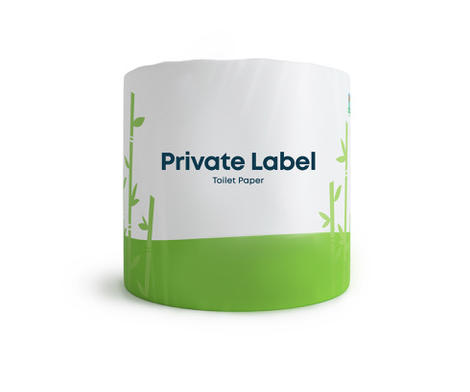
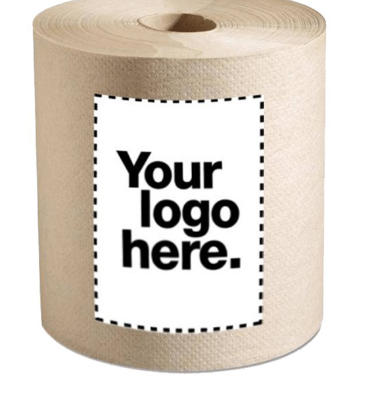
Private label toilet paper is a term used to signify the toilet papers manufactured by a certain company but sold under the brand names of another company. These products are generally offered in outlets that require a retailer-branded toilet paper product at a more affordable price. Private label products are usually of a good quality and created similarly to the features to the branded ones, but packed and branded under the retail store name itself.

Key Characteristics
- Branding: Private label toilet paper is characterized by a retailer’s own label, while branded varieties carry the name of a manufacturer.
- Manufacturing: Private label toilet paper is mass-produced by tissue paper manufacturers focusing on producing larger quantities of paper products. These producers usually manufacture both store brands and national brands, allowing constant strengthening of quality control standards.
- Price Point: Usually, private label toilet paper costs less than national-brand type. Retailers opt for private labeling to provide consumers with uncostly alternatives to the more expensive name-brand products.
Advantages
- Costing: Primary to the pros private label toilet paper brings with it is a capture of excessive; costs, which are much less than its well-advertised price tags. Retailers compete for sales by offering folks the opportunity to save more for choosing privately made tissue.
- Store Loyalty: Strong store loyalty is fostered by the availability of high-quality private label products and is intended to imbue consumers with the spirit to shop in the store very frequently.
- Quality Control: Considering that private label toilet paper can be at par with or even superior to bigger brands, this situation often requires the companies/backers to guarantee that their private label offerings are either on par or superior to recognized brand names in order to retain customer satisfaction.
- Customization: Retailers could provide different types of toilet paper (recycled, scented, 2-ply, 3-ply, etc.) in meeting different demands of customers, as well as so much more variety as compared to a few recognized name brands.
Limitation
- Brand Recognition: Private label toilet paper is hampered by brands of independent recognition, as opposed to well-established national brand recognition. Some consumers could find familiarity with them and may thus lean toward name brands, in the mistaken belief that they are associated with quality and reliability.
- Perceived Quality: Shared branding of the toilet paper with a mass retailer, with usually very high-quality product standard might generate a negative trade-off out of the perceived opinion by the consumer that, on account of the low cost, it may not be of passable value.
- Limited Availability: Private label toilet paper will, more often than not, be available at the particular retail store where it was minted, and this could be restricted to more options for the purchaser.
Application
- Retailers: Supermarkets, discount stores, and warehouse clubs are all places affiliated with the retailing of private-label toilet paper as an affordable option under their stores.
- Online Marketplaces: In the meanwhile, some e-retail outfits have plunged into the band wagon and now stock up on private label toilet paper for the ease and low cost thereof.
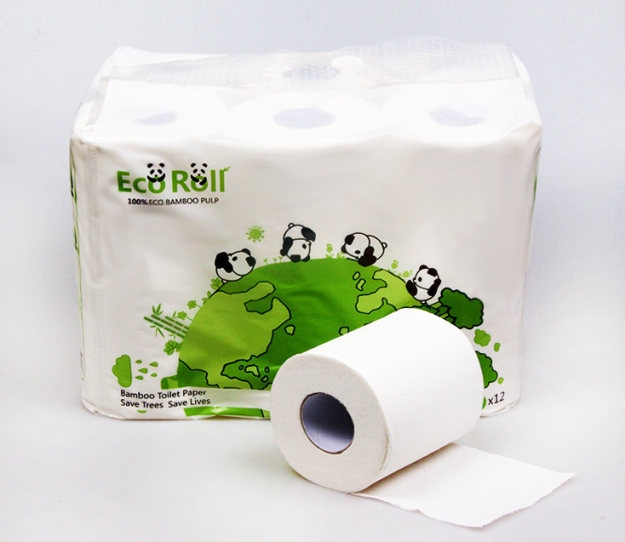
- Eco-conscious Consumers: There is a growing trend of private label toilet paper being marketed as eco-friendly (recycled, bamboo or other sustainably sourced materials), which appeals to environmentally conscious consumers.
Understanding Branded Toilet Paper
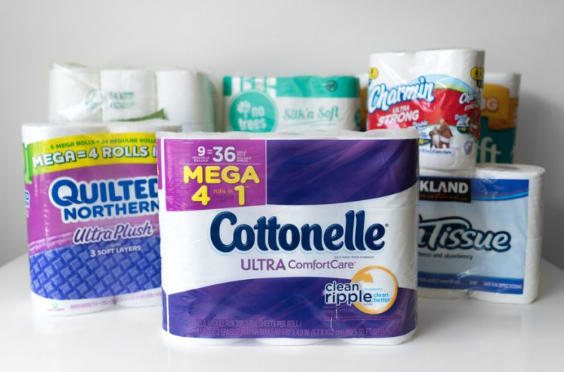
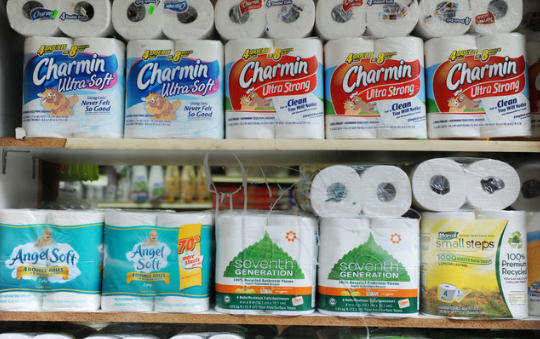
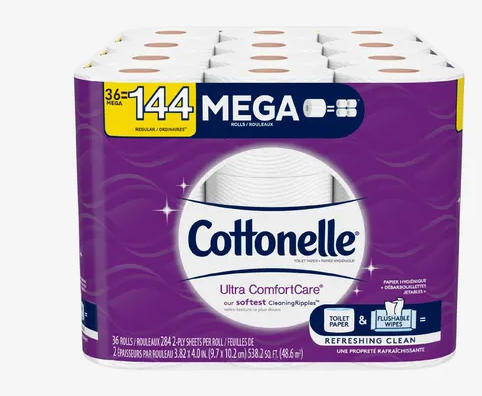
Branded toilet paper stands for products that get produced by well-recognized companies that are marketed under these companies’ own brand names like Charmin, Scott, Cottonelle, Quilted Northern. Their brands have been able to show strength in terms of quality, good performance, and innovation, and they are widely sold offline and online.
Key characteristics
- Brand Identity: Branded toilet paper is the product of a certain manufacturer known for producing finer paper products. Branding plays an important role in buying decisions, bridging the gap of trust in both comfort and quality.
- Premium Quality: Branded toilet paper claims to provide the best in terms of softness, strength, absorbency, and durability. Most of these products usually undergo various tests and developments.
- Price Point: The branded product is more costly than generic toilet paper because of the cost of marketing and advertising which the private label products do not require and because they have in-built brand reputation. Its price is a signal of the additional value that brand recognition and perceived quality confer.
Advantages
- Brand Trust and Reputation: The reputation of brands is very important for many consumers, thus the latter will continue to buy the products or services of a well-known, reputable brand. In another important context, many of these brands boast about their dedication to the quality they provide, sitting back and implying that every roll is of quality.
- Consistency: Branded tissue rolls endow customers with a means of looking for both quality and of expecting some sort of consistency with each subsequent purchase. Due to the fact that these brands have carefully engraved themselves on the mindset of a certain customer, these brands have so much credibility in ensuring consistent, high-quality products.
- Innovative Features: The manufacturers frequently come up with new features like extra softness, aloe-infused paper, eco-friendly materials, and so on. They treat each of these innovations as opportunities to cater to specific customer needs.
- Loyal Customer Base: As toilet paper brands have amassed a long history on the market, some consumers turn enthusiastically loyal to these brands, turning to them on a regular basis for a better and satisfying usage experience.
- Marketing and Advertising: Many TV ads, internet ads, and in-store campaigns are an integral part of brand building for toilet paper. Thus, it seems like branded toilet paper always has a higher visibility compared to private label ones.
Limitations
- Higher Price: The exclusivity of branded toilet paper as opposed to private label products is the principal setback. Consumers are generally paying a premium on the name of the brand and its associated advertising and premium features.
- Perceived Exclusivity: On the one hand, some consumers may feel that the higher price of branded toilet paper doesn’t necessarily equate to better performance, especially if they are looking for basic functionality.
- Environmental Concerns: While some branded toilet paper brands offer eco-friendly options, traditional versions are often criticized for their environmental impact, as they may contribute to deforestation and excessive waste.
Applications
- Mass Market: Geometry is a generic term representing all the major toilet papers (major brands) available in numerous outlets around the country; whether it be the chains, supermarkets, convenience stores, or even just shopping online, the brands cater to all segments of customers of virtues-a budget-conscious shopper or one who wants luxury or a special variety sake.
- Premium Consumers: To provide an option to the luxury market, some other brands give their product, the precious high bulging substance, at top premium of quality. Muslims, allocation favored by vacationers, and other customers, for whom the relationship of comfort and performance against price is substantially higher, is how it does that.
- Eco-Friendly Lines: Most toilet paper brands now offer environmentally friendly varieties made from recycled papers or sustainably sourced materials, good for eco-conscious crowds.
- Specialty Needs: Brands are attentive to specific needs that householders may exhibit, such as hypoallergenic toilet paper, unscented attributes, or septic-safe options.
Key Differences Between Private Label and Branded Toilet Paper
This chart highlights the fundamental differences in price, quality, innovation, and consumer experience between private label and branded toilet paper, helping consumers make more informed decisions based on their preferences and needs.
| Criteria | Private Label Toilet Paper | Branded Toilet Paper |
| Price | Lower, more affordable | Higher, premium pricing |
| Quality | Comparable but may vary (sometimes thinner or less absorbent) | Generally higher consistency in quality, softness, and strength |
| Brand Recognition | Sold under store’s own name, lacks widespread recognition | Well-known brands with strong consumer loyalty |
| Product Variety | Basic to mid-range options, limited specialty products | Wide variety including specialty products (e.g., hypoallergenic, scented, ultra-soft) |
| Innovation | Limited innovation, primarily focused on basic needs | Frequent innovation in product features and specialized options |
| Packaging | Simple packaging, store-branded | Premium packaging, often includes attractive designs |
| Environmental Options | Increasing availability of recycled and eco-friendly options | Many brands focus on sustainability (e.g., recycled paper, FSC-certified) |
| Consumer Loyalty | Less emotional attachment, often based on price and convenience | Strong brand loyalty based on trust and long history |
| Marketing and Advertising | Minimal marketing and advertising, relies on in-store presence | Extensive advertising (TV, online, billboards) to maintain brand image |
| Consistency | Can vary depending on the manufacturer and retailer | Consistent quality and experience across products |
| Sustainability Focus | Some eco-friendly options (e.g., bamboo, recycled materials) | Many brands have robust sustainability initiatives and certifications |
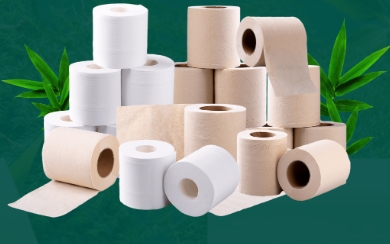
Key Factors to Consider for Choosing Between Private Label and Branded Toilet Paper
1. Price vs. Quality
Price is one of the major considerations when it comes to choosing between private and brand toilet papers. In general, the private ones are cheaper because production and marketing costs are less. For price-conscious consumers, they stand as a good option, especially for those looking to buy in bulk or for larger families. The private label toilet rolls are worth mentioning in that they have good quality and affordability accord with many consumers’ reasoning. Brands’ toilet paper, meanwhile, offer a more superior touch to quality. Charmin, Quilted Northern, and Napkins are brands that are known for their softness, absorbency, and strength. All of these high-performing brands were programmable, and that is where customers swing to. If quality and comfort are everything, particularly for the very sensitive types, a brand selection might be good.
2. Variety and Innovation
Most branded toilet paper products stand out due to innovative product features. Such branded products offer numerous options, including scented or hypoallergenic types, ultra-soft textures, luxurious features, aloe, or lotion. For those consumers mainly looking for the specific qualities or special features that one might offer, the branded variety is more advised. However, private label toilet paper typically only comes in a few basic varieties and has fewer specialized products. When all you need is decent performance without all the extra effort of the specialized features-which is often an unnecessary drag-private label products come as an economical alternative.
3. Environmental Considerations
Sustainability has over time emerged as yet another major concern for many individuals; consequently, buyers are driving producers of both private label brands and branded toilet paper into improvised, green options such as recycled paper or bamboo toilet paper. Branded toilet paper brands are shown to establish enough grounds for commitment to sustainability in favor of certified eco products. When it comes to private brands, the private line-ups are moving towards sustainability, but the branded line-ups might consist of more varieties of such products.
Brand products provide for more opportunities to transparently select from multiple sources of sustainable alternatives in cases where the marketing of responsibility is integral to marketing of the product.

4. Brand Loyalty vs. Practicality
Brand loyalty has an excellent influence on some buyers. Well-created brands of toilet paper always have an irresistible impact with consumers going back a long time and are emotionally fulfilling. People trust the worth of brands that are old and can stand firm in the market. Some of the things that make branded toilet paper an option are: brand loyalty. Still, practicality continuously lifts its importance, this time to the weighty end because many buyers will be looking for every possible saving. Private label toilet paper doesn’t belong in this category; it serves as the no-nonsense staple for the cost-conscious purchaser who expects durable quality at a lower price. For those who care very little about names and luxury but highly regard affordability, private label brands offer a very good alternative to the former.
5. Consistency and Availability
Consistency in product performance is another important consideration. Branded toilet paper typically offers a consistent experience across products, and the brand’s reputation for quality assurance can instill confidence in regular users. With private label products, however, the quality can vary somewhat, as these products are often sourced from different manufacturers, which could lead to slight differences in softness, absorbency, or texture from batch to batch. Private label toilet paper is somewhat different from these points as it has inconsistent and fluctuating values for price and quality, due to different sources, different flavors, etc. with it being produced by different factories. Smaller attribute variations could result in a slightly different softness or absorption or unexpected texture between batches.
Furthermore, availability indicates how a bigger role can be played in the brand you choose. Branded toilet papers are widely available in supermarkets, drugstores, and online marketplaces. This factor makes it very easy for customers to find and purchase their favorite brand. Private label is somewhat different in this aspect, as private label toilet papers can be found in major retailers such as Walmart, Costco, or Target but not other major ones, so availability in each store location or chains may be inconsistent.
6. Environmental and Social Impact
Lastly, consider the social and environmental implications of your purchase. Over the years, big corporate brands such as these have invested in sustainability programs while obtaining certifications for eco-sustainable sourcing. In return, they are also increasingly getting engaged in one or other form of social outreach or corporate social responsibility initiative. Rather than cashing in on the trend, some private label brands are slowly changing their environmental footprints but – some of them – have yet to earn the renowned “commitment” from the public or take a visible part in the same initiatives.
Summary
- For those looking for a budget-friendly option, private label toilet paper provides a practical solution.
- Consumers prioritizing brand trust, innovation, and specialized features might lean toward branded toilet paper.
Final Thoughts
It appears that the private label and branded toilet paper decision ultimately come down to individual needs. Price sensitivity, environmental concerns, quality expectations, environmental concerns, are all factors that influence this decision.
As far as the future is concerned and evolving circumstances prevail, both private label and branded toilet papers will still contain their prosperous measures-equivocal might be. Branded toilet papers may revolve their strategies around innovation and emotional appeal, while the private label products might excel in being more accessible and affordable. Quality, price, and convenience will shape the future of the toilet paper industry.