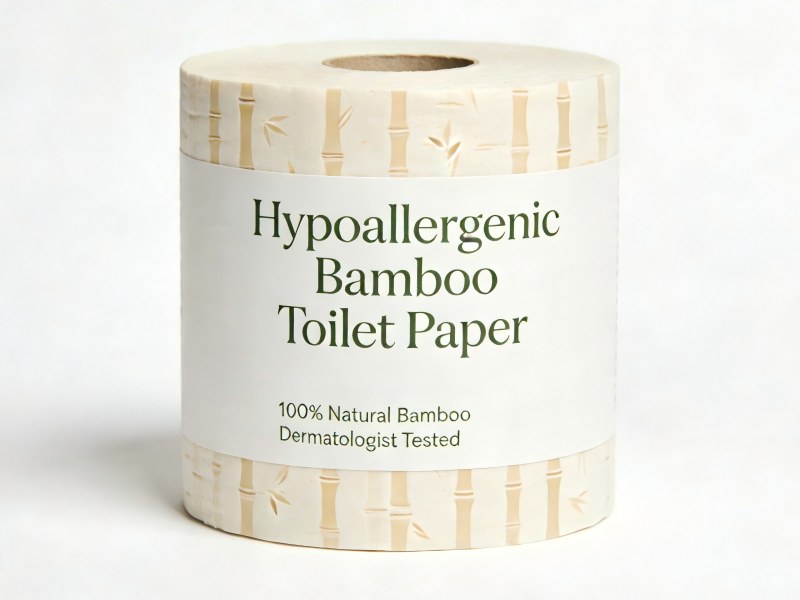
Hypoallergenic Bamboo Toilet Paper: PFAS-Free & TCF Technical Grade
The worldwide tissue paper industry currently experiences a technological shift, which chemical safety regulations and material science innovations. The sanitary paper market now includes a separate product category, which consists of hypoallergenic bamboo toilet paper that protects users with dermatological conditions from chemical exposure found in conventional wood-pulp products. The study investigates the technical attributes and chemical makeup, together with the production methods that establish superior hypoallergenic bamboo products.
Technical Composition of Bamboo Fiber vs. Wood Pulp
The primary differentiator of hypoallergenic bamboo toilet paper lies in the morphological characteristics of the bamboo fiber itself. Bamboo is a grass, not a wood, and its cellular structure provides functional advantages for sensitive skin.
Fiber Length and Tensile Strength
Bamboo fibers are classified as long fibers with an average length between 1.5mm and 4mm. As for the recycled paper goods and low-grade virgin wood pulp, they are made from fibers of shorter length. Short fibers break easily with mechanical force or friction, resulting in the generation of what is known as paper dust or paper lint. For those with contact dermatitis or respiratory sensitivity issues, this is an irritant. Because of the high tensile strength of bamboo, the paper retains the structural integrity even when wet, reducing the micro-particle shedding onto the skin.
The “Bamboo Kun” Factor
Bamboo contains a natural bio-agent known as “Bamboo Kun.” The raw form of this component enables the plant to defend itself against bacterial and insect attacks. The pulping operation uses extreme temperatures together with mechanical processing, while the specialized production of hypoallergenic bamboo paper tries to maintain its natural antimicrobial properties without using artificial biocides. The product reduces the requirement of chemical preservatives, which are typically included in regular tissue products.
Chemical Safety Standards: PFAS-free and BPA-free Requirements
The paper supply chain contains persistent organic pollutants, which recent industrial audits conducted in 2025 and 2026 discovered. A hypoallergenic bamboo paper designed for professional use must achieve particular non-toxic standards.
PFAS-free Bamboo Paper
Paper products have been found to contain perfluoroalkyl and polyfluoroalkyl substances, which bamboo tissue paper manufacturers use as moisture-resistant coatings and lubricants for their production equipment. The hypoallergenic bamboo brands of 2026 will establish strict controls for their supply chain to guarantee that all bamboo paper products remain free from PFAS contamination. The ability of PFAS to enter the body through skin contact results in permanent environmental accumulation, which disrupts hormone function in humans.
BPA-free and Recycled Content Risks
Recycled paper has sustainable benefits, yet it contains residual Bisphenol A (BPA) and Bisphenol S (BPS), which come from thermal receipts and carbonless copy paper that enter the recycling process. BPA functions as both a skin irritant and an endocrine disruptor. The hypoallergenic bamboo toilet paper uses 100% virgin bamboo pulp, which eliminates contamination risks from recycling systems to produce a final product that contains no BPA.
Bleaching Protocols: TCF vs. PCF
The method used to achieve whiteness in toilet paper is a primary source of chemical irritation. There are three main industrial bleaching categories:
- Elemental Chlorine Bleaching: Uses Chlorine gas and creates a high volume of dioxins. This method is mostly obsolete in premium markets but exists in cheaper supply chains.
- Elemental Chlorine-Free (ECF): Instead of Chlorine gas, it is replaced with Chlorine dioxide. This method does not get rid of dioxins, but lowers the volume.
- Totally Chlorine-Free (TCF): Instead uses oxygen, hydrogen peroxide, or ozone.
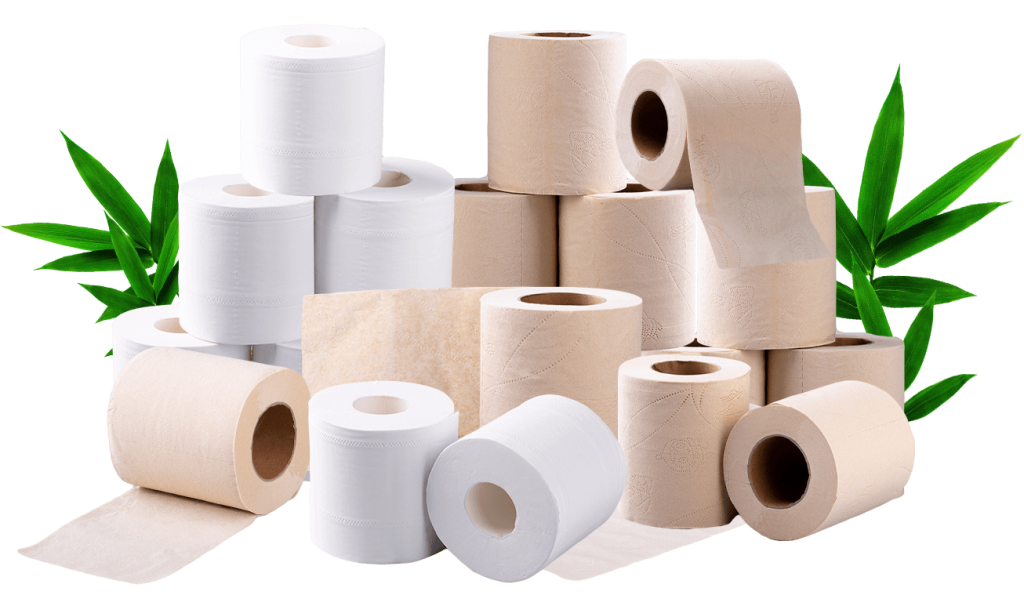
The best toilet paper for sensitive skin needs to follow TCF protocols for its classification. The TCF process uses chlorine-free methods, which stop the production of organochlorine compounds that cause extreme skin reactions. The market has started to adopt unbleached bamboo tissue as a new trend. By skipping the bleaching stage entirely, manufacturers eliminate the risk of chemical residue, resulting in a light brown or cream-colored paper that retains the maximum structural integrity of the bamboo fiber.
Addressing Specific Dermatological Needs
The application of hypoallergenic bamboo paper is particularly relevant for populations with compromised skin barriers.
Best Toilet Paper for Sensitive Skin
Clinical observations indicate that chronic vulvar irritation and perianal dermatitis are frequently exacerbated by the fragrances and dyes found in standard wood-pulp paper. Hypoallergenic bamboo products are formulated without:
- Synthetic Fragrances: Which contain phthalates.
- Dyes and Inks: Which often contain heavy metals or azo-compounds.
- Wet-Strength Resins: Such as formaldehyde-based resins, used to keep paper from tearing.
Mechanical Friction and pH Balance
The surface smoothness of bamboo paper is achieved through mechanical calendering (pressing between rollers) rather than chemical coating. A smooth surface reduces the Coefficient of Friction (CoF) against the skin. Maintaining a neutral pH is also a functional requirement for hypoallergenic paper to prevent disruption of the skin’s natural acid mantle.
Industrial Sustainability and Supply Chain Transparency
The bamboo toilet paper benefits extend beyond individual health to environmental health, which indirectly affects public health.
Growth Cycles and Carbon Sequestration
Bamboo species used for paper, such as Neosinocalamus affinis, can grow up to one meter per day and reach maturity for harvest in 3 to 5 years. This is significantly more efficient than the 20 to 50 years required for softwood or hardwood trees. Rapid regeneration allows for a continuous supply of virgin fiber without the deforestation associated with traditional wood pulp.
FSC and ISO Certification
To verify the claims of “hypoallergenic” and “eco-friendly,” technical buyers and informed consumers look for specific certifications:
- FSC (Forest Stewardship Council): Ensures the bamboo is sourced from responsibly managed forests that do not deplete natural habitats.
- ISO 14001: Specifies requirements for an effective environmental management system (EMS).
- Dermatological Testing: Independent lab verification that the product is non-sensitizing under Patch Test conditions.
Analysis of Unbleached vs. Bleached Bamboo Tissue
When selecting a product, the distinction between unbleached vs bleached bamboo tissue is a primary technical consideration.
| Feature | Unbleached Bamboo Paper | TCF Bleached Bamboo Paper |
| Chemical Exposure | Zero bleaching agents used. | Oxygen/Peroxide based agents. |
| Fiber Strength | Highest (no chemical degradation). | High (minimal degradation). |
| Softness | Natural texture, slightly firmer. | Increased softness due to processing. |
| Environmental Impact | Lowest (reduced water/energy). | Low (effluent-free). |
Unbleached paper is increasingly preferred for medical and post-surgical recovery due to its absolute chemical neutrality.
Operational FAQ: Usage and Disposal
Will bamboo toilet paper cause the toilet to clog?
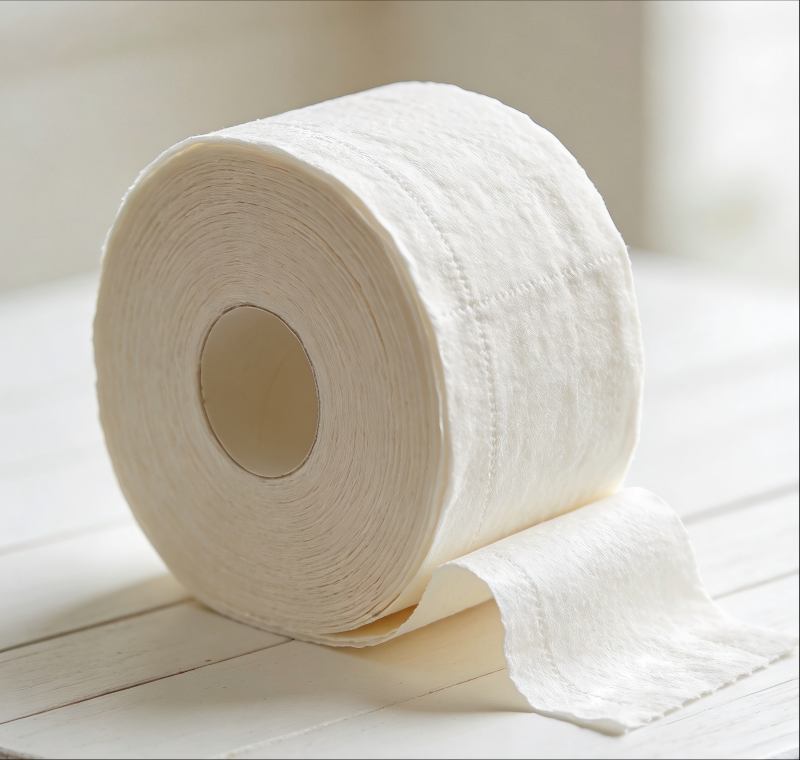
Bamboo fiber attracts and absorbs water quickly. It is designed to break apart quickly when it is wet. Tests show that bamboo toilet paper is safe to use in municipal sewage systems and septic tanks. It even breaks apart as quickly, or even quicker, than common 2-ply toilet paper.
Is bamboo paper toilet paper more expensive?
Bamboo toilet paper rolls cost more than regular wood-pulp toilet paper rolls. This is because bamboo pulp is more expensive to process, and because the facilities that process bamboo pulp are smaller in number, which makes bamboo toilet paper rolls more expensive. But because bamboo paper is stronger and more absorbent, it actually leads to lower consumption.
Why is it called “Hypoallergenic”?
Hypoallergenic products are put through tests where the products are stripped of cleaners like chlorine, formaldehyde, and phthalates, as well as fragrances, and show no signs of irritating the skin.