Bamboo Facial Tissue for Sensitive Skin 2026: The Science of Unbleached & Hypoallergenic Care
The personal care industry will undergo its first major transition from conventional wood-pulp products to bio-based materials beginning in 2026. Among these options, bamboo facial tissue stands out as both an environmentally friendly choice and the best solution for skin health according to scientific evidence. The rising awareness of “chemical additives” among consumers has caused the demand for unbleached hypoallergenic bamboo fiber to become a worldwide standard used in products for people with sensitive skin and newborns.
Bamboo Kun and Natural Antimicrobial Efficacy
Bamboo shows its main difference from traditional timber because of its natural biological defense system. The bamboo plant produces a special natural substance which scientists refer to as “Bamboo Kun.” The polypeptide-based substance enables the plant to protect itself against pests and fungi, which allows farmers to grow the plant without using chemical pesticides.
The antimicrobial properties of high-quality bamboo fibers remain intact when they undergo processing into facial tissue. According to research published in BioResources and archived by the National Institutes of Health (NIH) (see: PMC11066308), natural bamboo fiber demonstrates a significant quantitative reduction in the growth of common skin pathogens, including Staphylococcus aureus and Escherichia coli. The raw material of bamboo offers both physical and biological protection to users without needing chemical treatments that traditional tissues require for achieving antibacterial status. The product serves as an optimal base material for people who need to stay away from artificial biocides because they suffer from skin barrier deficiencies.
Structural Analysis: Fiber Length and Mechanical Irritation
Beyond chemical purity, the physical architecture of the fiber determines the “hand-feel” and the level of mechanical irritation inflicted upon the epidermis. Skin sensitivity is often exacerbated by the friction factor of paper products.
The morphological characteristics of bamboo fibers show that they measure between 1.5 mm and 2.5 mm in length. The solution exists as a balanced point that connects the two extremes of short-fiber hardwoods and long-fiber softwoods. In 2026, advanced manufacturing uses physical embossing methods to create fiber alignment instead of chemical softening agents. The tissue maintains high tensile strength, which prevents breakage and pilling during use and achieves a low coefficient of friction. The patients who experience Atopic Dermatitis (AD) and chronic eczema need to reduce mechanical “micro-scratching” because it leads to inflammatory flare-ups, which occur after they wipe their skin.
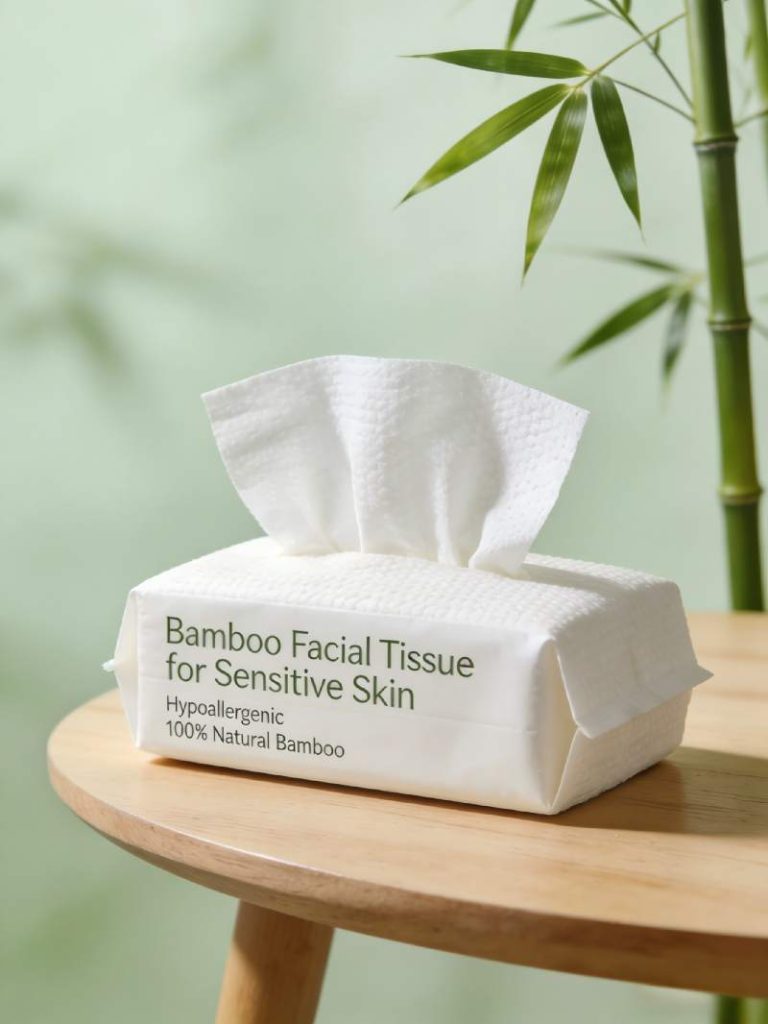
The Toxicity Gap: Chlorine-Free vs. Unbleached Processing
The most significant health advantage of bamboo facial tissue is found in what is not added during production. Traditional white tissue undergoes a rigorous bleaching process to meet aesthetic “brightness” standards. Even processes labeled as Elemental Chlorine Free (ECF) can leave trace amounts of organic halogen compounds.
1. The Risk of Dioxins and Fluorescent Agents
Traditional bleaching is a primary source of dioxins, a group of chemically related compounds that are persistent environmental pollutants. On a tactile level, the inclusion of Fluorescent Brightening Agents (FBAs) to achieve a “blue-white” tint poses a direct risk to sensitive skin. These agents can migrate from the paper to the skin surface upon contact with moisture (sweat or tears), potentially causing contact dermatitis.
2. The Unbleached Advantage
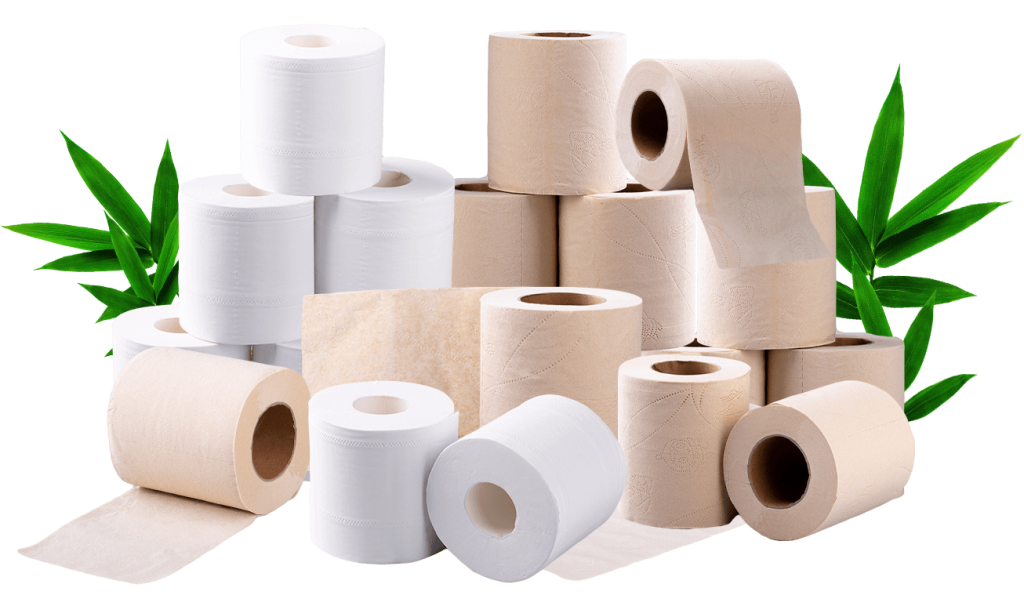
Unbleached bamboo tissue retains its natural tan or cream color, indicating the presence of native lignin and the absence of aggressive oxidative chemicals. By bypassing the bleaching stage, the production cycle adheres to the safety standards set by the FDA (21 CFR 176.170) regarding paper components in contact with aqueous and fatty substances. This “food-grade” safety profile ensures that when the tissue is used on the lips or near the eyes, there is zero risk of chemical ingestion or mucosal irritation.
Specialized Applications for Vulnerable Populations
1. Neonatal and Pediatric Care
Infant skin is approximately 30% thinner than adult skin, making it highly permeable to topical toxins. The 2026 market data indicates that “Newborn Skin Safety” is the leading driver for bamboo tissue adoption. Because unbleached bamboo tissue is free from FBAs and synthetic fragrances, it aligns with the OEKO-TEX® STANDARD 100 (Class I) requirements—the strictest certification level specifically designed for products in contact with baby skin (refer to: OEKO-TEX Standard 100).
2. Chronic Rhinitis and Allergy Management
People with chronic rhinitis who blow their noses a lot get “red nose” syndrome, which is when the lipid barrier around the nostrils breaks down. The long fibers in bamboo make sure that it doesn’t leave lint behind. When you rub bamboo against something, it doesn’t break down like wood-pulp tissues do, which release “paper dust” (micro-particulates). This stops you from breathing in particles that would make your nasal mucosa even more irritated and make you sneeze more, which would create a positive feedback loop for allergy relief.
Global Compliance and Ethical Sourcing
In 2026, strict third-party certifications will be used to tell the difference between “greenwashed” products and bamboo tissue that is truly sustainable. The following benchmarks are important to both consumers and medical professionals:
- FSC (Forest Stewardship Council) Chain of Custody: With the 2025-2026 implementation of the FSC TV Loop for bamboo, every metric ton of fiber is tracked from the grove to the consumer, ensuring no natural forests were converted for bamboo plantations (Source: FSC Bamboo Integrity).
- Biodegradability: Unlike “flushable” wipes that contain synthetic binders, 100% bamboo facial tissue is fully biodegradable and compostable, returning to the carbon cycle within 2-6 months depending on environmental conditions.
Conclusion: The Logic of Bio-Material Superiority
Switching to bamboo facial tissue is a change from buying things based on how they look to buying things based on how they make you feel. This material is a complete solution for modern skin problems because it uses the natural antimicrobial properties of Bamboo Kun, the strength of long fibers, and the chemical purity of unbleached processing.
In 2026, choosing a facial tissue is an important part of a person’s skincare routine. In this case, unbleached bamboo is the only material that meets both the Eczema-Friendly certification and the Carbon-Neutral production standards. It is no longer just a “paper product”; it is now a biocompatible tool for keeping the skin barrier intact.
FAQs
Q: Is bamboo facial tissue better for eczema?
A: Yes. Unbleached bamboo tissue is free from chlorine and fluorescent brightening agents, reducing chemical triggers. Its long-fiber structure also lowers mechanical friction on damaged skin barriers.
Q: Does bamboo tissue have antimicrobial properties?
A: Naturally, yes. Bamboo contains “Bamboo Kun,” a bio-agent that research (PMC11066308) shows can inhibit common skin bacteria without synthetic additives.